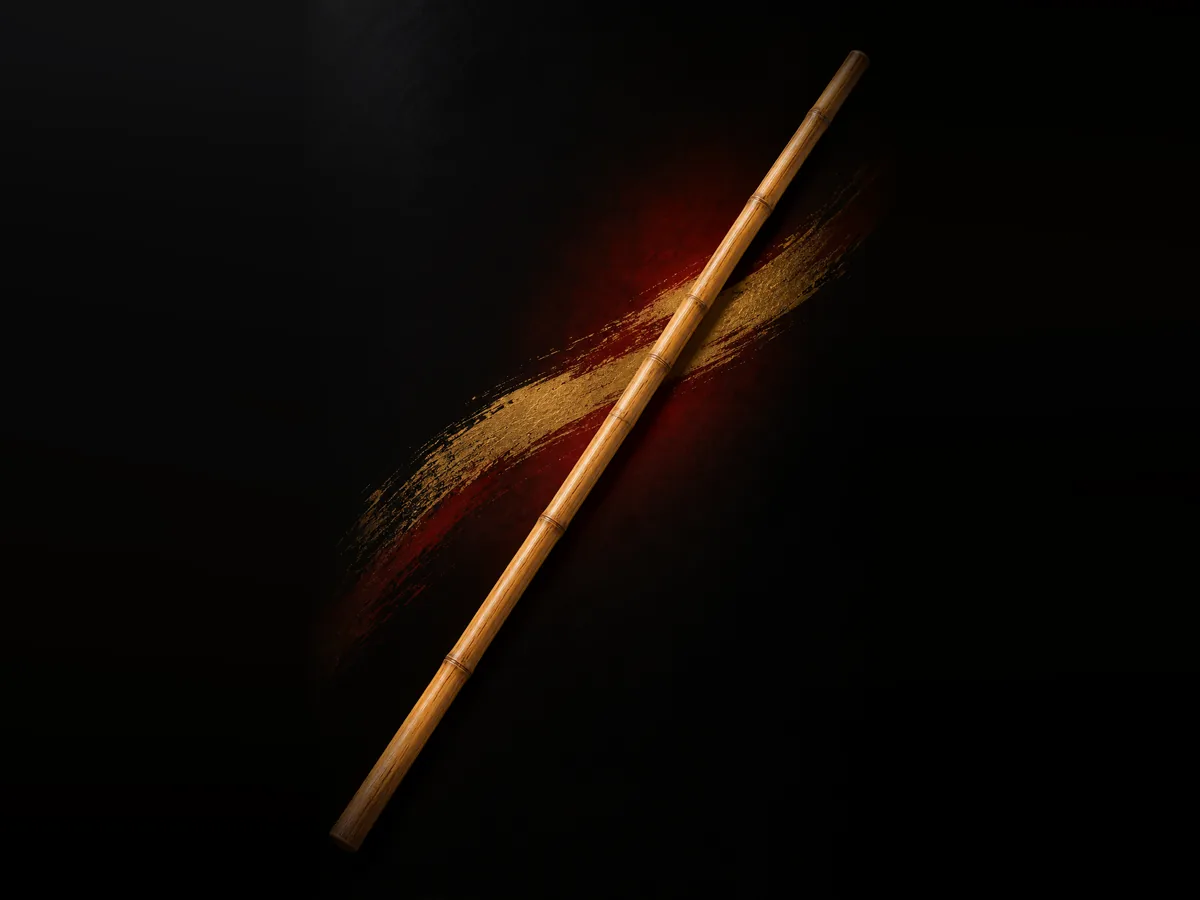
O pau comprido do tahtib egípcio, com cerca de 1,2 m de rattan ou bambu, usado numa dança-combate representada desde o Antigo Egito.
Asa (bastão do tahtib) Ilustração WABUKAN
Outros nomes
عصا · asaya; tahtib stick
Origem e história
O tahtib é a arte egípcia de luta com pau, representada nas paredes dos túmulos de Beni Hasan (cerca de 2000 a.C.) e mantida viva no Alto Egito como jogo marcial e dança. Foi inscrito na lista do Património Cultural Imaterial da UNESCO em 2016.
Pau de rota ou de madeira (asa) com cerca de 1–1,3 m; na forma dançada (raqs al-assaya) usa-se muitas vezes uma bengala mais leve com o topo em gancho.
Técnicas básicas
combates de tahtib
dança do pau (raqs al-assaya)
guardas e golpes à cabeça
Treino
O treino de pau e bastão começa pelas pegas, posições e golpes e defesas básicos, praticados no ar ou num alvo, e depois exercícios a dois com velocidade controlada. Muitas escolas usam paus de rota ou almofadados para combate, com capacete e luvas.
Segurança
Use capacete com grelha e luvas almofadadas em qualquer trabalho de contacto; mãos e dedos são as lesões mais comuns. Verifique os paus à procura de fissuras e lascas e retire os danificados.
Legalidade (informação geral)
Paus, bastões e outras armas de impacto ou flexíveis são objetos comuns em alguns países e armas proibidas ou limitadas noutros (vários países europeus, por exemplo, regulam nunchaku, bastões extensíveis ou correntes com peso). Andar com uma na rua sem motivo pode ser infração mesmo onde é legal tê-la. Transporte-a num saco e use-a no local de treino. Isto é informação geral, não aconselhamento jurídico: confirme a lei local.
Curiosidades
No tahtib a cabeça é o alvo principal, mas o jogo faz-se com respeito e controlo, muitas vezes ao som de música.
The long stick of Egyptian tahtib, about four feet of rattan or bamboo, used in a fight-dance shown since ancient Egypt.
Asa (tahtib stick) WABUKAN illustration
Also known as
عصا · asaya; tahtib stick
Origin and history
Tahtib is the Egyptian stick-fighting art, depicted on tomb walls at Beni Hasan (around 2000 BC) and kept alive in Upper Egypt as a martial game and dance. It was inscribed on UNESCO’s Intangible Cultural Heritage list in 2016.
A rattan or wooden stick (asa) of about 1–1.3 m; in the dance form (raqs al-assaya) a lighter cane with a hooked top is often used.
Basic techniques
tahtib bouts
stick dance (raqs al-assaya)
guards and strikes to the head
Training
Stick and staff training starts with grips, stances and basic strikes and blocks practised in the air or on a target, then two-person drills at controlled speed. Many schools use rattan or padded sticks for sparring, with a helmet and gloves.
Safety
Wear a helmet with a face grille and padded gloves for any contact work; hands and fingers are the most common injuries. Check sticks for cracks and splinters and retire damaged ones.
Legality (general information)
Sticks, staffs and other impact or flexible weapons are ordinary objects in some countries and restricted weapons in others (several European countries, for example, regulate nunchaku, batons or weighted chains). Carrying one in public without a good reason can be an offence even where owning it is legal. Transport it in a bag and use it in the training hall. This is general information, not legal advice: check local law.
Did you know?
In tahtib the head is the main target, but the game is played with respect and control, often to music.
El tahtib es el arte egipcio de lucha con palo, representado en las paredes de las tumbas de Beni Hasan (hacia 2000 a. C.) y mantenido vivo en el Alto Egipto como juego marcial y danza. Fue inscrito en la lista de Patrimonio Cultural Inmaterial de la UNESCO en 2016.
Palo de ratán o madera (asa) de unos 1–1,3 m; en la forma bailada (raqs al-assaya) se usa a menudo un bastón más ligero con el extremo en gancho.
Técnicas básicas
combates de tahtib
danza del bastón (raqs al-assaya)
guardias y golpes a la cabeza
Entrenamiento
El entrenamiento de palo y bastón empieza por los agarres, las posiciones y los golpes y defensas básicos, practicados al aire o sobre un objetivo, y después ejercicios por parejas a velocidad controlada. Muchas escuelas usan palos de ratán o acolchados para el combate, con casco y guantes.
Seguridad
Use casco con rejilla y guantes acolchados en cualquier trabajo de contacto; manos y dedos son las lesiones más frecuentes. Revise los palos en busca de grietas y astillas y retire los dañados.
Legalidad (información general)
Palos, bastones y otras armas de impacto o flexibles son objetos corrientes en algunos países y armas restringidas en otros (varios países europeos, por ejemplo, regulan el nunchaku, las porras o las cadenas con peso). Llevar una en público sin motivo puede ser infracción aunque poseerla sea legal. Transpórtela en una bolsa y úsela en la sala de entrenamiento. Es información general, no asesoramiento jurídico: consulte la ley local.
Curiosidades
En el tahtib la cabeza es el objetivo principal, pero el juego se hace con respeto y control, a menudo con música.
Le tahtib est l’art égyptien du combat au bâton, représenté sur les murs des tombes de Beni Hassan (vers 2000 av. J.-C.) et resté vivant en Haute-Égypte comme jeu martial et danse. Il a été inscrit sur la liste du patrimoine culturel immatériel de l’UNESCO en 2016.
Bâton en rotin ou en bois (asa) d’environ 1–1,3 m ; la forme dansée (raqs al-assaya) utilise souvent une canne plus légère à bout recourbé.
Techniques de base
assauts de tahtib
danse du bâton (raqs al-assaya)
gardes et frappes à la tête
Entraînement
L’entraînement au bâton commence par les prises, les gardes et les frappes et parades de base, travaillées dans le vide ou sur cible, puis par des exercices à deux à vitesse contrôlée. Beaucoup d’écoles utilisent des bâtons en rotin ou rembourrés pour l’assaut, avec casque et gants.
Sécurité
Portez un casque à grille et des gants rembourrés pour tout travail au contact ; mains et doigts sont les blessures les plus fréquentes. Vérifiez les bâtons (fissures, échardes) et retirez ceux qui sont abîmés.
Légalité (information générale)
Bâtons, cannes et autres armes contondantes ou souples sont des objets ordinaires dans certains pays et des armes réglementées dans d’autres (plusieurs pays européens encadrent par exemple le nunchaku, la matraque ou les chaînes lestées). Les porter en public sans motif peut constituer une infraction même là où leur détention est légale. Transportez-les dans un sac et utilisez-les en salle. Ceci est une information générale, pas un conseil juridique : vérifiez la loi locale.
Le saviez-vous ?
Au tahtib, la tête est la cible principale, mais le jeu se pratique avec respect et contrôle, souvent en musique.