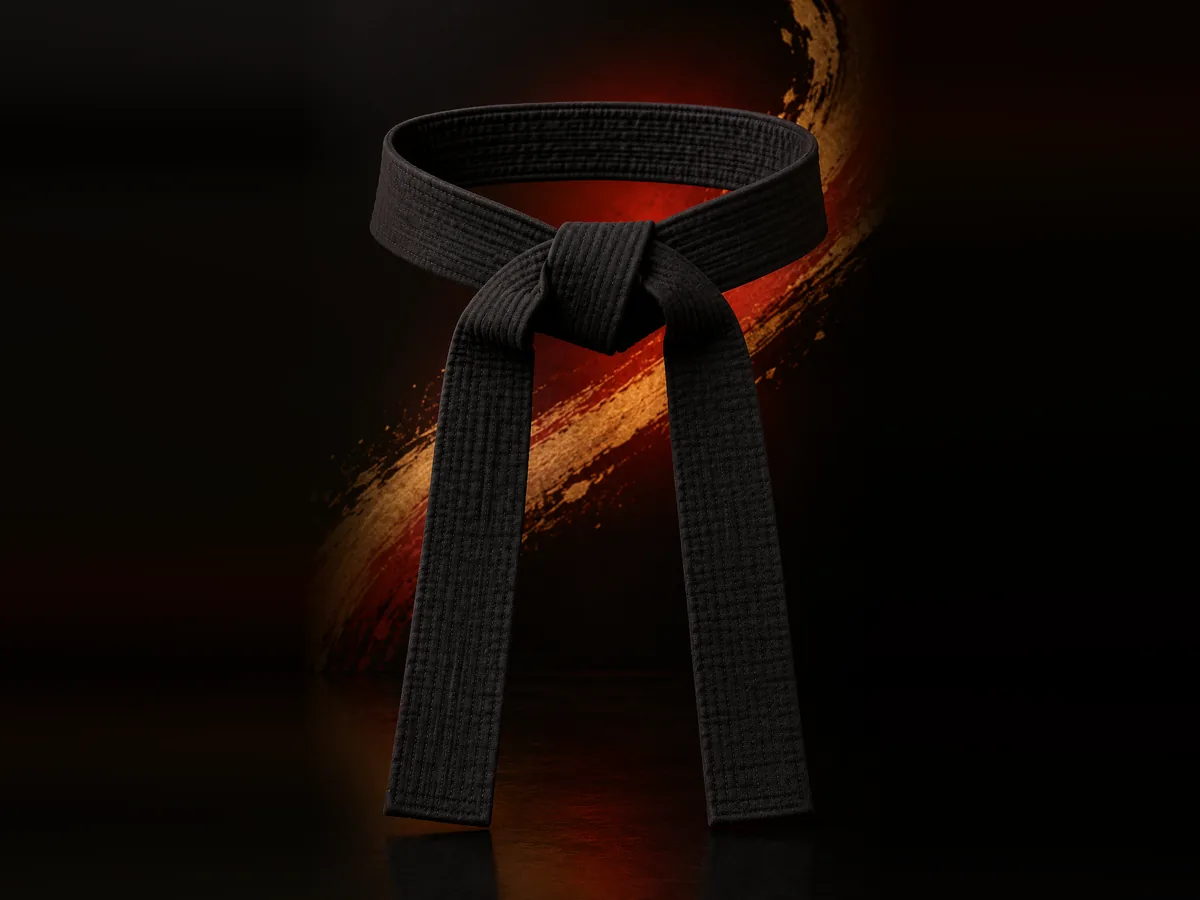
Jigoro Kano criou os graus dan e o cinto negro no judo nos anos 1880. O cinto negro marca o fim das bases, não o domínio da arte.
Cinto negro Ilustração WABUKAN
Outros nomes
黒帯 · kuro-obi; shodan
Origem e história
O cinto negro como símbolo de graduação vem do judo: Kanō Jigorō introduziu os graus dan nos anos 1880 e pouco depois as faixas negras para quem os tinha. O karaté adotou o sistema dan/kyū nos anos 1920 e espalhou-se ao taekwondo, ao BJJ e a muitas outras artes.
Cinto de algodão, normalmente com várias camadas cosidas, atado com um nó direito. Em muitas artes, barras ou texto bordado mostram o dan e o nome do dono.
Técnicas básicas
atar o obi
graus dan (shodan, nidan…)
Treino
Uniformes e peças tradicionais “treinam-se” pela etiqueta: como vestir, dobrar, atar e cuidar deles ensina-se junto com a técnica e faz parte da cultura de cada arte.
Segurança
Mantenha-o limpo e seco, verifique costuras e nós e garanta que nada fica solto que possa prender dedos das mãos ou dos pés durante o treino.
Legalidade (informação geral)
Isto é equipamento de treino ou tradicional, não uma arma, e em geral é livre de comprar e ter. Clubes e federações podem ainda impor regras sobre modelos aprovados e estado de conservação. Informação geral, não aconselhamento jurídico.
Curiosidades
No Japão o cinto negro (shodan) é muitas vezes descrito como o início do estudo a sério, não o fim.
Jigoro Kano introduced the dan ranks and the black belt in judo in the 1880s. A black belt marks the end of the basics, not mastery.
Black belt WABUKAN illustration
Also known as
黒帯 · kuro-obi; shodan
Origin and history
The black belt as a rank symbol comes from judo: Kanō Jigorō introduced dan grades in the 1880s and black sashes for dan holders shortly after. Karate adopted the dan/kyū system in the 1920s, and it spread to taekwondo, BJJ and many other arts.
A cotton belt, usually several layers stitched together, tied with a square knot. In many arts stripes or embroidered text show the dan level and the owner’s name.
Basic techniques
tying the obi
dan grades (shodan, nidan…)
Training
Uniforms and traditional items are “trained” through etiquette: how to wear, fold, tie and care for them is taught alongside technique and is part of each art’s culture.
Safety
Keep it clean and dry, check seams and knots, and make sure nothing hangs loose that could catch fingers or toes during training.
Legality (general information)
This is training or traditional equipment, not a weapon, and is generally free to buy and own. Clubs and federations may still set rules on approved models and condition. General information, not legal advice.
Did you know?
A black belt (shodan) is often described in Japan as the start of serious study, not the end.
El cinturón negro, símbolo de grado nacido en el judo.
Cinturón negro Ilustración WABUKAN
Otros nombres
黒帯 · kuro-obi; shodan
Origen e historia
El cinturón negro como símbolo de grado viene del judo: Kanō Jigorō introdujo los grados dan en los años 1880 y poco después los fajines negros para quienes los tenían. El karate adoptó el sistema dan/kyū en los años 1920 y se extendió al taekwondo, el BJJ y muchas otras artes.
Cinturón de algodón, normalmente de varias capas cosidas, atado con nudo llano. En muchas artes, barras o texto bordado indican el dan y el nombre del dueño.
Técnicas básicas
atar el obi
grados dan (shodan, nidan…)
Entrenamiento
Uniformes y piezas tradicionales se “entrenan” a través de la etiqueta: cómo ponerlos, doblarlos, atarlos y cuidarlos se enseña junto a la técnica y forma parte de la cultura de cada arte.
Seguridad
Manténgalo limpio y seco, revise costuras y nudos y asegúrese de que nada quede suelto que pueda engancharse en dedos de manos o pies durante el entrenamiento.
Legalidad (información general)
Es material de entrenamiento o tradicional, no un arma, y en general es libre de comprar y poseer. Clubes y federaciones pueden fijar normas sobre modelos homologados y estado de conservación. Información general, no asesoramiento jurídico.
Curiosidades
En Japón el cinturón negro (shodan) se describe a menudo como el comienzo del estudio serio, no el final.
La ceinture noire comme symbole de grade vient du judo : Kanō Jigorō introduit les grades dan dans les années 1880 puis les ceintures noires pour leurs titulaires. Le karaté adopte le système dan/kyū dans les années 1920, qui s’étend au taekwondo, au JJB et à de nombreux arts.
Ceinture en coton, généralement en plusieurs épaisseurs cousues, nouée d’un nœud plat. Dans beaucoup d’arts, des barrettes ou un texte brodé indiquent le dan et le nom du titulaire.
Techniques de base
nouer l’obi
grades dan (shodan, nidan…)
Entraînement
Uniformes et pièces traditionnelles s’« entraînent » par l’étiquette : comment les porter, les plier, les nouer et les entretenir s’enseigne avec la technique et fait partie de la culture de chaque art.
Sécurité
Gardez-le propre et sec, vérifiez coutures et nœuds et assurez-vous que rien ne pend qui pourrait accrocher les doigts ou les orteils à l’entraînement.
Légalité (information générale)
Il s’agit d’un équipement d’entraînement ou traditionnel, pas d’une arme, en général libre à l’achat et à la détention. Clubs et fédérations peuvent toutefois imposer des modèles homologués et un bon état. Information générale, pas un conseil juridique.
Le saviez-vous ?
Au Japon, la ceinture noire (shodan) est souvent décrite comme le début de l’étude sérieuse, pas sa fin.