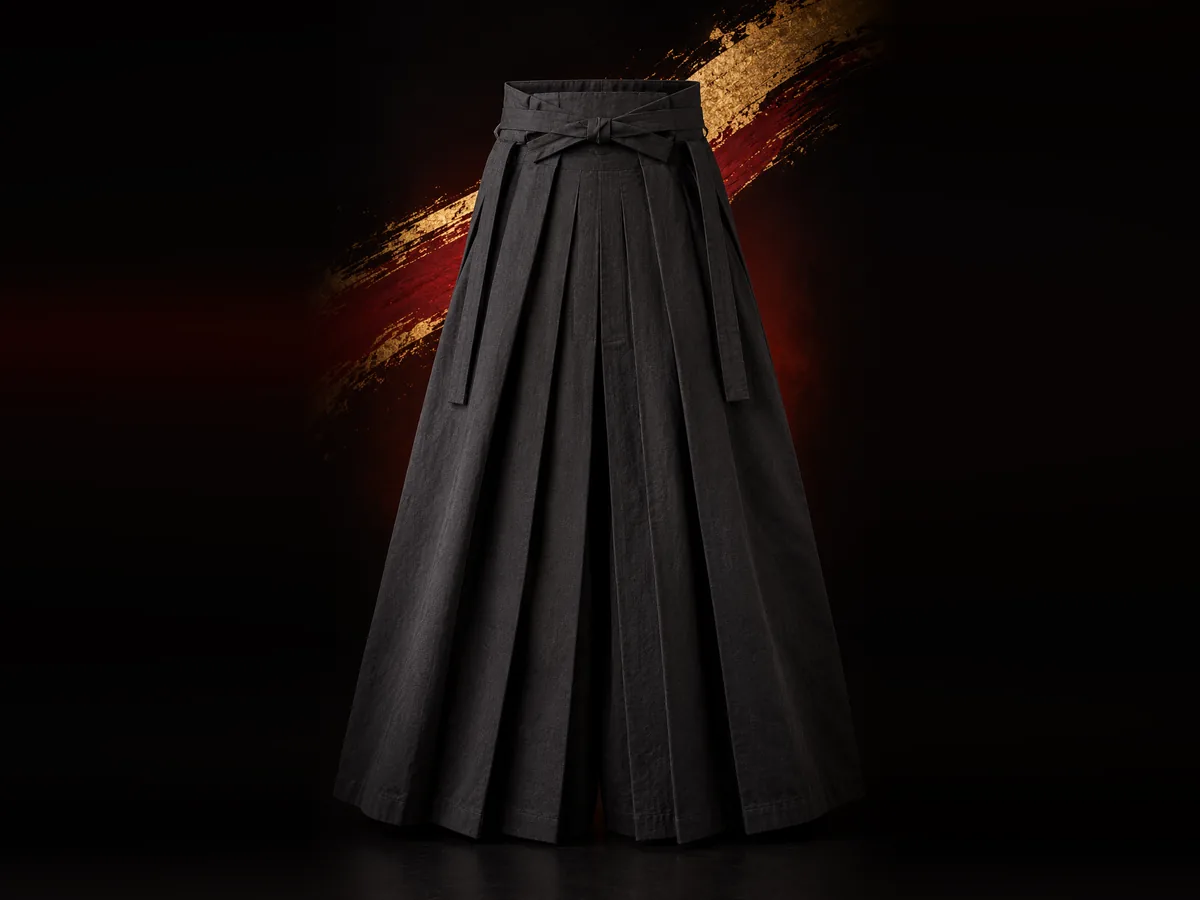
Calças largas com pregas dos samurais. Diz-se muitas vezes que as sete pregas representam sete virtudes do budo.
Hakama Ilustração WABUKAN
Outros nomes
袴 · umanori-hakama; andon-hakama
Origem e história
Calças plissadas usadas sobre o quimono pelos aristocratas japoneses e depois pelos samurais, o hakama passou a ser roupa do dia a dia da classe guerreira no período Edo. Hoje faz parte do uniforme no kendo, iaido, kyūdō, aikido, naginata e jōdō.
Calças largas com sete pregas (cinco à frente, duas atrás) e atilhos compridos (himo); a placa rígida das costas é o koshi-ita. O modelo umanori é dividido para montar; o andon é uma saia.
Técnicas básicas
atar o himo
dobrar o hakama
deslocar-se em suriashi
Treino
Uniformes e peças tradicionais “treinam-se” pela etiqueta: como vestir, dobrar, atar e cuidar deles ensina-se junto com a técnica e faz parte da cultura de cada arte.
Segurança
Mantenha-o limpo e seco, verifique costuras e nós e garanta que nada fica solto que possa prender dedos das mãos ou dos pés durante o treino.
Legalidade (informação geral)
Isto é equipamento de treino ou tradicional, não uma arma, e em geral é livre de comprar e ter. Clubes e federações podem ainda impor regras sobre modelos aprovados e estado de conservação. Informação geral, não aconselhamento jurídico.
Curiosidades
Em algumas escolas as sete pregas explicam-se como sete virtudes ligadas ao bushidō; esta leitura é moderna e varia de dojo para dojo.
Wide pleated trousers of the samurai. Its seven pleats are often said to stand for seven virtues of budo.
Hakama WABUKAN illustration
Also known as
袴 · umanori-hakama; andon-hakama
Origin and history
Pleated trousers worn over the kimono by Japanese aristocrats and later by samurai, the hakama became everyday wear for the warrior class in the Edo period. Today it is part of the uniform in kendo, iaido, kyūdō, aikido, naginata and jōdō.
Wide, pleated trousers with seven pleats (five in front, two at the back) and long ties (himo); the stiff back plate is the koshi-ita. The umanori style is divided for riding; the andon style is a skirt.
Basic techniques
tying the himo
folding the hakama
moving in suriashi
Training
Uniforms and traditional items are “trained” through etiquette: how to wear, fold, tie and care for them is taught alongside technique and is part of each art’s culture.
Safety
Keep it clean and dry, check seams and knots, and make sure nothing hangs loose that could catch fingers or toes during training.
Legality (general information)
This is training or traditional equipment, not a weapon, and is generally free to buy and own. Clubs and federations may still set rules on approved models and condition. General information, not legal advice.
Did you know?
In some schools the seven pleats are explained as seven virtues associated with bushidō; this interpretation is modern and varies from dojo to dojo.
El pantalón plisado tradicional japonés de las artes de armas.
Hakama Ilustración WABUKAN
Otros nombres
袴 · umanori-hakama; andon-hakama
Origen e historia
Pantalones plisados que los aristócratas japoneses y luego los samuráis llevaban sobre el kimono, el hakama se convirtió en ropa diaria de la clase guerrera en el periodo Edo. Hoy forma parte del uniforme en kendo, iaido, kyūdō, aikido, naginata y jōdō.
Pantalón ancho con siete pliegues (cinco delante, dos detrás) y cintas largas (himo); la placa rígida trasera es el koshi-ita. El modelo umanori está dividido para montar; el andon es una falda.
Técnicas básicas
atar el himo
doblar el hakama
desplazarse en suriashi
Entrenamiento
Uniformes y piezas tradicionales se “entrenan” a través de la etiqueta: cómo ponerlos, doblarlos, atarlos y cuidarlos se enseña junto a la técnica y forma parte de la cultura de cada arte.
Seguridad
Manténgalo limpio y seco, revise costuras y nudos y asegúrese de que nada quede suelto que pueda engancharse en dedos de manos o pies durante el entrenamiento.
Legalidad (información general)
Es material de entrenamiento o tradicional, no un arma, y en general es libre de comprar y poseer. Clubes y federaciones pueden fijar normas sobre modelos homologados y estado de conservación. Información general, no asesoramiento jurídico.
Curiosidades
En algunas escuelas los siete pliegues se explican como siete virtudes del bushidō; es una lectura moderna que varía según el dojo.
Le pantalon plissé traditionnel japonais des arts d’armes.
Hakama Illustration WABUKAN
Autres noms
袴 · umanori-hakama; andon-hakama
Origine et histoire
Pantalon plissé porté sur le kimono par les aristocrates puis par les samouraïs, le hakama devient le vêtement quotidien de la classe guerrière à l’époque Edo. Il fait aujourd’hui partie de la tenue en kendo, iaido, kyūdō, aïkido, naginata et jōdō.
Pantalon large à sept plis (cinq devant, deux derrière) et longs liens (himo) ; la plaque rigide du dos est le koshi-ita. Le modèle umanori est divisé pour monter à cheval ; l’andon est une jupe.
Techniques de base
nouer le himo
plier le hakama
se déplacer en suriashi
Entraînement
Uniformes et pièces traditionnelles s’« entraînent » par l’étiquette : comment les porter, les plier, les nouer et les entretenir s’enseigne avec la technique et fait partie de la culture de chaque art.
Sécurité
Gardez-le propre et sec, vérifiez coutures et nœuds et assurez-vous que rien ne pend qui pourrait accrocher les doigts ou les orteils à l’entraînement.
Légalité (information générale)
Il s’agit d’un équipement d’entraînement ou traditionnel, pas d’une arme, en général libre à l’achat et à la détention. Clubs et fédérations peuvent toutefois imposer des modèles homologués et un bon état. Information générale, pas un conseil juridique.
Le saviez-vous ?
Certaines écoles associent les sept plis à sept vertus du bushidō ; cette lecture est moderne et varie selon les dojos.