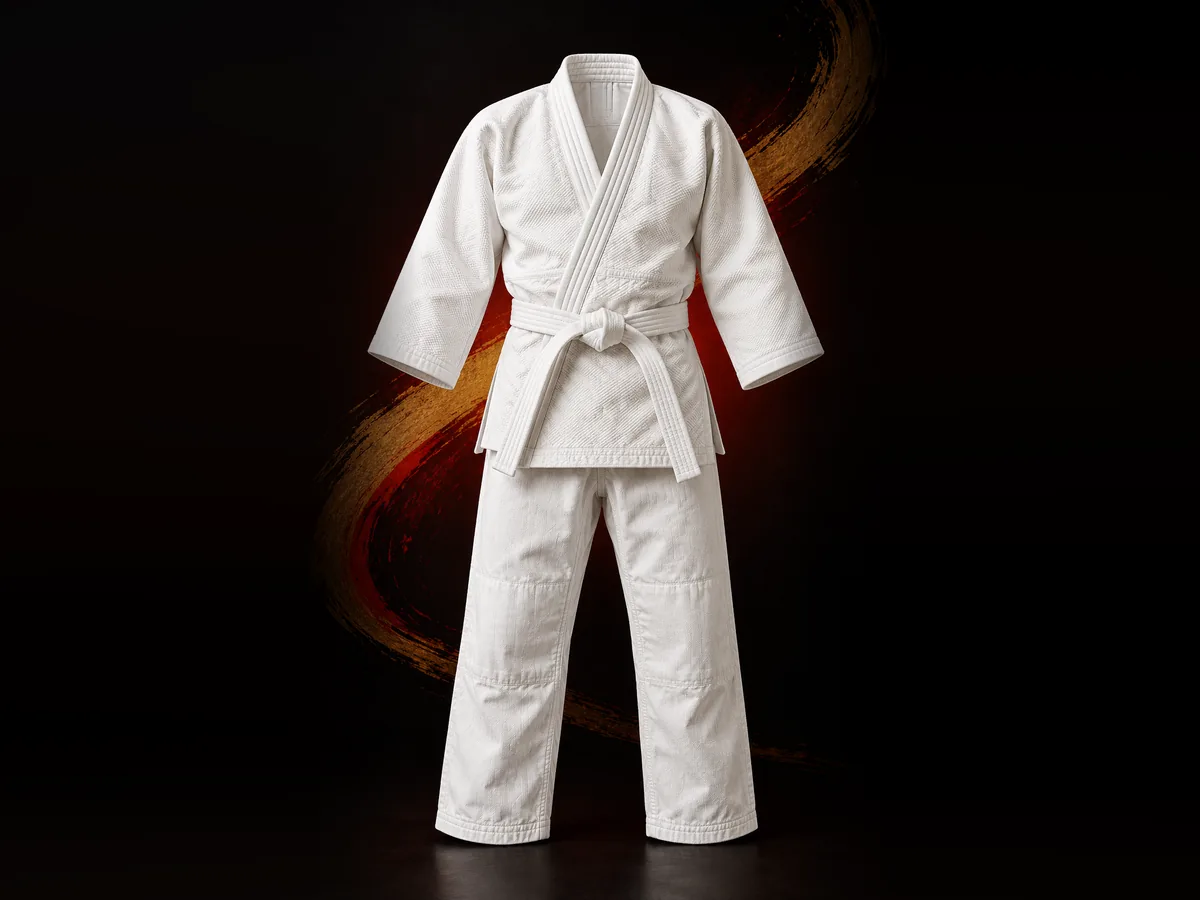
O uniforme de treino. Jigoro Kano criou o judogi nos anos 1900; Gichin Funakoshi adaptou-o ao karate.
Keikogi (gi) Ilustração WABUKAN
Outros nomes
稽古着 · gi; jūdōgi; karategi; dōgi
Origem e história
O uniforme moderno de treino vem do judo: Kanō Jigorō adaptou roupa de trabalho e roupa interior japonesa num casaco e calças resistentes no Kōdōkan, no fim do século XIX e início do XX. O karaté adotou uma versão mais leve nos anos 1920 e outras artes seguiram-no.
Casaco (uwagi), calças (zubon) e cinto (obi), normalmente de algodão. Os casacos de judo e BJJ são grossos e tecidos para aguentar as pegas; os de karaté são mais leves.
Técnicas básicas
atar o obi
dobrar o gi
kumikata (pegas no gi)
Treino
Uniformes e peças tradicionais “treinam-se” pela etiqueta: como vestir, dobrar, atar e cuidar deles ensina-se junto com a técnica e faz parte da cultura de cada arte.
Segurança
Mantenha-o limpo e seco, verifique costuras e nós e garanta que nada fica solto que possa prender dedos das mãos ou dos pés durante o treino.
Legalidade (informação geral)
Isto é equipamento de treino ou tradicional, não uma arma, e em geral é livre de comprar e ter. Clubes e federações podem ainda impor regras sobre modelos aprovados e estado de conservação. Informação geral, não aconselhamento jurídico.
Curiosidades
As regras de competição controlam o gi de perto: no judo verifica-se o comprimento das mangas e a espessura da gola, e o judo internacional usa um gi azul para um dos atletas desde os anos 1990.
The training uniform. Jigoro Kano created the judogi in the 1900s; Gichin Funakoshi adapted it for karate.
Keikogi (gi) WABUKAN illustration
Also known as
稽古着 · gi; jūdōgi; karategi; dōgi
Origin and history
The modern practice uniform comes from judo: Kanō Jigorō adapted Japanese work and under-clothing into a tough jacket and trousers at the Kōdōkan in the late 19th and early 20th century. Karate adopted a lighter version in the 1920s, and other arts followed.
Jacket (uwagi), trousers (zubon) and belt (obi), usually cotton. Judo and BJJ jackets are thick and woven to withstand gripping; karate gis are lighter and often longer in the sleeve.
Basic techniques
tying the obi
folding the gi
kumikata (grips on the gi)
Training
Uniforms and traditional items are “trained” through etiquette: how to wear, fold, tie and care for them is taught alongside technique and is part of each art’s culture.
Safety
Keep it clean and dry, check seams and knots, and make sure nothing hangs loose that could catch fingers or toes during training.
Legality (general information)
This is training or traditional equipment, not a weapon, and is generally free to buy and own. Clubs and federations may still set rules on approved models and condition. General information, not legal advice.
Did you know?
Competition rules regulate the gi closely: judo uses a sleeve-length and lapel-thickness check, and international judo has used a blue gi for one contestant since the 1990s.
El uniforme moderno de práctica procede del judo: Kanō Jigorō adaptó ropa de trabajo e interior japonesa en una chaqueta y pantalón resistentes en el Kōdōkan, a finales del siglo XIX y principios del XX. El karate adoptó una versión más ligera en los años 1920 y otras artes le siguieron.
Chaqueta (uwagi), pantalón (zubon) y cinturón (obi), normalmente de algodón. Las chaquetas de judo y BJJ son gruesas y tejidas para resistir los agarres; las de karate son más ligeras.
Técnicas básicas
atar el obi
doblar el gi
kumikata (agarres al gi)
Entrenamiento
Uniformes y piezas tradicionales se “entrenan” a través de la etiqueta: cómo ponerlos, doblarlos, atarlos y cuidarlos se enseña junto a la técnica y forma parte de la cultura de cada arte.
Seguridad
Manténgalo limpio y seco, revise costuras y nudos y asegúrese de que nada quede suelto que pueda engancharse en dedos de manos o pies durante el entrenamiento.
Legalidad (información general)
Es material de entrenamiento o tradicional, no un arma, y en general es libre de comprar y poseer. Clubes y federaciones pueden fijar normas sobre modelos homologados y estado de conservación. Información general, no asesoramiento jurídico.
Curiosidades
Los reglamentos controlan el gi de cerca: en judo se comprueba la longitud de las mangas y el grosor de la solapa, y el judo internacional usa un gi azul para uno de los competidores desde los años 1990.
L’uniforme moderne vient du judo : Kanō Jigorō adapte des vêtements de travail et de dessous japonais en une veste et un pantalon solides au Kōdōkan, à la fin du XIXe et au début du XXe siècle. Le karaté en adopte une version plus légère dans les années 1920, suivi par d’autres arts.
Veste (uwagi), pantalon (zubon) et ceinture (obi), généralement en coton. Les vestes de judo et de JJB sont épaisses et tissées pour résister aux saisies ; celles de karaté sont plus légères.
Techniques de base
nouer l’obi
plier le gi
kumikata (saisies du gi)
Entraînement
Uniformes et pièces traditionnelles s’« entraînent » par l’étiquette : comment les porter, les plier, les nouer et les entretenir s’enseigne avec la technique et fait partie de la culture de chaque art.
Sécurité
Gardez-le propre et sec, vérifiez coutures et nœuds et assurez-vous que rien ne pend qui pourrait accrocher les doigts ou les orteils à l’entraînement.
Légalité (information générale)
Il s’agit d’un équipement d’entraînement ou traditionnel, pas d’une arme, en général libre à l’achat et à la détention. Clubs et fédérations peuvent toutefois imposer des modèles homologués et un bon état. Information générale, pas un conseil juridique.
Le saviez-vous ?
Les règlements contrôlent le gi de près : en judo on vérifie la longueur des manches et l’épaisseur du revers, et le judo international utilise un gi bleu pour l’un des combattants depuis les années 1990.