
Historical archive
Bodhidharma and Shaolin
Did an Indian monk teach kung fu to the monks of Shaolin? The most famous origin story in the martial arts, and what the sources say.
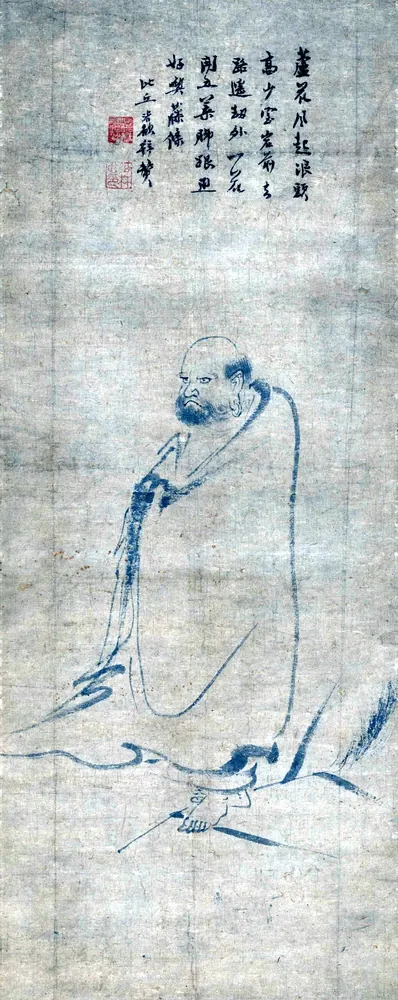
The legend
Legend
What history shows
Evidence
- Bodhidharma probably existed: a monk of that name appears in Yang Xuanzhi’s Record of the Buddhist Monasteries of Luoyang (547) and in Daoxuan’s Continued Biographies of Eminent Monks (645). Neither mentions any fighting art.
- The first link between Bodhidharma and martial exercise is the Yijin Jing (“Muscle-Tendon Change Classic”), a text dated to 1624, over a thousand years later. Historians such as Tang Hao and Matsuda Ryūchi reject the attribution.
- Shaolin monks really did fight: a stele at the monastery, dated 728, records how monks helped the future Tang emperor Li Shimin against Wang Shichong in 621. The documented Shaolin fighting styles (staff first, then empty hand) grow mainly in the Ming dynasty (1368–1644).
- The nine years facing the wall and the idea that “all Asian martial arts come from Shaolin” are later legends; arts such as Japanese jujutsu or Indian kalaripayattu have their own, separate histories.
In short: Bodhidharma is a real Zen patriarch; Bodhidharma as the inventor of kung fu is a 17th-century legend. Shaolin’s fighting monks are real, but their art grew centuries after him.
Images: public-domain or CC0 works credited under each picture, or original WABUKAN ink illustrations. Panels: the story told in numbered comic boxes.
Sources
- Bodhidharma — Wikipedia — en.wikipedia.org
- Yijin Jing — Wikipedia — en.wikipedia.org
- Shaolin Monastery — Wikipedia — en.wikipedia.org
- Shaolin kung fu — Wikipedia (Meir Shahar, The Shaolin Monastery, 2008) — en.wikipedia.org
- Bodhidharma Crossing the Yangzi on a Reed — Cleveland Museum of Art — clevelandart.org
Cite / use this content
You may quote and share this page with a link to WABUKAN. Suggested citation:
WABUKAN 和武館, «Bodhidharma and Shaolin», https://wabukan.com/lenda-bodhidharma-shaolin (accessed 2026-10-30).