
Historical archive
Musashi and the duel at Ganryūjima
An oar carved into a sword, a late arrival and one blow on a beach: the most famous duel in Japan, and how much of it we can actually know.
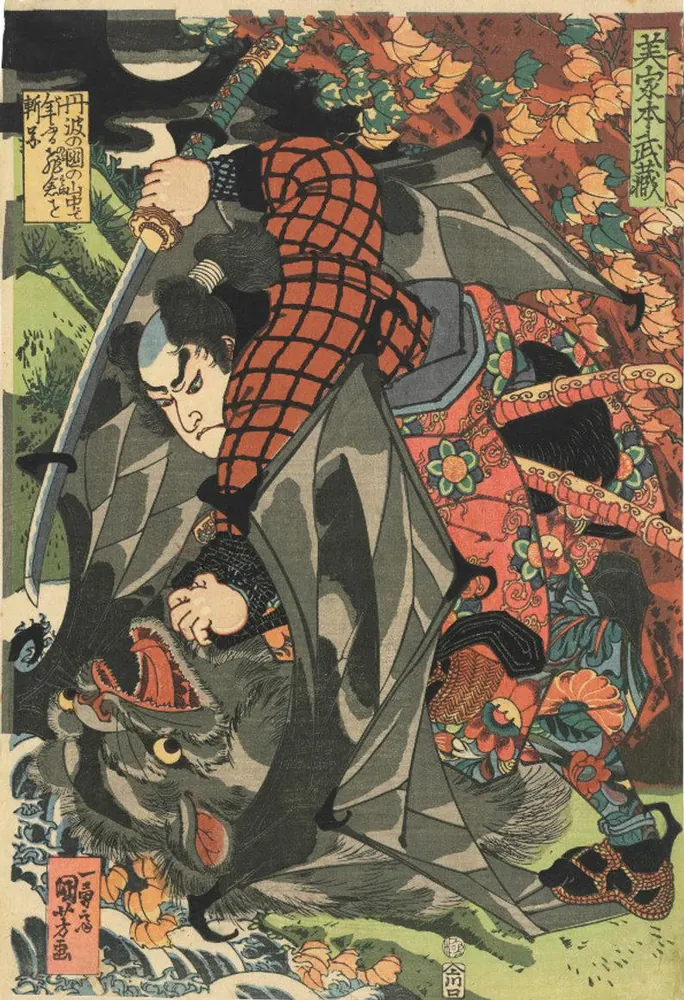
The legend
Legend
What history shows
Evidence
- Musashi (c. 1584–1645) is very real. In his own Book of Five Rings (1645) he says he fought more than sixty duels without losing, the first at thirteen against Arima Kihei — but he never describes Ganryūjima.
- The oldest account is the memorial stone raised in Kokura by his adopted son Miyamoto Iori in 1654: it says Musashi killed his opponent with a wooden sword, without the colourful details.
- The carved oar, the deliberate late arrival and the thrown scabbard come from biographies written in Kumamoto more than a century later — the Bukōden (1755) and the Nitenki (1776), which is also where Kojirō first gets the surname Sasaki — and were then popularised by Eiji Yoshikawa’s novel Musashi (1935–39) and the cinema.
- Even Kojirō’s age, school and the exact date are uncertain; the 13 April 1612 date is the traditional one.
In short: A real duel, probably won with a wooden sword. Most of the cinematic details were added between one and three centuries later.
Images: public-domain or CC0 works credited under each picture, or original WABUKAN ink illustrations. Panels: the story told in numbered comic boxes.
Sources
- Miyamoto Musashi, Gorin no sho (1645) — original text — www.miyamoto-musashi.org
- 小倉碑文 (Kokura hibun, 1654) — Wikipedia (ja) — ja.wikipedia.org
- 二天記 (Nitenki, 1776) — Wikipedia (ja) — ja.wikipedia.org
- Miyamoto Musashi — Wikipedia — en.wikipedia.org
- Sasaki Kojirō — Wikipedia — en.wikipedia.org
- Miyamoto Musashi — Wikimedia Commons — commons.wikimedia.org
Cite / use this content
You may quote and share this page with a link to WABUKAN. Suggested citation:
WABUKAN 和武館, «Musashi and the duel at Ganryūjima», https://wabukan.com/lenda-musashi-ganryujima (accessed 2026-10-30).