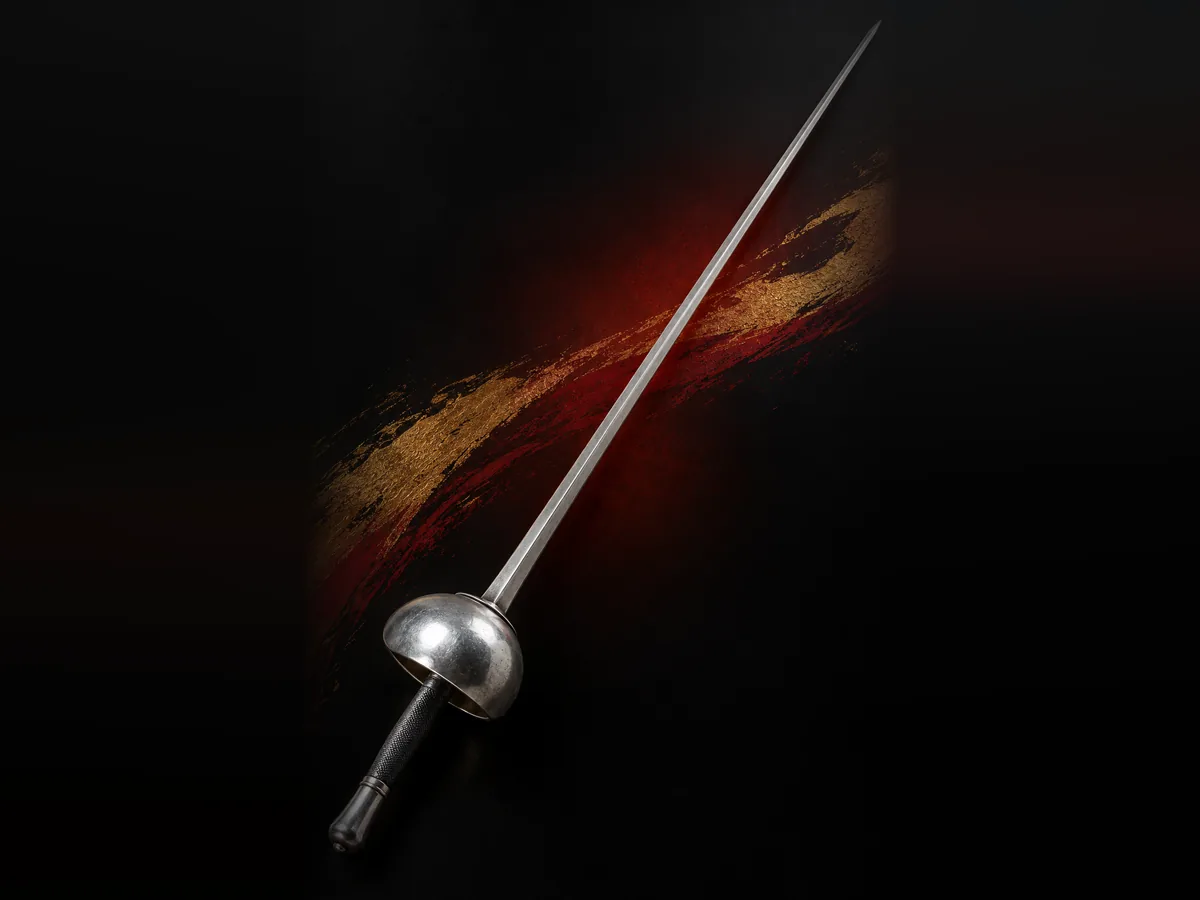
A arma mais pesada da esgrima, vinda da espada de duelo. O corpo todo é alvo e não há prioridade.
Espada (esgrima) Ilustração WABUKAN
Outros nomes
épée · épée; espada (fencing)
Origem e história
A espada de esgrima descende da espada de duelo do século XIX, quando os duelos muitas vezes acabavam ao primeiro sangue. Daí as regras: todo o corpo é alvo e não há prioridade. É olímpica desde 1900.
Lâmina triangular mais rígida até 90 cm com copa grande; peso total até 775 g. A ponta elétrica tem de ser pressionada com pelo menos 750 g de força para marcar.
Técnicas básicas
contra-ataque ao braço e à mão
golpe de paragem
toque duplo
Treino
Os principiantes aprendem primeiro a pega, a postura e o trabalho de pés; depois as linhas de corte e de estocada em formas a solo ou exercícios, normalmente com uma réplica de madeira ou sem fio. Seguem-se exercícios a pares, devagar, antes de qualquer combate livre com proteções.
Segurança
Treine com réplicas de madeira, sem fio ou aprovadas pelo clube; lâminas verdadeiras só para praticantes experientes e com supervisão. Verifique lâmina, cabo e montagens antes de cada sessão, mantenha um espaço livre de pelo menos dois comprimentos da arma e nunca corte na direção de pessoas.
Legalidade (informação geral)
Espadas, facas e outras armas de lâmina são reguladas de forma muito diferente de país para país (e por vezes de região para região): ter uma em casa é muitas vezes permitido, mas trazê-la na via pública, comprá-la abaixo de certa idade ou importá-la pode estar limitado ou proibido. Os praticantes costumam transportá-las em estojo fechado, fora de alcance e diretamente entre casa e dojo. Isto é informação geral, não aconselhamento jurídico: confirme a lei onde vive.
Curiosidades
Dois atiradores que tocam com menos de 1/25 de segundo de diferença marcam ambos, um toque duplo impossível no florete e no sabre.
The heaviest fencing weapon, from the duelling sword. The whole body is a target and there is no right of way.
Épée WABUKAN illustration
Also known as
épée; espada (fencing)
Origin and history
The épée descends from the duelling sword of the 19th century, when duels were often fought to first blood. Hence its rules: the whole body is target and there is no right of way. It has been Olympic since 1900.
A stiffer, triangular blade of up to 90 cm with a large bell guard; total weight up to 775 g. The electric tip must be pressed with at least 750 g of force to register a hit.
Basic techniques
counter-attack to the arm and hand
stop hit
double touch
Training
Beginners learn grip, posture and footwork first, then cutting and thrusting lines in solo forms or drills, usually with a wooden or blunt trainer. Paired drills with a partner come next, at slow speed, before any free sparring with protective gear.
Safety
Train with wooden, blunt or club-approved trainers; keep live blades for experienced practitioners under supervision. Check the blade, handle and fittings before every session, keep a clear space of at least two weapon lengths and never cut towards people.
Legality (general information)
Swords, knives and other edged weapons are regulated very differently from country to country (and sometimes from region to region): owning one at home is often allowed, while carrying it in public, buying it under a certain age or importing it may be restricted or banned. Practitioners usually transport them cased, out of reach and straight between home and dojo. This is general information, not legal advice: check the law where you live.
Did you know?
Two fencers who hit within 1/25 of a second of each other both score, a double touch that is impossible in foil and sabre.
El arma olímpica del duelo, con todo el cuerpo como blanco.
Espada (esgrima) Ilustración WABUKAN
Otros nombres
épée · épée; espada (fencing)
Origen e historia
La espada de esgrima desciende de la espada de duelo del siglo XIX, cuando los duelos solían terminar a primera sangre. De ahí sus reglas: todo el cuerpo es blanco y no hay prioridad. Es olímpica desde 1900.
Hoja triangular más rígida de hasta 90 cm con cazoleta grande; peso total de hasta 775 g. La punta eléctrica debe pulsarse con al menos 750 g de fuerza para marcar.
Técnicas básicas
contraataque al brazo y la mano
golpe de detención
tocado doble
Entrenamiento
Los principiantes aprenden primero el agarre, la postura y el juego de pies; después las líneas de corte y de estocada en formas en solitario o ejercicios, normalmente con una réplica de madera o roma. Luego vienen los ejercicios por parejas, despacio, antes de cualquier combate libre con protecciones.
Seguridad
Entrene con réplicas de madera, romas o aprobadas por el club; las hojas reales solo para practicantes expertos y bajo supervisión. Revise hoja, empuñadura y montura antes de cada sesión, mantenga un espacio libre de al menos dos largos del arma y nunca corte hacia personas.
Legalidad (información general)
Las espadas, cuchillos y demás armas blancas se regulan de forma muy distinta según el país (y a veces según la región): tener una en casa suele estar permitido, pero llevarla en la vía pública, comprarla por debajo de cierta edad o importarla puede estar limitado o prohibido. Los practicantes suelen transportarlas en funda cerrada, fuera de alcance y directamente entre casa y dojo. Es información general, no asesoramiento jurídico: consulte la ley donde vive.
Curiosidades
Dos tiradores que tocan con menos de 1/25 de segundo de diferencia puntúan ambos, un tocado doble imposible en florete y sable.
L’arme olympique du duel, tout le corps étant cible.
Épée Illustration WABUKAN
Autres noms
épée; espada (fencing)
Origine et histoire
L’épée d’escrime descend de l’épée de duel du XIXe siècle, quand les duels se livraient souvent au premier sang. D’où ses règles : tout le corps est cible et il n’y a pas de priorité. Elle est olympique depuis 1900.
Lame triangulaire plus rigide jusqu’à 90 cm avec grande coquille ; poids total jusqu’à 775 g. La pointe électrique doit être enfoncée avec au moins 750 g de force pour signaler une touche.
Techniques de base
contre-attaque au bras et à la main
coup d’arrêt
coup double
Entraînement
Les débutants apprennent d’abord la prise, la posture et le jeu de jambes, puis les lignes de coupe et d’estoc en formes solo ou en exercices, généralement avec une arme d’entraînement en bois ou émoussée. Viennent ensuite les exercices à deux, lentement, avant tout assaut libre avec protections.
Sécurité
Entraînez-vous avec des répliques en bois, émoussées ou homologuées par le club ; les lames vives sont réservées aux pratiquants confirmés et encadrés. Vérifiez lame, poignée et montures avant chaque séance, gardez un espace libre d’au moins deux longueurs d’arme et ne coupez jamais vers quelqu’un.
Légalité (information générale)
Les épées, couteaux et autres armes blanches sont réglementés très différemment d’un pays à l’autre (parfois d’une région à l’autre) : en posséder une chez soi est souvent permis, mais la porter dans la rue, l’acheter avant un certain âge ou l’importer peut être limité ou interdit. Les pratiquants la transportent en général dans un étui fermé, hors de portée et directement entre domicile et dojo. Ceci est une information générale, pas un conseil juridique : vérifiez la loi là où vous vivez.
Le saviez-vous ?
Deux escrimeurs qui touchent à moins de 1/25 de seconde marquent tous deux, un coup double impossible au fleuret et au sabre.