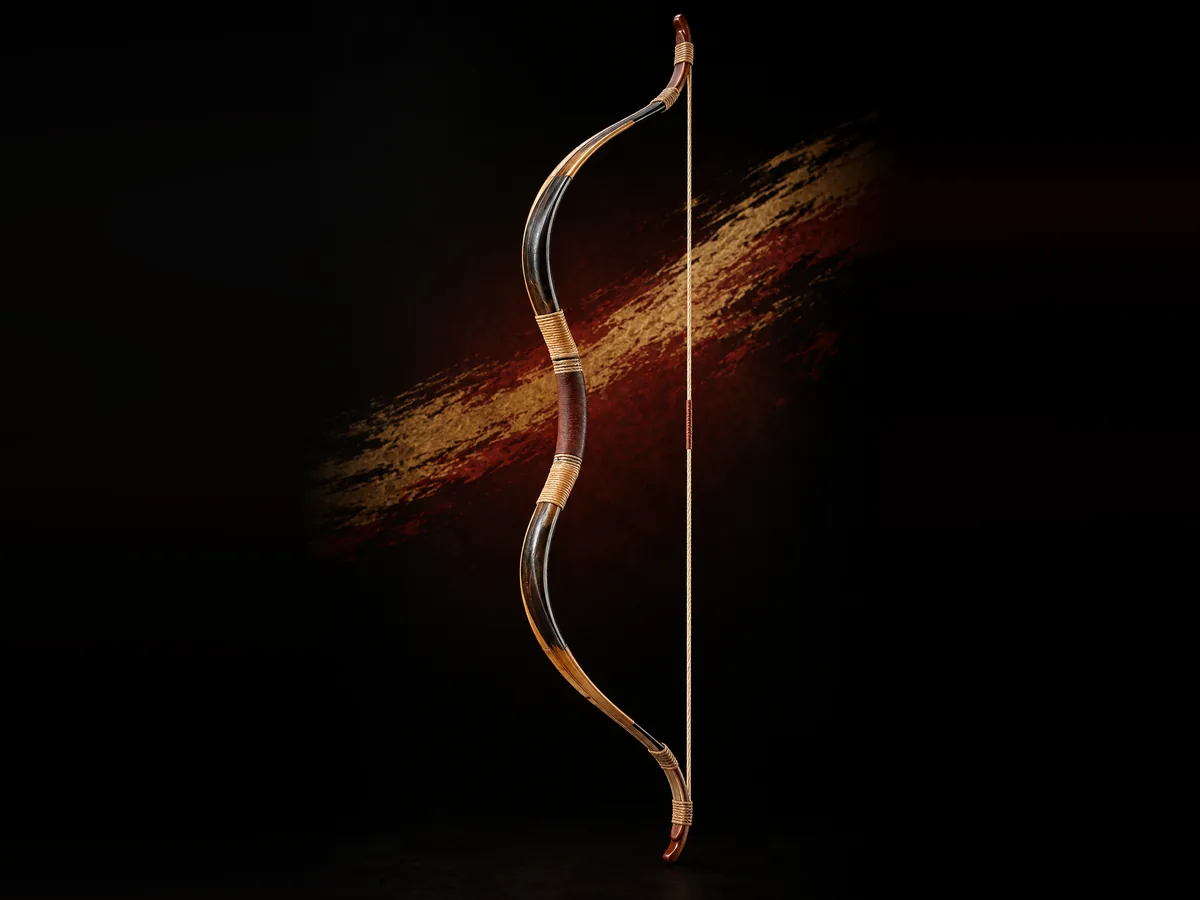
O arco coreano de chifre, curto e muito potente, feito de chifre, bambu e tendão. O tiro com arco tradicional ainda se pratica em campos próprios.
Gakgung Ilustração WABUKAN
Outros nomes
角弓 · gakgung; Korean horn bow; gungdo (archery)
Origem e história
O arco coreano de chifre usa-se desde o período dos Três Reinos e era o orgulho dos exames militares de Joseon. O tiro com arco tradicional (gungdo) ainda se pratica nos pavilhões de tiro (hwalteo), com alvos a 145 m.
Arco compósito curto e muito recurvo, de chifre de búfalo, bambu, madeira e tendão colados com cola de peixe, com cerca de 1,2 m. Os arqueiros puxam com um anel de polegar (gakji).
Técnicas básicas
posição
puxar com anel de polegar
soltar
tiro tradicional ao alvo a 145 m
Treino
As armas de distância treinam-se numa carreira com anteparo seguro: postura, pega, largada e respiração repetem-se até o movimento ser igual em todas as vezes. A distância só aumenta quando a forma está estável.
Segurança
Só atire ou lance numa carreira supervisionada com anteparo seguro, nunca na direção de algo que não queira atingir, e nunca vá buscar setas ou lâminas enquanto outros estão a atirar.
Legalidade (informação geral)
Arcos, lâminas de arremesso e armas semelhantes são muitas vezes legais de ter, mas só podem ser usados em carreiras de tiro aprovadas ou segundo as regras do clube; algumas armas de arremesso (como shuriken ou estrelas de lançamento) são proibidas em vários países. Isto é informação geral, não aconselhamento jurídico: confirme a lei local e as regras da sua federação.
Curiosidades
Os alvos do tiro coreano tradicional ficam a cerca de 145 metros, muito mais longe do que no tiro olímpico (70 m).
The Korean horn bow, short and very powerful, made of horn, bamboo and sinew. Korean archery is still practised on traditional ranges.
Gakgung WABUKAN illustration
Also known as
角弓 · gakgung; Korean horn bow; gungdo (archery)
Origin and history
The Korean horn bow has been used since the Three Kingdoms period and was the pride of Joseon military examinations. Traditional archery (gungdo) is still practised at archery pavilions (hwalteo), shooting at 145 m (about 476 ft) targets.
A short, strongly recurved composite bow of water-buffalo horn, bamboo, wood and sinew glued with fish glue, about 1.2 m long. Archers draw with a thumb ring (gakji).
Basic techniques
stance
draw with thumb ring
release
traditional 145 m target shooting
Training
Ranged weapons are trained on a range with a safe backstop: stance, grip, release and breathing are repeated until the movement is identical every time. Distance increases only after the form is stable.
Safety
Only shoot or throw on a supervised range with a safe backstop, never towards anything you would not want to hit, and never retrieve while others are shooting or throwing.
Legality (general information)
Bows, throwing blades and similar weapons are often legal to own but may only be used on approved ranges or under club rules; some throwing weapons (such as shuriken or throwing stars) are banned outright in several countries. This is general information, not legal advice: check local law and your federation’s rules.
Did you know?
Traditional Korean archery targets stand at about 145 metres, much farther than in Olympic archery (70 m).
El arco coreano de cuerno se usa desde el periodo de los Tres Reinos y era el orgullo de los exámenes militares de Joseon. El tiro tradicional (gungdo) aún se practica en los pabellones de tiro (hwalteo), con dianas a 145 m.
Arco compuesto corto y muy recurvado, de cuerno de búfalo, bambú, madera y tendón pegados con cola de pescado, de unos 1,2 m. Los arqueros tensan con un anillo de pulgar (gakji).
Técnicas básicas
postura
tensar con anillo de pulgar
suelta
tiro tradicional a 145 m
Entrenamiento
Las armas de distancia se practican en un campo con parapeto seguro: postura, agarre, suelta y respiración se repiten hasta que el movimiento sea idéntico cada vez. La distancia solo aumenta cuando la forma es estable.
Seguridad
Dispare o lance solo en un campo supervisado con parapeto seguro, nunca hacia algo que no quiera alcanzar, y nunca recoja mientras otros están tirando.
Legalidad (información general)
Arcos, armas arrojadizas y similares suelen ser legales de poseer, pero solo pueden usarse en campos autorizados o según las normas del club; algunas armas arrojadizas (como los shuriken o estrellas) están prohibidas en varios países. Es información general, no asesoramiento jurídico: consulte la ley local y las normas de su federación.
Curiosidades
Las dianas del tiro coreano tradicional están a unos 145 metros, mucho más lejos que en el tiro olímpico (70 m).
L’arc coréen en corne est utilisé depuis l’époque des Trois Royaumes et faisait la fierté des examens militaires de Joseon. Le tir traditionnel (gungdo) se pratique encore dans les pavillons de tir (hwalteo), sur des cibles à 145 m.
Arc composite court et très recourbé, en corne de buffle, bambou, bois et tendon collés à la colle de poisson, d’environ 1,2 m. Les archers tirent avec un anneau de pouce (gakji).
Techniques de base
posture
tirer avec l’anneau de pouce
lâcher
tir traditionnel à 145 m
Entraînement
Les armes à distance se travaillent sur un pas de tir avec une butte sûre : posture, prise, lâcher et respiration se répètent jusqu’à ce que le geste soit identique à chaque fois. La distance n’augmente qu’une fois la forme stabilisée.
Sécurité
Ne tirez ou ne lancez que sur un pas de tir encadré avec une butte sûre, jamais vers ce que vous ne voulez pas atteindre, et n’allez jamais récupérer pendant que d’autres tirent.
Légalité (information générale)
Arcs, lames de lancer et armes similaires sont souvent légaux à détenir mais ne peuvent être utilisés que sur des pas de tir agréés ou selon les règles du club ; certaines armes de lancer (comme les shuriken ou étoiles) sont interdites dans plusieurs pays. Ceci est une information générale, pas un conseil juridique : vérifiez la loi locale et les règles de votre fédération.
Le saviez-vous ?
Les cibles du tir coréen traditionnel sont à environ 145 mètres, bien plus loin qu’au tir olympique (70 m).