De Nagoya a Paris: um outono de artes marciais em três semanas
· 3 min de leitura
Entre o fim de setembro e meados de outubro de 2026, três das artes marciais mais praticadas do mundo tiveram um calendário cheio. Karaté, judo e taekwondo encontraram-se nos Jogos Asiáticos de Aichi-Nagoya, no Japão, e o taekwondo voou depois para um Grand Prix em Paris. Uma atleta liga os dois palcos: uma lutadora chinesa que ganhou no Japão e, nove dias depois, voltou a ganhar em França.
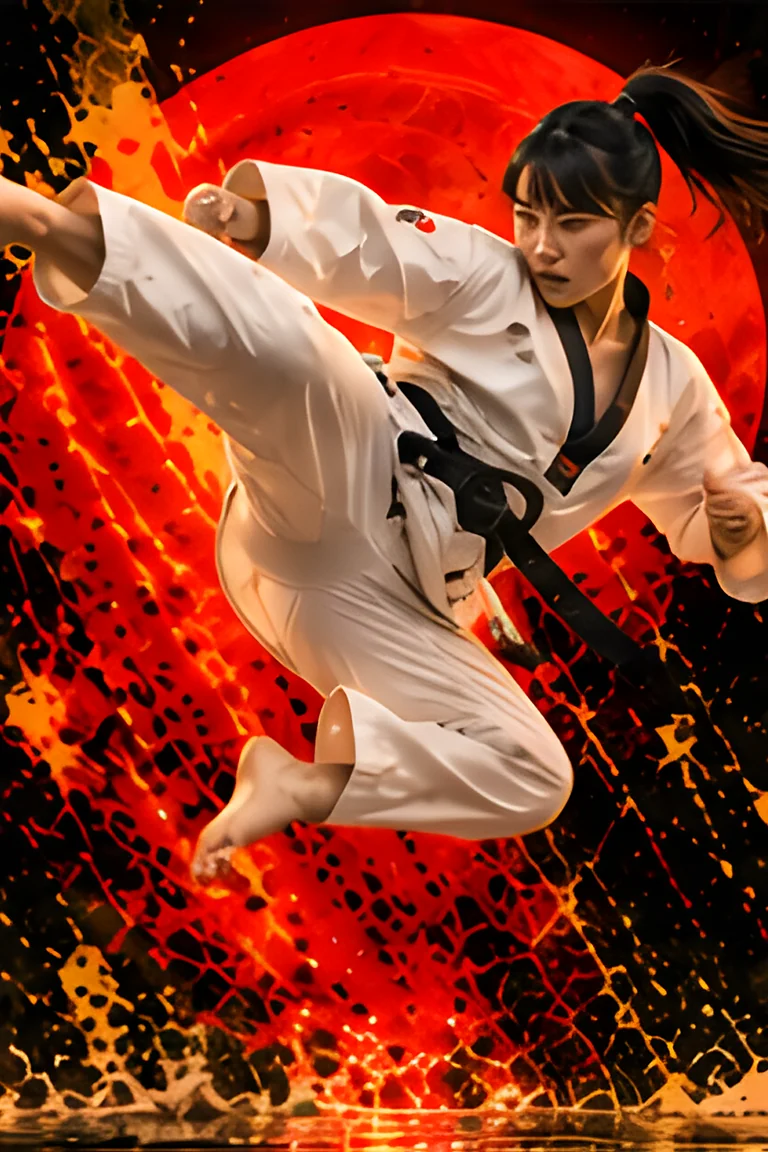
No taekwondo, um pontapé à cabeça vale mais pontos do que um ao corpo. Ilustração WABUKAN
Karaté: 22 países no pódio
O karaté abriu o programa das artes marciais, de 20 a 23 de setembro, no Ginásio de Toyohashi, com atletas de 34 países. A Federação Mundial de Karaté destacou um número: 22 desses 34 países ganharam pelo menos uma medalha. O Irão liderou o medalheiro com cinco medalhas, duas de ouro, e o Cazaquistão também somou cinco. Os anfitriões ganharam quatro, incluindo os dois títulos de kata, de Kakeru Nishiyama e Maho Ono. O karaté nasceu em Okinawa, no sul do Japão; nuns Jogos em casa, a sua forma tradicional, o kata, voltou a ser japonesa.
Judo: o Japão em casa
De 30 de setembro a 3 de outubro, a Aichi International Arena recebeu o judo: 199 judocas de 32 países. O Japão ganhou oito títulos individuais e, no último dia, ganhou também a prova de equipas mistas, batendo o Cazaquistão por 4–0 na final. Foi o terceiro título asiático seguido do Japão em equipas mistas, desde que a prova foi criada em Jacarta, em 2018. O Usbequistão foi a segunda nação, com dois ouros. Logo no dia seguinte, 4 de outubro, começava o Mundial de Baku.
Taekwondo: a dobradinha de Ma Jingyue
A 2 de outubro, no torneio de taekwondo, a chinesa Ma Jingyue conquistou o ouro dos Jogos Asiáticos. Na mesma noite, o usbeque Jasurbek Jaysunov ganhou o seu título asiático. Ambos seguiram diretamente para a etapa seguinte do circuito mundial: o Grand Prix de Paris, no Palais des Sports Marcel Cerdan, em Levallois-Perret, às portas da capital francesa.
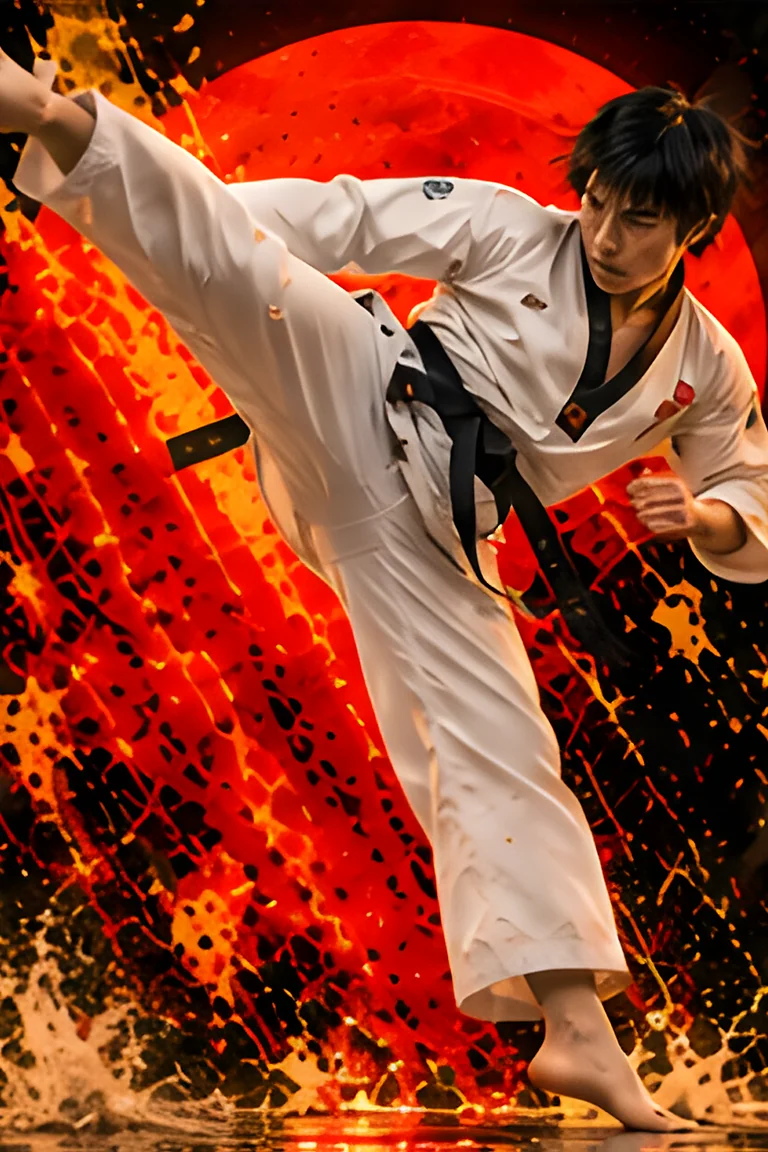
Hoje, os combates de taekwondo disputam-se à melhor de três rondas. Ilustração WABUKAN
Em Paris, Ma venceu os −49 kg femininos, batendo a coreana Kim Hyang-gi por duas rondas a uma na final. Não foi fácil: três dos seus cinco combates foram decididos numa terceira ronda. Jaysunov chegou à final masculina de −80 kg, mas encontrou o campeão do mundo, o brasileiro Henrique Marques, que ganhou por 2–0. Para Marques foi a coleção completa em 2026: prata no Grand Prix de Roma, bronze em Muju, ouro em Paris. O Brasil e o Irão terminaram o fim de semana empatados, com dois ouros cada.
Linha do tempo
20–23 setKaraté nos Jogos Asiáticos, Ginásio de Toyohashi: 34 países.
30 set – 3 outJudo na Aichi International Arena: 199 judocas de 32 países.
2 outTaekwondo: ouros asiáticos para Ma Jingyue e Jasurbek Jaysunov.
11 outGrand Prix de Paris: Ma volta a ganhar; Henrique Marques vence Jaysunov.
Porque importa
Para quem acompanha, estas três semanas mostram como o calendário das artes marciais se tornou ligado: os mesmos atletas passam de uns Jogos continentais para provas mundiais em poucos dias. Para quem pratica, lembram o que está por trás dos resultados: rondas decisivas, uma final decidida numa terceira ronda, um kata julgado movimento a movimento. O judo e o taekwondo já estão a caminho de Los Angeles 2028.
From Nagoya to Paris: an autumn of martial arts in three weeks
· 3 min read
Between late September and mid-October 2026, three of the most practised martial arts in the world had a crowded calendar. Karate, judo and taekwondo met at the Asian Games in Aichi-Nagoya, Japan, and taekwondo then flew to Paris for a Grand Prix. One athlete links the two stages: a Chinese fighter who won in Japan and, nine days later, won again in France.
In taekwondo, a kick to the head scores more than one to the body. WABUKAN illustration
Karate: 22 countries on the podium
Karate opened the martial arts programme, from 20 to 23 September at the Toyohashi Gymnasium, with athletes from 34 countries. The World Karate Federation highlighted one figure: 22 of those 34 countries won at least one medal. Iran topped the table with five medals, two of them gold, and Kazakhstan also won five. The hosts won four, including the two kata titles, for Kakeru Nishiyama and Maho Ono. Karate was born in Okinawa, in the south of Japan; at a home Games, its traditional form, the kata, again belonged to Japan.
Judo: Japan at home
From 30 September to 3 October the Aichi International Arena hosted judo: 199 judoka from 32 nations. Japan won eight individual titles, and on the last day it also won the mixed team event, beating Kazakhstan 4–0 in the final. It was Japan’s third Asian Games mixed team title in a row, since the event was introduced in Jakarta in 2018. Uzbekistan was the second nation, with two golds. The very next day, 4 October, the World Championships began in Baku.
Taekwondo: the double of Ma Jingyue
On 2 October, in the taekwondo tournament, China’s Ma Jingyue won the Asian Games gold. The same evening Uzbekistan’s Jasurbek Jaysunov won his own Asian title. Both went straight to the next stop on the world circuit: the Paris Grand Prix, at the Palais des Sports Marcel Cerdan in Levallois-Perret, just outside the French capital.
Today, taekwondo contests are decided over the best of three rounds. WABUKAN illustration
In Paris, Ma won the women’s −49 kg, beating Korea’s Kim Hyang-gi by two rounds to one in the final. It was not easy: three of her five contests went to a deciding third round. Jaysunov reached the men’s −80 kg final but met the world champion, Brazil’s Henrique Marques, who won 2–0. For Marques it completed a full set in 2026: silver at the Rome Grand Prix, bronze in Muju, gold in Paris. Brazil and Iran finished the weekend level, with two golds each.
Timeline
20–23 setKarate at the Asian Games, Toyohashi Gymnasium: 34 countries.
30 set – 3 outJudo at the Aichi International Arena: 199 judoka from 32 nations.
2 outTaekwondo: Asian gold for Ma Jingyue and Jasurbek Jaysunov.
11 outParis Grand Prix: Ma wins again; Henrique Marques beats Jaysunov.
Why it matters
For fans, these three weeks show how connected the martial arts calendar has become: the same athletes move from continental Games to world events in a matter of days. For practitioners, they are also a reminder of what lies behind the results: deciding rounds, a final decided in a third round, a kata judged move by move. Judo and taekwondo are already on the road to Los Angeles 2028.
De Nagoya a París: un otoño de artes marciales en tres semanas
· 3 min de lectura
Entre finales de septiembre y mediados de octubre de 2026, tres de las artes marciales más practicadas del mundo tuvieron un calendario lleno. Karate, judo y taekwondo se encontraron en los Juegos Asiáticos de Aichi-Nagoya, en Japón, y el taekwondo voló después a un Grand Prix en París. Una atleta une los dos escenarios: una luchadora china que ganó en Japón y, nueve días después, volvió a ganar en Francia.
En el taekwondo, una patada a la cabeza vale más puntos que una al cuerpo. Ilustración WABUKAN
Karate: 22 países en el podio
El karate abrió el programa de artes marciales, del 20 al 23 de septiembre, en el Gimnasio de Toyohashi, con atletas de 34 países. La Federación Mundial de Karate destacó una cifra: 22 de esos 34 países ganaron al menos una medalla. Irán encabezó el medallero con cinco medallas, dos de oro, y Kazajistán también sumó cinco. Los anfitriones ganaron cuatro, incluidos los dos títulos de kata, de Kakeru Nishiyama y Maho Ono. El karate nació en Okinawa, en el sur de Japón; en unos Juegos en casa, su forma tradicional, el kata, volvió a ser japonesa.
Judo: Japón en casa
Del 30 de septiembre al 3 de octubre, el Aichi International Arena acogió el judo: 199 judocas de 32 países. Japón ganó ocho títulos individuales y, el último día, también la prueba por equipos mixtos, al vencer a Kazajistán por 4–0 en la final. Fue su tercer título asiático seguido por equipos mixtos, desde que la prueba se creó en Yakarta en 2018. Uzbekistán fue la segunda nación, con dos oros. Justo al día siguiente, el 4 de octubre, empezaba el Mundial de Bakú.
Taekwondo: el doblete de Ma Jingyue
El 2 de octubre, en el torneo de taekwondo, la china Ma Jingyue ganó el oro de los Juegos Asiáticos. Esa misma noche, el uzbeko Jasurbek Jaysunov ganó su título asiático. Ambos fueron directamente a la siguiente parada del circuito mundial: el Grand Prix de París, en el Palais des Sports Marcel Cerdan de Levallois-Perret, a las puertas de la capital francesa.
Hoy, los combates de taekwondo se disputan al mejor de tres asaltos. Ilustración WABUKAN
En París, Ma ganó los −49 kg femeninos, venciendo a la coreana Kim Hyang-gi por dos asaltos a uno en la final. No fue fácil: tres de sus cinco combates se decidieron en un tercer asalto. Jaysunov llegó a la final masculina de −80 kg, pero se encontró con el campeón del mundo, el brasileño Henrique Marques, que ganó 2–0. Para Marques fue la colección completa en 2026: plata en el Grand Prix de Roma, bronce en Muju y oro en París. Brasil e Irán terminaron el fin de semana empatados, con dos oros cada uno.
Cronología
20–23 setKarate en los Juegos Asiáticos, Gimnasio de Toyohashi: 34 países.
30 set – 3 outJudo en el Aichi International Arena: 199 judocas de 32 países.
2 outTaekwondo: oros asiáticos para Ma Jingyue y Jasurbek Jaysunov.
11 outGrand Prix de París: Ma vuelve a ganar; Henrique Marques vence a Jaysunov.
Por qué importa
Para los aficionados, estas tres semanas muestran lo conectado que está hoy el calendario de las artes marciales: los mismos atletas pasan de unos Juegos continentales a pruebas mundiales en pocos días. Para quienes practican, recuerdan lo que hay detrás de los resultados: asaltos decisivos, una final decidida en un tercer asalto, un kata juzgado movimiento a movimiento. El judo y el taekwondo ya van camino de Los Ángeles 2028.
De Nagoya à Paris : un automne d’arts martiaux en trois semaines
· 3 min de lecture
Entre la fin septembre et la mi-octobre 2026, trois des arts martiaux les plus pratiqués au monde ont eu un calendrier chargé. Karaté, judo et taekwondo se sont retrouvés aux Jeux asiatiques d’Aichi-Nagoya, au Japon, puis le taekwondo s’est envolé pour un Grand Prix à Paris. Une athlète relie les deux scènes : une combattante chinoise qui a gagné au Japon et, neuf jours plus tard, a regagné en France.
En taekwondo, un coup de pied à la tête rapporte plus qu’un coup au corps. Illustration WABUKAN
Karaté : 22 pays sur le podium
Le karaté a ouvert le programme des arts martiaux, du 20 au 23 septembre, au gymnase de Toyohashi, avec des athlètes de 34 pays. La Fédération mondiale de karaté a souligné un chiffre : 22 de ces 34 pays ont gagné au moins une médaille. L’Iran a dominé le tableau avec cinq médailles, dont deux en or, et le Kazakhstan en a aussi gagné cinq. Les hôtes en ont remporté quatre, dont les deux titres de kata, pour Kakeru Nishiyama et Maho Ono. Le karaté est né à Okinawa, dans le sud du Japon ; lors de Jeux à domicile, sa forme traditionnelle, le kata, est restée japonaise.
Judo : le Japon à domicile
Du 30 septembre au 3 octobre, l’Aichi International Arena a accueilli le judo : 199 judokas de 32 nations. Le Japon a remporté huit titres individuels et, le dernier jour, aussi l’épreuve par équipes mixtes, en battant le Kazakhstan 4–0 en finale. C’était son troisième titre asiatique d’affilée par équipes mixtes, depuis la création de l’épreuve à Jakarta en 2018. L’Ouzbékistan a été la deuxième nation, avec deux titres. Dès le lendemain, le 4 octobre, commençaient les Championnats du monde de Bakou.
Taekwondo : le doublé de Ma Jingyue
Le 2 octobre, au tournoi de taekwondo, la Chinoise Ma Jingyue a remporté l’or des Jeux asiatiques. Le même soir, l’Ouzbek Jasurbek Jaysunov a gagné son titre asiatique. Tous deux sont partis directement vers l’étape suivante du circuit mondial : le Grand Prix de Paris, au Palais des Sports Marcel Cerdan de Levallois-Perret, aux portes de la capitale.
Aujourd’hui, les combats de taekwondo se disputent au meilleur des trois rounds. Illustration WABUKAN
À Paris, Ma a gagné les −49 kg féminins en battant la Coréenne Kim Hyang-gi deux rounds à un en finale. Ce ne fut pas facile : trois de ses cinq combats se sont joués dans un troisième round décisif. Jaysunov a atteint la finale masculine des −80 kg mais a trouvé face à lui le champion du monde, le Brésilien Henrique Marques, vainqueur 2–0. Pour Marques, c’est la collection complète en 2026 : argent au Grand Prix de Rome, bronze à Muju, or à Paris. Le Brésil et l’Iran ont terminé le week-end à égalité, avec deux titres chacun.
Chronologie
20–23 setKaraté aux Jeux asiatiques, gymnase de Toyohashi : 34 pays.
30 set – 3 outJudo à l’Aichi International Arena : 199 judokas de 32 nations.
2 outTaekwondo : l’or asiatique pour Ma Jingyue et Jasurbek Jaysunov.
11 outGrand Prix de Paris : Ma gagne encore ; Henrique Marques bat Jaysunov.
Pourquoi c’est important
Pour les passionnés, ces trois semaines montrent à quel point le calendrier des arts martiaux est devenu connecté : les mêmes athlètes passent de Jeux continentaux à des épreuves mondiales en quelques jours. Pour les pratiquants, elles rappellent ce qu’il y a derrière les résultats : des rounds décisifs, une finale tranchée au troisième round, un kata jugé mouvement par mouvement. Le judo et le taekwondo sont déjà sur la route de Los Angeles 2028.