Bielsko-Biała 2026: os novos campeões do mundo do karaté
· 3 min de leitura
Há dois anos, em Veneza-Jesolo, dois adolescentes japoneses foram campeões do mundo de kata em cadetes. Em outubro de 2026, na cidade polaca de Bielsko-Biała, voltaram um escalão acima e repetiram. A história deles resume o Mundial de cadetes, juniores e sub-21 de karaté, que terminou a 18 de outubro: os jovens que vão encher os pódios de seniores daqui a poucos anos, e algumas surpresas pelo caminho.
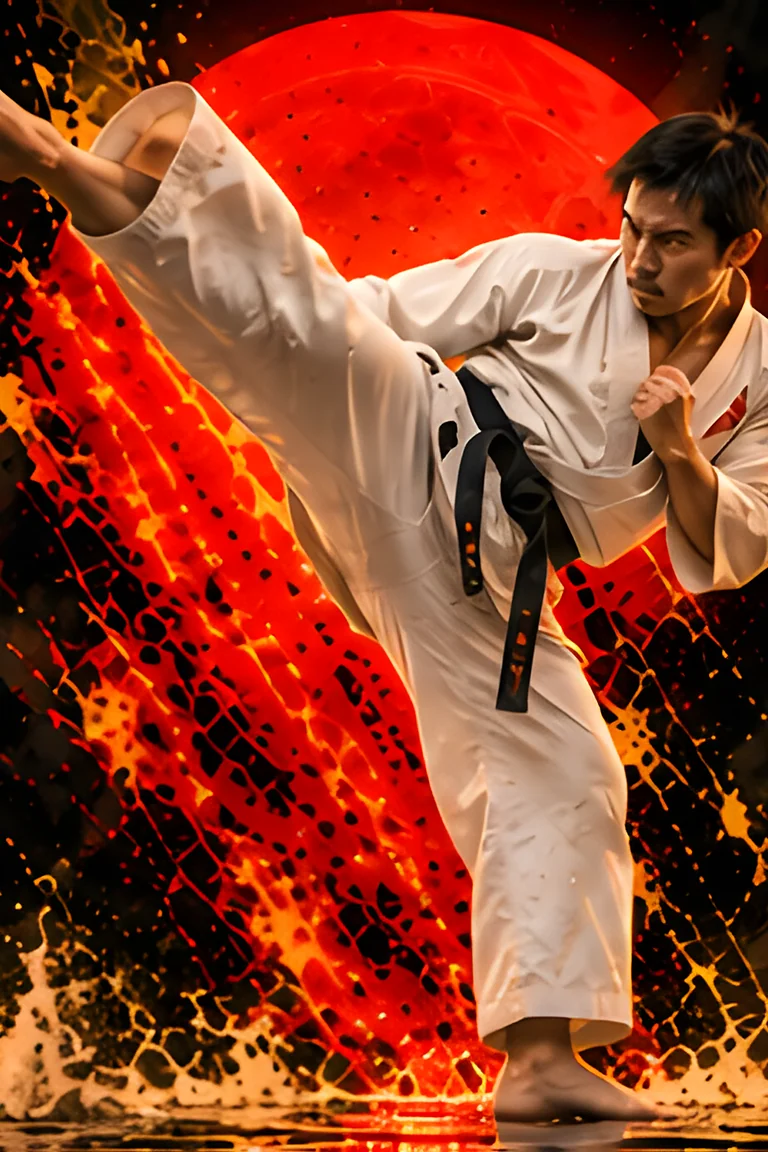
Um pontapé alto: no kata, cada técnica é julgada pela precisão, potência e ritmo. Ilustração WABUKAN
Kata: as mesmas caras, um degrau acima
Os kata são sequências fixas de técnicas contra adversários imaginários, avaliadas por um painel pela precisão, potência, ritmo e compreensão do movimento. Wakana Ito venceu o título feminino de juniores ao bater a austríaca Tamara Lehner por 4–1 na final, depois de uma série de vitórias por 5–0. Disse sentir-se «muito importante» por voltar a ganhar depois de Veneza, e apontou como modelo Kiyou Shimizu, bicampeã do mundo e medalha de prata olímpica, natural da sua terra.
Takeru Hamazawa ganhou o título masculino de juniores. O adversário na final foi o português Vasco Mateus, que ficou com a prata; o resultado foi 4–1. Hamazawa admitiu que andava a perder nos campeonatos nacionais de juniores e que ficou aliviado por ganhar no último ano no escalão. O seu ídolo é Ryo Kiyuna, o okinawense que foi campeão olímpico de kata em Tóquio 2020.
As finais sub-21
No último dia foram coroados os campeões sub-21. Em kata, o japonês Soshi Okumura venceu o turco Furkan Kaynar por 5–0, e a espanhola Paola García Lozano superou a brasileira Gabrielle Henrique por 3–2. Em kumite, o combate, o egípcio Omar Osman (−84 kg) foi campeão do mundo sub-21 pela segunda vez seguida. A alemã Anastasiia Semenenko (−61 kg) venceu depois de uma final a 0–0, por hantei, a decisão dos juízes. O moldavo Alexandr Capmoale (−67 kg) ganhou o primeiro ouro internacional, por 9–5 frente ao turco Savas Ogus.
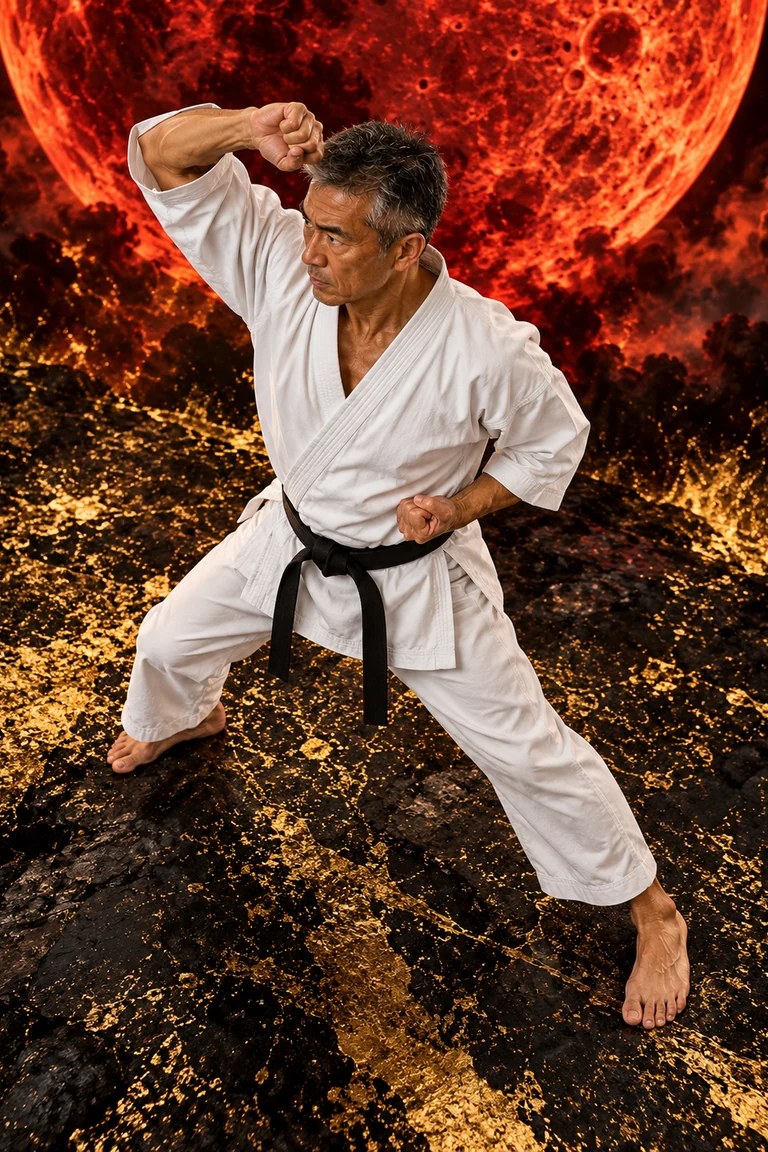
Postura baixa e guarda: a base de tudo, do kata ao kumite, o combate. Ilustração WABUKAN
O medalheiro
O Japão terminou em primeiro com 12 medalhas, seis delas de ouro. O Egito foi segundo com 11 medalhas e quatro ouros, e a Espanha terceira com oito medalhas e três ouros. Os últimos títulos foram os de kata por equipas: as japonesas voltaram a ganhar, numa série de títulos consecutivos nestes campeonatos que vem de 2019, e os italianos bateram a Turquia por 4–1.
Linha do tempo
2024Mundial de jovens em Veneza-Jesolo: Ito e Hamazawa campeões de cadetes.
17 out 2026Ito e Hamazawa repetem em juniores; Vasco Mateus (Portugal) prata.
18 out 2026Último dia: campeões sub-21 e kata por equipas; Japão no topo do medalheiro.
2028Próxima edição: México.
O que quer dizer 4–1
Resultados como 5–0, 4–1 ou 3–2 contam os votos de cinco juízes, cada um a escolher um dos dois atletas; 4–1 quer dizer que um juiz viu a final ao contrário. Muita gente conhece o karaté do dojo; estes resultados lembram que, ao mais alto nível, a diferença entre o ouro e a prata pode ser a leitura de um só juiz sobre um movimento. A próxima edição será no México, em 2028.
Bielsko-Biała 2026: karate’s new young world champions
· 3 min read
Two years ago, in Venice-Jesolo, two Japanese teenagers won world titles in cadet kata. In October 2026, in the Polish city of Bielsko-Biała, they came back one age group older and did it again. Their story sums up the World Cadet, Junior and U21 Karate Championships, which ended on 18 October: the young people who will fill senior podiums in a few years, and a few surprises along the way.
A high kick: in kata, every technique is judged on precision, power and rhythm. WABUKAN illustration
Kata: the same faces, one step higher
Kata are fixed sequences of techniques against imaginary opponents, judged by a panel on precision, power, rhythm and understanding of the movement. Wakana Ito won the junior women’s title by beating Austria’s Tamara Lehner 4–1 in the final, after a run of 5–0 wins. She said she felt “very important” winning again after Venice, and named as her model Kiyou Shimizu, two-time world champion and Olympic silver medallist, who comes from her hometown.
Takeru Hamazawa took the junior men’s title. His opponent in the final was Portugal’s Vasco Mateus, who earned silver; the score was 4–1. Hamazawa admitted that he had been losing at the national junior championships and was relieved to win in his last year as a junior. His idol is Ryo Kiyuna, the Okinawan who became Olympic kata champion at Tokyo 2020.
The U21 finals
On the last day the under-21 champions were crowned. In kata, Japan’s Soshi Okumura beat Türkiye’s Furkan Kaynar 5–0, and Spain’s Paola García Lozano edged Brazil’s Gabrielle Henrique 3–2. In kumite, the sparring event, Egypt’s Omar Osman (−84 kg) won the U21 world title for the second time in a row. Germany’s Anastasiia Semenenko (−61 kg) won after a 0–0 final, by hantei, the judges’ decision. Moldova’s Alexandr Capmoale (−67 kg) won his first international gold, 9–5 against Türkiye’s Savas Ogus.
Low stance and guard: the base of everything, from kata to kumite, the sparring event. WABUKAN illustration
The medal table
Japan finished first with 12 medals, six of them gold. Egypt was second with 11 medals and four golds, and Spain third with eight medals and three golds. The last titles were team kata: Japan’s girls won again, a run of consecutive titles at these championships going back to 2019, and Italy’s boys beat Türkiye 4–1.
Timeline
2024Youth Worlds in Venice-Jesolo: Ito and Hamazawa win the cadet titles.
17 out 2026Ito and Hamazawa repeat as juniors; Vasco Mateus (Portugal) silver.
18 out 2026Final day: U21 champions and team kata; Japan tops the medal table.
2028Next edition: Mexico.
What a 4–1 means
Scores like 5–0, 4–1 or 3–2 count the votes of five judges, each choosing one of the two athletes, so 4–1 means one judge saw the final the other way. Many people know karate from the dojo; these scores are a reminder that at the top level the difference between gold and silver can be a single judge’s view of one movement. The next edition will be held in Mexico in 2028.
Bielsko-Biała 2026: los nuevos campeones del mundo del karate
· 3 min de lectura
Hace dos años, en Venecia-Jesolo, dos adolescentes japoneses fueron campeones del mundo de kata cadete. En octubre de 2026, en la ciudad polaca de Bielsko-Biała, volvieron una categoría por encima y repitieron. Su historia resume el Mundial cadete, júnior y sub-21 de karate, que terminó el 18 de octubre: los jóvenes que llenarán los podios absolutos dentro de pocos años, y algunas sorpresas por el camino.
Una patada alta: en el kata, cada técnica se juzga por su precisión, potencia y ritmo. Ilustración WABUKAN
Kata: las mismas caras, un peldaño más arriba
Los kata son secuencias fijas de técnicas contra adversarios imaginarios, evaluadas por un panel según la precisión, la potencia, el ritmo y la comprensión del movimiento. Wakana Ito ganó el título femenino júnior al vencer a la austriaca Tamara Lehner por 4–1 en la final, tras una serie de victorias por 5–0. Dijo sentirse «muy importante» al volver a ganar después de Venecia, y citó como modelo a Kiyou Shimizu, bicampeona del mundo y medallista de plata olímpica, de su misma ciudad.
Takeru Hamazawa ganó el título masculino júnior. Su rival en la final fue el portugués Vasco Mateus, que se llevó la plata; el resultado fue 4–1. Hamazawa admitió que venía perdiendo en los campeonatos nacionales júnior y que se sintió aliviado de ganar en su último año en la categoría. Su ídolo es Ryo Kiyuna, el okinawense que fue campeón olímpico de kata en Tokio 2020.
Las finales sub-21
El último día se coronó a los campeones sub-21. En kata, el japonés Soshi Okumura venció al turco Furkan Kaynar por 5–0, y la española Paola García Lozano superó a la brasileña Gabrielle Henrique por 3–2. En kumite, el combate, el egipcio Omar Osman (−84 kg) fue campeón del mundo sub-21 por segunda vez consecutiva. La alemana Anastasiia Semenenko (−61 kg) ganó tras una final 0–0, por hantei, la decisión de los jueces. El moldavo Alexandr Capmoale (−67 kg) logró su primer oro internacional, 9–5 ante el turco Savas Ogus.
Postura baja y guardia: la base de todo, del kata al kumite, el combate. Ilustración WABUKAN
El medallero
Japón terminó primero con 12 medallas, seis de ellas de oro. Egipto fue segundo con 11 medallas y cuatro oros, y España tercera con ocho medallas y tres oros. Los últimos títulos fueron los de kata por equipos: las japonesas volvieron a ganar, en una racha de títulos consecutivos en estos campeonatos que viene de 2019, y los italianos vencieron a Turquía por 4–1.
Cronología
2024Mundial juvenil en Venecia-Jesolo: Ito y Hamazawa campeones cadetes.
17 out 2026Ito y Hamazawa repiten en júnior; Vasco Mateus (Portugal) plata.
18 out 2026Último día: campeones sub-21 y kata por equipos; Japón encabeza el medallero.
2028Próxima edición: México.
Qué significa un 4–1
Resultados como 5–0, 4–1 o 3–2 cuentan los votos de cinco jueces, cada uno eligiendo a uno de los dos atletas; 4–1 significa que un juez vio la final al revés. Mucha gente conoce el karate del dojo; estos resultados recuerdan que, al más alto nivel, la diferencia entre el oro y la plata puede ser la lectura de un solo juez sobre un movimiento. La próxima edición será en México, en 2028.
Bielsko-Biała 2026 : les nouveaux jeunes champions du monde de karaté
· 3 min de lecture
Il y a deux ans, à Venise-Jesolo, deux adolescents japonais devenaient champions du monde de kata cadets. En octobre 2026, dans la ville polonaise de Bielsko-Biała, ils sont revenus une catégorie plus haut et ont recommencé. Leur histoire résume les Mondiaux cadets, juniors et U21 de karaté, qui se sont terminés le 18 octobre : les jeunes qui rempliront les podiums seniors dans quelques années, et quelques surprises en chemin.
Un coup de pied haut : en kata, chaque technique est jugée sur la précision, la puissance et le rythme. Illustration WABUKAN
Kata : les mêmes visages, une marche plus haut
Les kata sont des enchaînements fixes de techniques contre des adversaires imaginaires, notés par un jury sur la précision, la puissance, le rythme et la compréhension du mouvement. Wakana Ito a remporté le titre junior féminin en battant l’Autrichienne Tamara Lehner 4–1 en finale, après une série de victoires 5–0. Elle a dit se sentir « très importante » en gagnant de nouveau après Venise, et a cité comme modèle Kiyou Shimizu, double championne du monde et médaillée d’argent olympique, originaire de sa ville.
Takeru Hamazawa a remporté le titre junior masculin. Son adversaire en finale était le Portugais Vasco Mateus, médaillé d’argent ; le score a été de 4–1. Hamazawa a reconnu qu’il perdait aux championnats nationaux juniors et qu’il était soulagé de gagner lors de sa dernière année dans la catégorie. Son idole est Ryo Kiyuna, l’Okinawais sacré champion olympique de kata à Tokyo 2020.
Les finales U21
Le dernier jour, les champions U21 ont été sacrés. En kata, le Japonais Soshi Okumura a battu le Turc Furkan Kaynar 5–0, et l’Espagnole Paola García Lozano a devancé la Brésilienne Gabrielle Henrique 3–2. En kumite, le combat, l’Égyptien Omar Osman (−84 kg) a remporté le titre mondial U21 pour la deuxième fois d’affilée. L’Allemande Anastasiia Semenenko (−61 kg) s’est imposée après une finale à 0–0, par hantei, la décision des juges. Le Moldave Alexandr Capmoale (−67 kg) a décroché son premier or international, 9–5 face au Turc Savas Ogus.
Posture basse et garde : la base de tout, du kata au kumite, le combat. Illustration WABUKAN
Le tableau des médailles
Le Japon a terminé premier avec 12 médailles, dont six en or. L’Égypte a été deuxième avec 11 médailles et quatre titres, l’Espagne troisième avec huit médailles et trois titres. Les derniers titres étaient ceux du kata par équipes : les Japonaises ont encore gagné, prolongeant une série de titres consécutifs dans ces championnats depuis 2019, et les Italiens ont battu la Turquie 4–1.
Chronologie
2024Mondiaux jeunes à Venise-Jesolo : Ito et Hamazawa champions cadets.
17 out 2026Ito et Hamazawa récidivent en juniors ; Vasco Mateus (Portugal) en argent.
18 out 2026Dernier jour : champions U21 et kata par équipes ; le Japon en tête des médailles.
2028Prochaine édition : Mexique.
Ce que veut dire 4–1
Des scores comme 5–0, 4–1 ou 3–2 comptent les voix de cinq juges, chacun choisissant l’un des deux athlètes : 4–1 signifie donc qu’un juge a vu la finale autrement. Beaucoup connaissent le karaté par le dojo ; ces scores rappellent qu’au plus haut niveau, la différence entre l’or et l’argent peut tenir au regard d’un seul juge sur un mouvement. La prochaine édition aura lieu au Mexique en 2028.