
Historical archive
← All beliefs and philosophies
Capoeira and the Afro-Brazilian religions: the sacred in the roda
How Candomblé, Umbanda and popular Catholicism live in capoeira’s songs, amulets and rituals, without making capoeira a religion.
The story
What the tradition holds
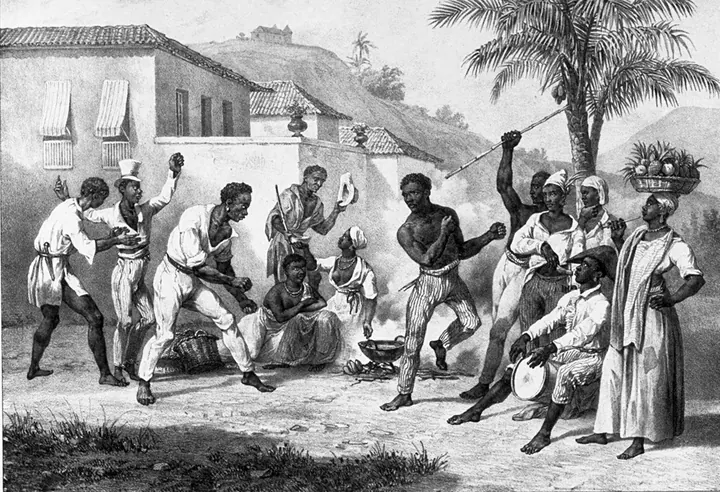
- The roda is a protected space with its own rituals and respect for the berimbau.
- Mandinga and the corpo fechado protect the player in and out of the game.
- Capoeira carries the memory and resistance of the ancestors.
What history and science show
- The 1890 ban, the persecution of Afro-Brazilian religions, Bimba’s and Pastinha’s schools and the 2014 UNESCO listing are well documented.
- Capoeira is not a branch of Candomblé; the two shared people, places and symbols, and their mix varies from group to group.
- No test supports a ritually “closed body” stopping weapons; the belief is part of the culture and its stories, such as the legend of Besouro Mangangá.
Myth and fact
Capoeira was a fight disguised as a dance so that slave owners would not notice.
This is a popular story, but there is no contemporary evidence for it. Police records from the nineteenth century show that the authorities knew exactly what capoeira was and arrested its players.
A note of respect
Candomblé and Umbanda are living religions that still face prejudice. We describe their place in capoeira as their followers describe it, without judging faith.
Related
Images: public-domain or CC0 works credited under each picture, or original WABUKAN ink illustrations. Panels: the story told in numbered comic boxes.
Sources
- Capoeira — Wikipedia — en.wikipedia.org
- Candomblé — Wikipedia — en.wikipedia.org
- Umbanda — Wikipedia — en.wikipedia.org
- Mestre Bimba — Wikipedia — en.wikipedia.org
- Mestre Pastinha — Wikipedia — en.wikipedia.org
- Besouro Mangangá — Wikipedia — en.wikipedia.org
- UNESCO — Capoeira circle — ich.unesco.org
- Jogar capoëra ou danse de la guerre — Wikimedia Commons — commons.wikimedia.org
Cite / use this content
You may quote and share this page with a link to WABUKAN. Suggested citation:
WABUKAN 和武館, «Capoeira and the Afro-Brazilian religions: the sacred in the roda», https://wabukan.com/crenca-capoeira-religioes (accessed 2026-10-30).