
Historical archive
The bow: rituals of the dojo
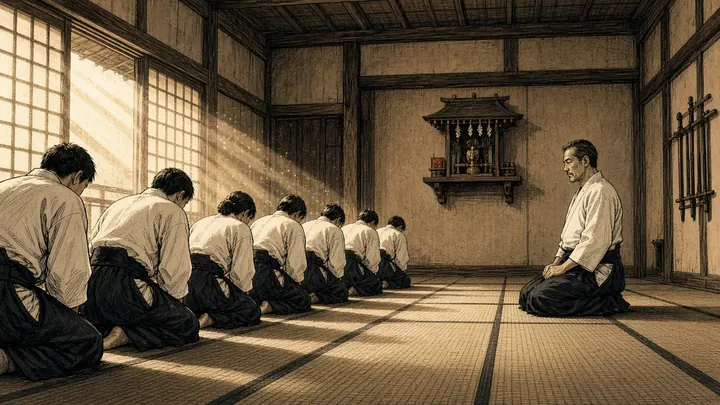
Why do we bow when entering the mat, to the front wall and to each other? A ritual, not a legend — but with its own myths.
The legend
Legend
What history shows
Evidence
- The word dōjō comes from Buddhism, where it named a place of practice or meditation; martial halls borrowed it.
- Bowing (rei) is everyday Japanese etiquette, not a secret warrior code. Much of the uniform dojo etiquette seen today was standardised in modern times, by bodies such as the Kodokan (1882) and the Dai Nippon Butoku Kai (1895).
- The layout with a shōmen or kamiza (“place of honour”), sometimes with a small Shinto shrine (kamidana), is a custom; many dojos outside Japan keep only a photo of the founder or nothing at all.
- A popular myth says the bow was invented to show you hold no weapon. We found no historical source for this; it is a modern folk explanation.
In short: A living ritual with Buddhist and everyday Japanese roots, largely codified in the last 150 years. Its value is practical and ethical, not magical.
Images: public-domain or CC0 works credited under each picture, or original WABUKAN ink illustrations. Panels: the story told in numbered comic boxes.
Sources
- Dōjō — Wikipedia — en.wikipedia.org
- Bowing in Japan — Wikipedia — en.wikipedia.org
- Dai Nippon Butoku Kai — Wikipedia — en.wikipedia.org
- Kodokan Judo Institute — Wikipedia — en.wikipedia.org
Cite / use this content
You may quote and share this page with a link to WABUKAN. Suggested citation:
WABUKAN 和武館, «The bow: rituals of the dojo», https://wabukan.com/lenda-rei-dojo (accessed 2026-10-30).