
Historical archive
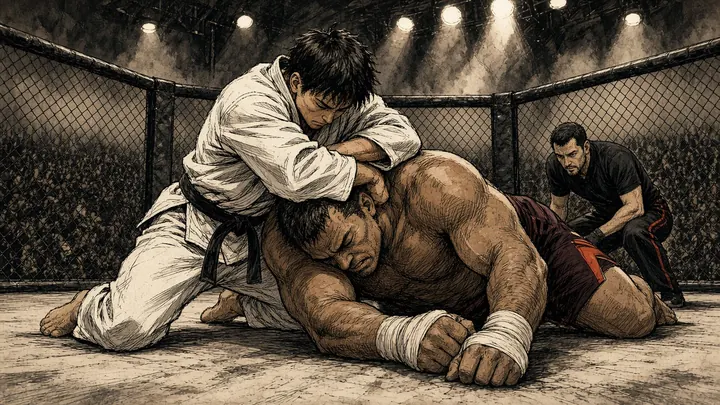
Denver, 1993: the Gracies and UFC 1
A slim Brazilian in a gi won a tournament of giants and changed how the world thinks about fighting.
1914–1993
The story
Key dates
- 1914–1915
Maeda Mitsuyo arrives in Brazil and settles in Belém.
- 1951
Hélio Gracie vs Kimura Masahiko at the Maracanã.
- 1978
Rorion Gracie moves to the United States.
- 12.11.1993
UFC 1 in Denver: Royce Gracie wins the eight-man tournament.
Myth and fact
UFC 1 had no rules at all.
It was sold as “no rules”, but biting and eye-gouging were banned, and a fight could end by knockout, submission or a corner throwing in the towel. There were no weight classes and no time limits.
Brazilian jiu-jitsu was invented from nothing by Hélio Gracie.
Its roots are in Kōdōkan judo and Japanese jūjutsu brought by Maeda and others. The Gracies, and rival Brazilian teachers such as Luiz França, developed it further, especially the ground game.
Why it matters
UFC 1 ended the era when each style claimed to be the best without testing it. Almost every serious fighter since has had to learn to strike, wrestle and fight on the ground.
Related
- Brazilian Jiu-Jitsu
- Vale Tudo
- Judo
- MMA
- Luta Livre
- Article: BJJ and vale tudo
- Article: from jujutsu to judo
- Modern MMA
Images: public-domain or CC0 works credited under each picture, or original WABUKAN ink illustrations. Panels: the story told in numbered comic boxes.
Sources
- UFC 1 — Wikipedia — en.wikipedia.org
- Royce Gracie — Wikipedia — en.wikipedia.org
- Mitsuyo Maeda — Wikipedia — en.wikipedia.org
- Hélio Gracie — Wikipedia — en.wikipedia.org
- Brazilian jiu-jitsu — Wikipedia — en.wikipedia.org
Cite / use this content
You may quote and share this page with a link to WABUKAN. Suggested citation:
WABUKAN 和武館, «Denver, 1993: the Gracies and UFC 1», https://wabukan.com/marco-gracie-ufc (accessed 2026-10-30).