
Historical archive
Meiji Japan: when the samurai put down the sword
How the end of the samurai class turned old fighting schools into modern budō.
1868–1912
The story
Key dates
- 1868
Meiji Restoration: imperial rule is restored.
- 1873
Conscription law: a national army replaces the samurai as soldiers.
- 1876
Haitōrei edict: carrying swords in public is banned, except for the military and police.
- 1877
Satsuma Rebellion, led by Saigō Takamori, is defeated.
- 1882
Kanō Jigorō founds the Kōdōkan in Tokyo.
- 1895
The Dai Nippon Butoku Kai is founded in Kyoto.
Myth and fact
The samurai disappeared because of the sword ban.
The ban of 1876 came at the end of a longer process: the class lost its stipends, its role in war and its legal privileges step by step. Families of samurai descent kept the status label shizoku for decades.
Why it matters
Almost every Japanese martial art practised today, with belts, ranks and competition rules, is a Meiji or later reinvention of older schools. Knowing this helps separate genuine old tradition from modern presentation.
Related
- Judo
- Kendo
- Kenjutsu
- Iaido
- Jujutsu
- Article: from jujutsu to judo
- Article: the old sword schools
- Kanō Jigorō — What judo is for (1915 and 1922)
- Timeline
Images: public-domain or CC0 works credited under each picture, or original WABUKAN ink illustrations. Panels: the story told in numbered comic boxes.
Sources
- Meiji Restoration — Wikipedia — en.wikipedia.org
- Haitōrei Edict — Wikipedia — en.wikipedia.org
- Satsuma Rebellion — Wikipedia — en.wikipedia.org
- Dai Nippon Butoku Kai — Wikipedia — en.wikipedia.org
- Kodokan Judo Institute — Wikipedia — en.wikipedia.org
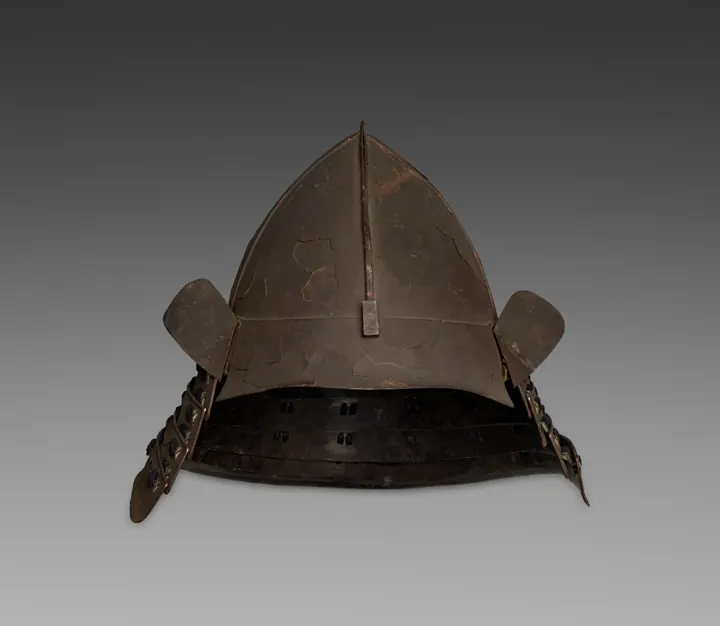
- Helmet (Kabuto) — Cleveland Museum of Art — clevelandart.org
Cite / use this content
You may quote and share this page with a link to WABUKAN. Suggested citation:
WABUKAN 和武館, «Meiji Japan: when the samurai put down the sword», https://wabukan.com/marco-meiji (accessed 2026-10-30).