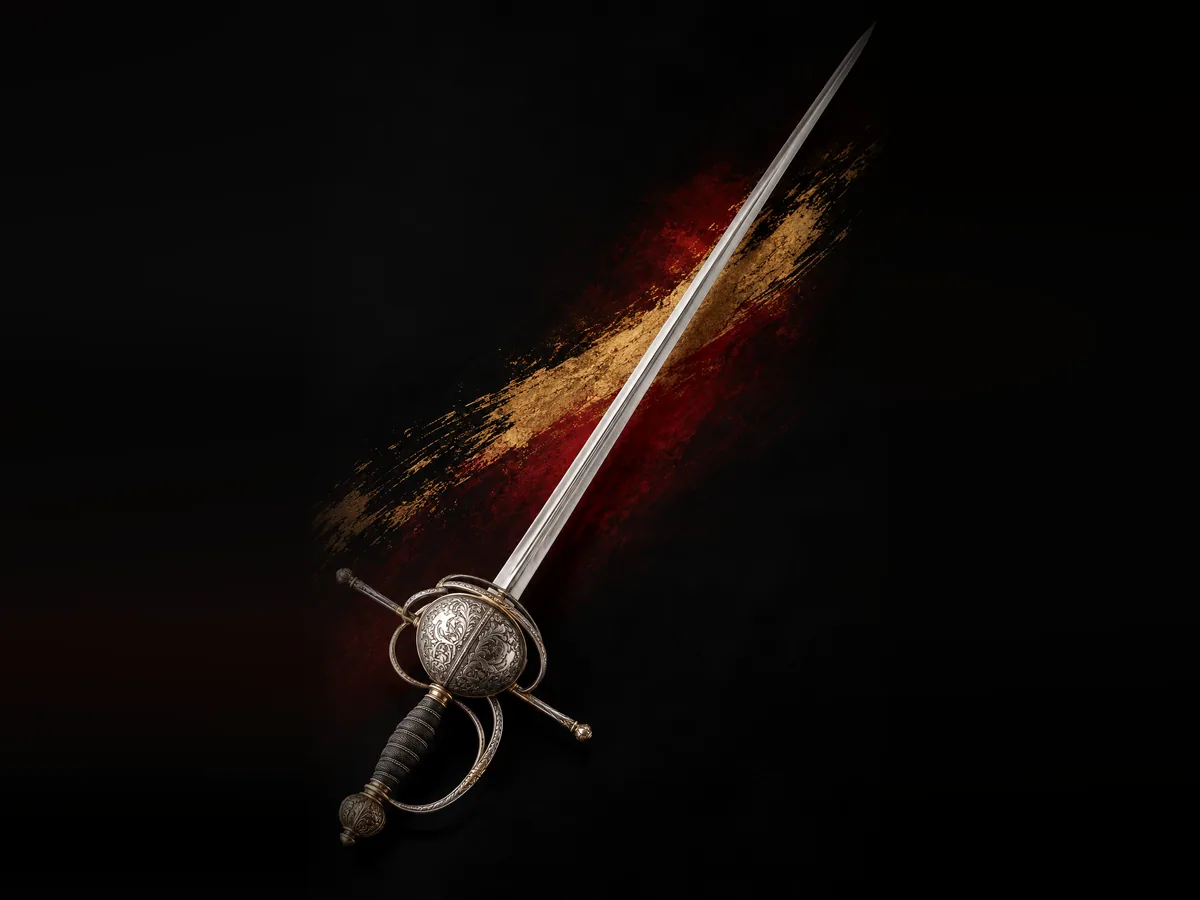
Espada comprida e fina para estocar dos séculos XVI e XVII, a espada civil dos duelos. A "destreza" espanhola estudava-a com geometria.
Ropera / rapieira Ilustração WABUKAN
Outros nomes
espada ropera · espada ropera; rapieira; spada da lato
Origem e história
A rapieira foi a espada civil dos séculos XVI e XVII, usada com a roupa do dia a dia e em duelos. Mestres italianos como Capoferro (1610) e a destreza espanhola de Jerónimo Sánchez de Carranza (1582) e Luis Pacheco de Narváez estudaram-na com geometria.
Lâmina comprida e fina de dois gumes (muitas vezes com mais de 1 m), feita sobretudo para estocar, com um punho complexo de anéis, barras ou copo a proteger a mão. As três rapieiras abaixo, do Museu de Arte de Cleveland, mostram o punho de barras e o posterior punho de copo.
Rapier, c. 1580–1610. Foto: Cleveland Museum of Art, domínio público (CC0) · Ficha do museuCup-Hilted Rapier, c.1610–30. Foto: Cleveland Museum of Art, domínio público (CC0) · Ficha do museuRapier, c.1625–50. Foto: Cleveland Museum of Art, domínio público (CC0) · Ficha do museu
Técnicas básicas
stoccata
imbroccata
passata
destreza espanhola com o círculo misterioso
Treino
Os principiantes aprendem primeiro a pega, a postura e o trabalho de pés; depois as linhas de corte e de estocada em formas a solo ou exercícios, normalmente com uma réplica de madeira ou sem fio. Seguem-se exercícios a pares, devagar, antes de qualquer combate livre com proteções.
Segurança
Treine com réplicas de madeira, sem fio ou aprovadas pelo clube; lâminas verdadeiras só para praticantes experientes e com supervisão. Verifique lâmina, cabo e montagens antes de cada sessão, mantenha um espaço livre de pelo menos dois comprimentos da arma e nunca corte na direção de pessoas.
Legalidade (informação geral)
Espadas, facas e outras armas de lâmina são reguladas de forma muito diferente de país para país (e por vezes de região para região): ter uma em casa é muitas vezes permitido, mas trazê-la na via pública, comprá-la abaixo de certa idade ou importá-la pode estar limitado ou proibido. Os praticantes costumam transportá-las em estojo fechado, fora de alcance e diretamente entre casa e dojo. Isto é informação geral, não aconselhamento jurídico: confirme a lei onde vive.
Curiosidades
O nome espanhol espada ropera quer dizer espada da roupa: usada com o traje civil, não com armadura.
A long, slender thrusting sword of the 16th and 17th centuries, the civilian sword of duels. The Spanish "destreza" studied it with geometry.
Rapier WABUKAN illustration
Also known as
espada ropera · espada ropera; rapieira; spada da lato
Origin and history
The rapier was the civilian sword of the 16th and 17th centuries, worn with everyday dress and used in duels. Italian masters such as Capoferro (1610) and the Spanish destreza of Jerónimo Sánchez de Carranza (1582) and Luis Pacheco de Narváez treated it with geometry.
A long, slender, double-edged blade (often over 1 m) built mainly for the thrust, with a complex hilt of rings, bars or a cup protecting the hand. The three rapiers below, from the Cleveland Museum of Art, show the swept hilt and the later cup hilt.
Rapier, c. 1580–1610. Photo: Cleveland Museum of Art, public domain (CC0) · Museum recordCup-Hilted Rapier, c.1610–30. Photo: Cleveland Museum of Art, public domain (CC0) · Museum recordRapier, c.1625–50. Photo: Cleveland Museum of Art, public domain (CC0) · Museum record
Basic techniques
stoccata
imbroccata
passata
Spanish destreza with the mysterious circle
Training
Beginners learn grip, posture and footwork first, then cutting and thrusting lines in solo forms or drills, usually with a wooden or blunt trainer. Paired drills with a partner come next, at slow speed, before any free sparring with protective gear.
Safety
Train with wooden, blunt or club-approved trainers; keep live blades for experienced practitioners under supervision. Check the blade, handle and fittings before every session, keep a clear space of at least two weapon lengths and never cut towards people.
Legality (general information)
Swords, knives and other edged weapons are regulated very differently from country to country (and sometimes from region to region): owning one at home is often allowed, while carrying it in public, buying it under a certain age or importing it may be restricted or banned. Practitioners usually transport them cased, out of reach and straight between home and dojo. This is general information, not legal advice: check the law where you live.
Did you know?
The Spanish name espada ropera means sword of the clothes: a sword worn with civilian dress, not armour.
La espada civil de duelo de los siglos XVI y XVII.
Espada ropera Ilustración WABUKAN
Otros nombres
espada ropera; rapieira; spada da lato
Origen e historia
La ropera fue la espada civil de los siglos XVI y XVII, llevada con la ropa de diario y usada en duelos. Maestros italianos como Capoferro (1610) y la destreza española de Jerónimo Sánchez de Carranza (1582) y Luis Pacheco de Narváez la estudiaron con geometría.
Hoja larga y fina de doble filo (a menudo de más de 1 m), pensada sobre todo para la estocada, con una guarnición compleja de anillos, barras o taza que protege la mano. Las tres roperas de abajo, del Museo de Arte de Cleveland, muestran la guarnición de lazo y la posterior de taza.
Rapier, c. 1580–1610. Foto: Cleveland Museum of Art, dominio público (CC0) · Ficha del museoCup-Hilted Rapier, c.1610–30. Foto: Cleveland Museum of Art, dominio público (CC0) · Ficha del museoRapier, c.1625–50. Foto: Cleveland Museum of Art, dominio público (CC0) · Ficha del museo
Técnicas básicas
stoccata
imbroccata
passata
destreza española con el círculo misterioso
Entrenamiento
Los principiantes aprenden primero el agarre, la postura y el juego de pies; después las líneas de corte y de estocada en formas en solitario o ejercicios, normalmente con una réplica de madera o roma. Luego vienen los ejercicios por parejas, despacio, antes de cualquier combate libre con protecciones.
Seguridad
Entrene con réplicas de madera, romas o aprobadas por el club; las hojas reales solo para practicantes expertos y bajo supervisión. Revise hoja, empuñadura y montura antes de cada sesión, mantenga un espacio libre de al menos dos largos del arma y nunca corte hacia personas.
Legalidad (información general)
Las espadas, cuchillos y demás armas blancas se regulan de forma muy distinta según el país (y a veces según la región): tener una en casa suele estar permitido, pero llevarla en la vía pública, comprarla por debajo de cierta edad o importarla puede estar limitado o prohibido. Los practicantes suelen transportarlas en funda cerrada, fuera de alcance y directamente entre casa y dojo. Es información general, no asesoramiento jurídico: consulte la ley donde vive.
Curiosidades
El nombre espada ropera significa espada de la ropa: se llevaba con traje civil, no con armadura.
espada ropera · espada ropera; rapieira; spada da lato
Origine et histoire
La rapière fut l’épée civile des XVIe et XVIIe siècles, portée avec l’habit quotidien et utilisée en duel. Des maîtres italiens comme Capoferro (1610) et la destreza espagnole de Jerónimo Sánchez de Carranza (1582) et Luis Pacheco de Narváez l’étudièrent par la géométrie.
Lame longue et fine à double tranchant (souvent plus d’1 m), conçue surtout pour l’estoc, avec une garde complexe d’anneaux, de branches ou de coquille protégeant la main. Les trois rapières ci-dessous, du musée d’art de Cleveland, montrent la garde à branches et la garde à coquille plus tardive.
Rapier, c. 1580–1610. Photo : Cleveland Museum of Art, domaine public (CC0) · Fiche du muséeCup-Hilted Rapier, c.1610–30. Photo : Cleveland Museum of Art, domaine public (CC0) · Fiche du muséeRapier, c.1625–50. Photo : Cleveland Museum of Art, domaine public (CC0) · Fiche du musée
Techniques de base
stoccata
imbroccata
passata
destreza espagnole avec le cercle mystérieux
Entraînement
Les débutants apprennent d’abord la prise, la posture et le jeu de jambes, puis les lignes de coupe et d’estoc en formes solo ou en exercices, généralement avec une arme d’entraînement en bois ou émoussée. Viennent ensuite les exercices à deux, lentement, avant tout assaut libre avec protections.
Sécurité
Entraînez-vous avec des répliques en bois, émoussées ou homologuées par le club ; les lames vives sont réservées aux pratiquants confirmés et encadrés. Vérifiez lame, poignée et montures avant chaque séance, gardez un espace libre d’au moins deux longueurs d’arme et ne coupez jamais vers quelqu’un.
Légalité (information générale)
Les épées, couteaux et autres armes blanches sont réglementés très différemment d’un pays à l’autre (parfois d’une région à l’autre) : en posséder une chez soi est souvent permis, mais la porter dans la rue, l’acheter avant un certain âge ou l’importer peut être limité ou interdit. Les pratiquants la transportent en général dans un étui fermé, hors de portée et directement entre domicile et dojo. Ceci est une information générale, pas un conseil juridique : vérifiez la loi là où vous vivez.
Le saviez-vous ?
Le nom espagnol espada ropera signifie épée de l’habit : portée avec le costume civil, non avec l’armure.