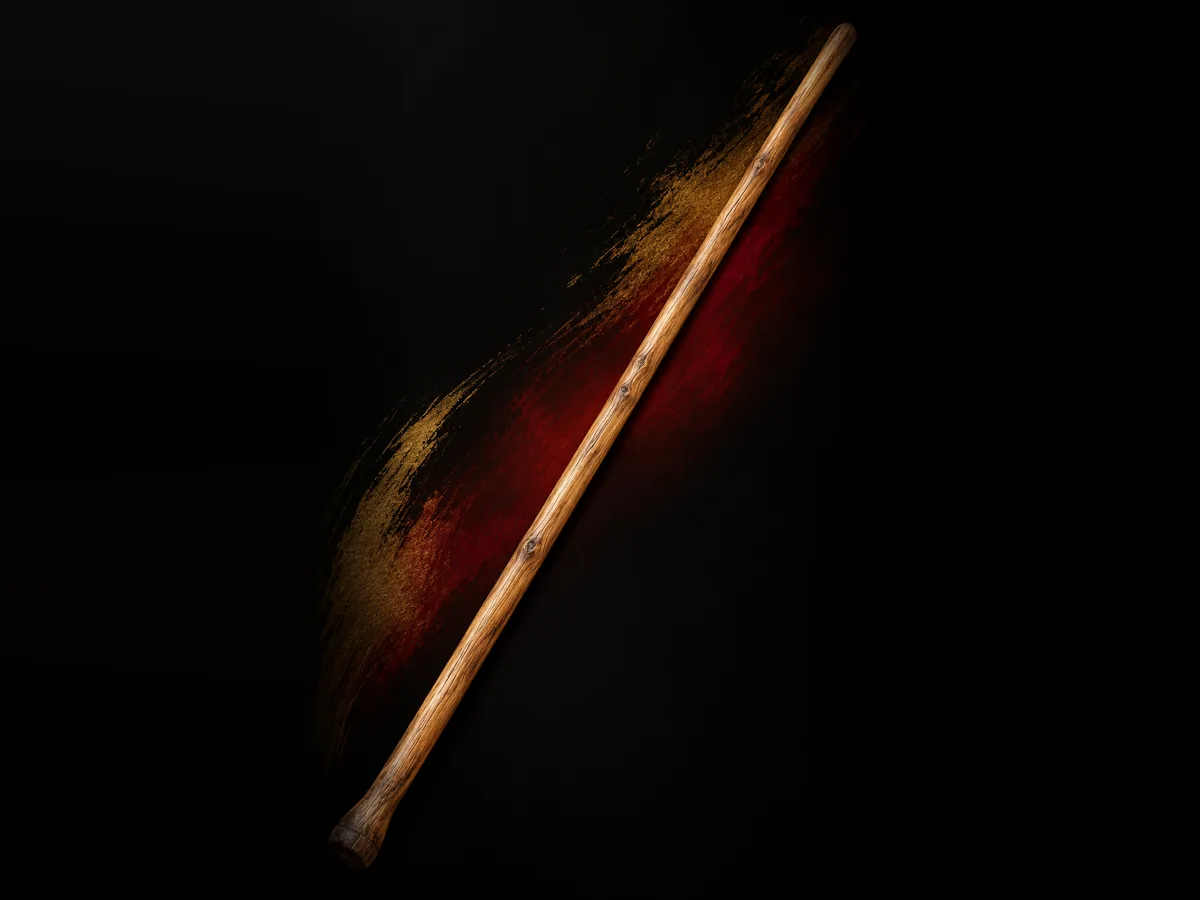
O pau de jogo português, mais ou menos da altura do queixo ou do ombro, que os pastores e lavradores do norte levavam consigo.
Varapau Ilustração WABUKAN
Outros nomes
pau · pau; jogo do pau; vara
Origem e história
O varapau é o pau comprido do norte de Portugal, usado para caminhar, pastorear e defender-se. A sua arte, o jogo do pau, praticava-se em feiras e romarias e foi mantida viva no Minho, em Trás-os-Montes e em academias de Lisboa; inclui o combate contra vários adversários ao mesmo tempo.
Pau de madeira forte e direita, como freixo, azevinho ou marmeleiro, da altura do peito à dos olhos ou mais (muitas vezes 1,5–1,8 m), por vezes com uma ponta mais grossa.
Técnicas básicas
golpes de cima e de baixo
varrimento
jogo de roda contra vários adversários
jogo de ensino
Treino
O treino de pau e bastão começa pelas pegas, posições e golpes e defesas básicos, praticados no ar ou num alvo, e depois exercícios a dois com velocidade controlada. Muitas escolas usam paus de rota ou almofadados para combate, com capacete e luvas.
Segurança
Use capacete com grelha e luvas almofadadas em qualquer trabalho de contacto; mãos e dedos são as lesões mais comuns. Verifique os paus à procura de fissuras e lascas e retire os danificados.
Legalidade (informação geral)
Paus, bastões e outras armas de impacto ou flexíveis são objetos comuns em alguns países e armas proibidas ou limitadas noutros (vários países europeus, por exemplo, regulam nunchaku, bastões extensíveis ou correntes com peso). Andar com uma na rua sem motivo pode ser infração mesmo onde é legal tê-la. Transporte-a num saco e use-a no local de treino. Isto é informação geral, não aconselhamento jurídico: confirme a lei local.
Curiosidades
O jogo de roda treina um jogador a defender-se de vários atacantes em círculo, lembrando as zaragatas nas feiras de aldeia.
The Portuguese fighting stick, about the height of the chin or shoulder, once carried by shepherds and farmers of the north.
Varapau WABUKAN illustration
Also known as
pau · pau; jogo do pau; vara
Origin and history
The varapau is the long stick of northern Portugal, used for walking, herding and self-defence. Its art, jogo do pau, was practised at fairs and pilgrimages and kept alive in Minho, Trás-os-Montes and Lisbon academies; it includes fighting several opponents at once.
A stick of strong, straight wood such as ash, holly or quince, from chest height to eye height or more (often 1.5–1.8 m), sometimes with a thicker end.
Basic techniques
blows from above and below
sweeps
jogo de roda against several opponents
jogo de ensino (teaching drills)
Training
Stick and staff training starts with grips, stances and basic strikes and blocks practised in the air or on a target, then two-person drills at controlled speed. Many schools use rattan or padded sticks for sparring, with a helmet and gloves.
Safety
Wear a helmet with a face grille and padded gloves for any contact work; hands and fingers are the most common injuries. Check sticks for cracks and splinters and retire damaged ones.
Legality (general information)
Sticks, staffs and other impact or flexible weapons are ordinary objects in some countries and restricted weapons in others (several European countries, for example, regulate nunchaku, batons or weighted chains). Carrying one in public without a good reason can be an offence even where owning it is legal. Transport it in a bag and use it in the training hall. This is general information, not legal advice: check local law.
Did you know?
The jogo de roda trains one player to defend against several attackers in a circle, recalling fights at village fairs.
El palo largo del norte de Portugal y del jogo do pau.
Varapau Ilustración WABUKAN
Otros nombres
pau · pau; jogo do pau; vara
Origen e historia
El varapau es el palo largo del norte de Portugal, usado para caminar, pastorear y defenderse. Su arte, el jogo do pau, se practicaba en ferias y romerías y se mantuvo vivo en el Miño, Trás-os-Montes y en academias de Lisboa; incluye el combate contra varios adversarios a la vez.
Palo de madera fuerte y recta, como fresno, acebo o membrillo, de la altura del pecho a la de los ojos o más (a menudo 1,5–1,8 m), a veces con un extremo más grueso.
Técnicas básicas
golpes de arriba y de abajo
barridos
jogo de roda contra varios adversarios
jogo de ensino (ejercicios de enseñanza)
Entrenamiento
El entrenamiento de palo y bastón empieza por los agarres, las posiciones y los golpes y defensas básicos, practicados al aire o sobre un objetivo, y después ejercicios por parejas a velocidad controlada. Muchas escuelas usan palos de ratán o acolchados para el combate, con casco y guantes.
Seguridad
Use casco con rejilla y guantes acolchados en cualquier trabajo de contacto; manos y dedos son las lesiones más frecuentes. Revise los palos en busca de grietas y astillas y retire los dañados.
Legalidad (información general)
Palos, bastones y otras armas de impacto o flexibles son objetos corrientes en algunos países y armas restringidas en otros (varios países europeos, por ejemplo, regulan el nunchaku, las porras o las cadenas con peso). Llevar una en público sin motivo puede ser infracción aunque poseerla sea legal. Transpórtela en una bolsa y úsela en la sala de entrenamiento. Es información general, no asesoramiento jurídico: consulte la ley local.
Curiosidades
El jogo de roda entrena a un jugador a defenderse de varios atacantes en círculo, recordando las peleas en las ferias de aldea.
Le long bâton du nord du Portugal et du jogo do pau.
Varapau Illustration WABUKAN
Autres noms
pau · pau; jogo do pau; vara
Origine et histoire
Le varapau est le long bâton du nord du Portugal, utilisé pour marcher, garder les troupeaux et se défendre. Son art, le jogo do pau, se pratiquait lors des foires et des pèlerinages et s’est maintenu au Minho, au Trás-os-Montes et dans des académies de Lisbonne ; il comprend le combat contre plusieurs adversaires.
Bâton de bois solide et droit, comme le frêne, le houx ou le cognassier, de la hauteur de la poitrine à celle des yeux ou plus (souvent 1,5–1,8 m), parfois avec une extrémité plus épaisse.
Techniques de base
coups d’en haut et d’en bas
balayages
jogo de roda contre plusieurs adversaires
jogo de ensino (exercices d’apprentissage)
Entraînement
L’entraînement au bâton commence par les prises, les gardes et les frappes et parades de base, travaillées dans le vide ou sur cible, puis par des exercices à deux à vitesse contrôlée. Beaucoup d’écoles utilisent des bâtons en rotin ou rembourrés pour l’assaut, avec casque et gants.
Sécurité
Portez un casque à grille et des gants rembourrés pour tout travail au contact ; mains et doigts sont les blessures les plus fréquentes. Vérifiez les bâtons (fissures, échardes) et retirez ceux qui sont abîmés.
Légalité (information générale)
Bâtons, cannes et autres armes contondantes ou souples sont des objets ordinaires dans certains pays et des armes réglementées dans d’autres (plusieurs pays européens encadrent par exemple le nunchaku, la matraque ou les chaînes lestées). Les porter en public sans motif peut constituer une infraction même là où leur détention est légale. Transportez-les dans un sac et utilisez-les en salle. Ceci est une information générale, pas un conseil juridique : vérifiez la loi locale.
Le saviez-vous ?
Le jogo de roda entraîne un joueur à se défendre contre plusieurs assaillants en cercle, souvenir des rixes des foires de village.