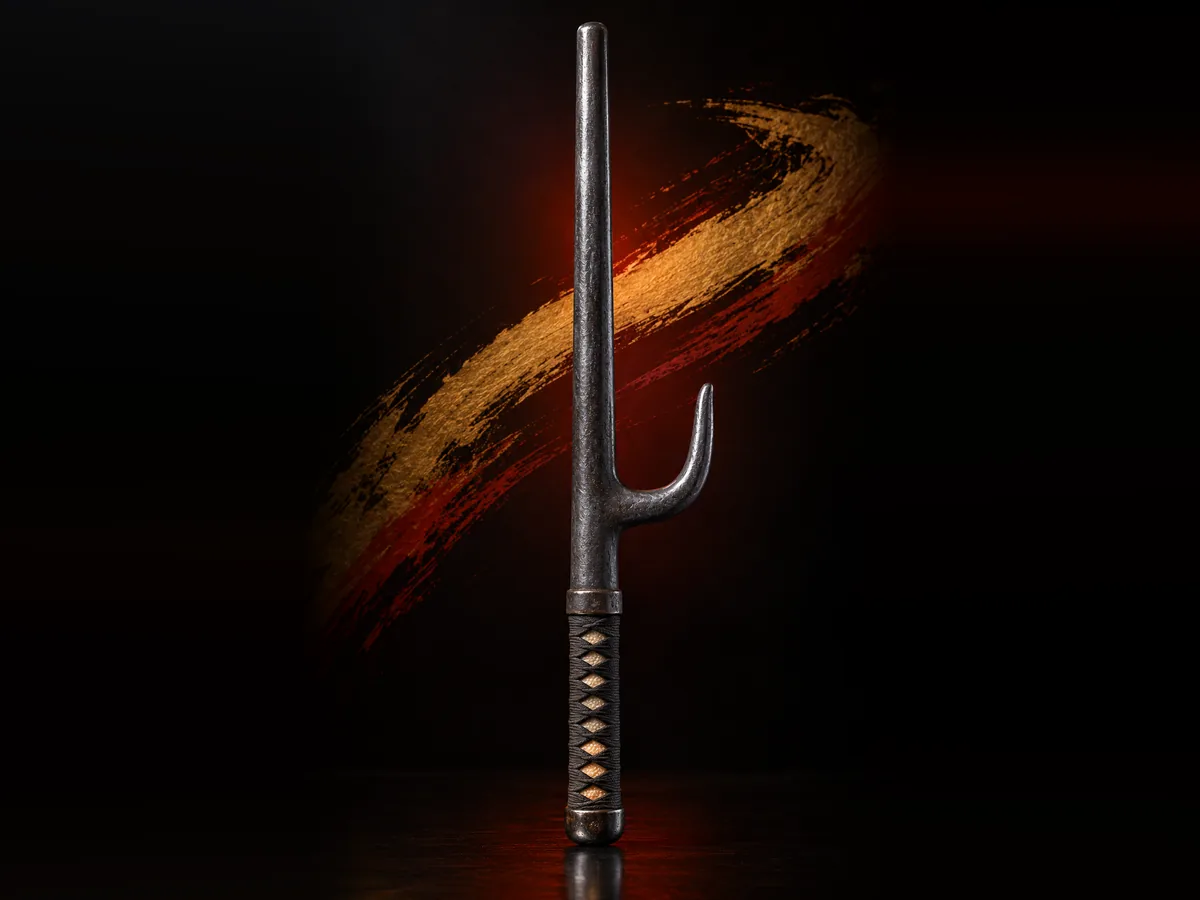
Cassetete de ferro com um gancho lateral, usado pela polícia do período Edo. Servia para prender a lâmina de uma espada e prender sem matar.
Jutte Ilustração WABUKAN
Outros nomes
十手 · jitte
Origem e história
O jutte era o distintivo e a ferramenta dos agentes da polícia do período Edo (dōshin e okappiki), usado para bloquear, prender e controlar pessoas armadas, de preferência sem as matar. Várias escolas koryū, como a Ittō Shōden Muto-ryū, conservaram as suas técnicas.
Barra de ferro redonda ou octogonal de cerca de 30–60 cm com um gancho lateral (kagi) acima do punho, muitas vezes com cordão e borla cuja cor podia indicar a patente.
Técnicas básicas
uke (prender uma lâmina)
kagi (enganchar)
uchi (golpe)
tori (desarme)
Treino
O treino de pau e bastão começa pelas pegas, posições e golpes e defesas básicos, praticados no ar ou num alvo, e depois exercícios a dois com velocidade controlada. Muitas escolas usam paus de rota ou almofadados para combate, com capacete e luvas.
Segurança
Use capacete com grelha e luvas almofadadas em qualquer trabalho de contacto; mãos e dedos são as lesões mais comuns. Verifique os paus à procura de fissuras e lascas e retire os danificados.
Legalidade (informação geral)
Paus, bastões e outras armas de impacto ou flexíveis são objetos comuns em alguns países e armas proibidas ou limitadas noutros (vários países europeus, por exemplo, regulam nunchaku, bastões extensíveis ou correntes com peso). Andar com uma na rua sem motivo pode ser infração mesmo onde é legal tê-la. Transporte-a num saco e use-a no local de treino. Isto é informação geral, não aconselhamento jurídico: confirme a lei local.
Curiosidades
O jutte não tem gume; servia para prender, não para matar, o que condizia com o papel de agente da ordem.
An iron truncheon with a side hook, carried by Edo-period police. It was used to catch a sword blade and arrest without killing.
Jutte WABUKAN illustration
Also known as
十手 · jitte
Origin and history
The jutte was the badge and tool of Edo-period police officers (dōshin and okappiki), used to block, hook and control armed people, ideally without killing them. Several koryū schools, such as Ittō Shōden Muto-ryū, kept its techniques.
A round or octagonal iron bar of about 30–60 cm with a single side hook (kagi) above the handle, often with a cord and tassel whose colour could show rank.
Basic techniques
uke (catching a blade)
kagi (hooking)
uchi (strike)
tori (disarm)
Training
Stick and staff training starts with grips, stances and basic strikes and blocks practised in the air or on a target, then two-person drills at controlled speed. Many schools use rattan or padded sticks for sparring, with a helmet and gloves.
Safety
Wear a helmet with a face grille and padded gloves for any contact work; hands and fingers are the most common injuries. Check sticks for cracks and splinters and retire damaged ones.
Legality (general information)
Sticks, staffs and other impact or flexible weapons are ordinary objects in some countries and restricted weapons in others (several European countries, for example, regulate nunchaku, batons or weighted chains). Carrying one in public without a good reason can be an offence even where owning it is legal. Transport it in a bag and use it in the training hall. This is general information, not legal advice: check local law.
Did you know?
The jutte has no edge; it was meant to arrest, not to kill, which matched the role of a peace officer.
Barra de hierro con gancho de la policía del periodo Edo.
Jutte Ilustración WABUKAN
Otros nombres
十手 · jitte
Origen e historia
El jutte era la insignia y la herramienta de los agentes de policía del periodo Edo (dōshin y okappiki), usado para bloquear, enganchar y controlar a personas armadas, a ser posible sin matarlas. Varias escuelas koryū, como la Ittō Shōden Muto-ryū, conservaron sus técnicas.
Barra de hierro redonda u octogonal de unos 30–60 cm con un gancho lateral (kagi) sobre la empuñadura, a menudo con cordón y borla cuyo color podía indicar el rango.
Técnicas básicas
uke (atrapar una hoja)
kagi (enganchar)
uchi (golpe)
tori (desarme)
Entrenamiento
El entrenamiento de palo y bastón empieza por los agarres, las posiciones y los golpes y defensas básicos, practicados al aire o sobre un objetivo, y después ejercicios por parejas a velocidad controlada. Muchas escuelas usan palos de ratán o acolchados para el combate, con casco y guantes.
Seguridad
Use casco con rejilla y guantes acolchados en cualquier trabajo de contacto; manos y dedos son las lesiones más frecuentes. Revise los palos en busca de grietas y astillas y retire los dañados.
Legalidad (información general)
Palos, bastones y otras armas de impacto o flexibles son objetos corrientes en algunos países y armas restringidas en otros (varios países europeos, por ejemplo, regulan el nunchaku, las porras o las cadenas con peso). Llevar una en público sin motivo puede ser infracción aunque poseerla sea legal. Transpórtela en una bolsa y úsela en la sala de entrenamiento. Es información general, no asesoramiento jurídico: consulte la ley local.
Curiosidades
El jutte no tiene filo; servía para detener, no para matar, en línea con el papel de un agente del orden.
Barre de fer à crochet de la police de l’époque Edo.
Jutte Illustration WABUKAN
Autres noms
十手 · jitte
Origine et histoire
Le jutte était l’insigne et l’outil des policiers de l’époque Edo (dōshin et okappiki), utilisé pour bloquer, crocheter et maîtriser des personnes armées, si possible sans les tuer. Plusieurs écoles koryū, comme l’Ittō Shōden Muto-ryū, en ont conservé les techniques.
Barre de fer ronde ou octogonale d’environ 30–60 cm avec un crochet latéral (kagi) au-dessus de la poignée, souvent avec une cordelette et un gland dont la couleur pouvait indiquer le grade.
Techniques de base
uke (bloquer une lame)
kagi (crocheter)
uchi (frappe)
tori (désarmement)
Entraînement
L’entraînement au bâton commence par les prises, les gardes et les frappes et parades de base, travaillées dans le vide ou sur cible, puis par des exercices à deux à vitesse contrôlée. Beaucoup d’écoles utilisent des bâtons en rotin ou rembourrés pour l’assaut, avec casque et gants.
Sécurité
Portez un casque à grille et des gants rembourrés pour tout travail au contact ; mains et doigts sont les blessures les plus fréquentes. Vérifiez les bâtons (fissures, échardes) et retirez ceux qui sont abîmés.
Légalité (information générale)
Bâtons, cannes et autres armes contondantes ou souples sont des objets ordinaires dans certains pays et des armes réglementées dans d’autres (plusieurs pays européens encadrent par exemple le nunchaku, la matraque ou les chaînes lestées). Les porter en public sans motif peut constituer une infraction même là où leur détention est légale. Transportez-les dans un sac et utilisez-les en salle. Ceci est une information générale, pas un conseil juridique : vérifiez la loi locale.
Le saviez-vous ?
Le jutte n’a pas de tranchant : il servait à arrêter, pas à tuer, comme il convient à un agent de l’ordre.