
Historical archive
From battlefield to sport: how fighting learned to keep score
Armour, gloves, rules and referees made it possible to fight hard without killing. Every rule also changed the art.
1 min read · 279 words
The problem
A fighting art has a basic problem: the techniques are meant to injure, but you cannot learn them well without testing them on someone who resists. For most of history the answer was forms and controlled drills. The great change of the last three centuries was to find safe ways to fight for real.
Bamboo swords and boxing gloves
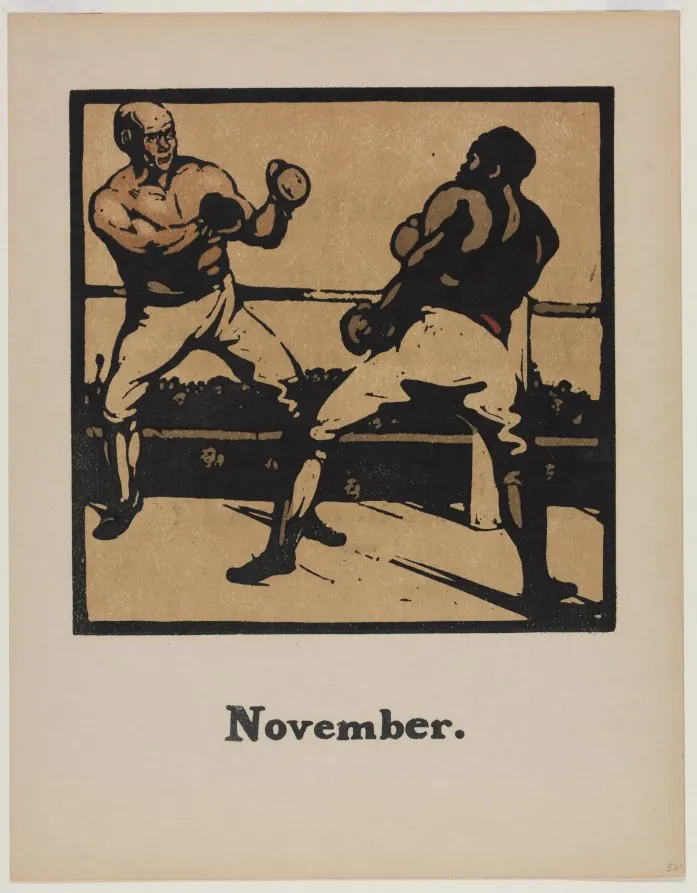
In Japan, during the Shōtoku era (1711–1715), the swordsman Naganuma Shirōzaemon is credited with developing protective armour (bōgu) and training with bamboo swords (shinai). Fencers could now strike each other at full speed, and this is the root of modern kendo. In Britain, the rules drafted by John Graham Chambers in 1865 and published in 1867 under the Marquess of Queensberry’s name made gloves, three-minute rounds and the ten-second count standard in boxing.
Randori, medals and the cage
Kanō’s judo, created in 1882, put free practice (randori) against a resisting partner at the centre, and removed the most dangerous jūjutsu techniques to make it possible. Fencing was already in the first modern Olympics in 1896; judo entered in 1964 and taekwondo became a full medal sport in 2000. In 1993 UFC 1 began with almost no rules; within a few years commissions demanded gloves, rounds and weight classes, and in 2000 New Jersey adopted the Unified Rules of MMA.
What rules give and take
Rules make honest testing possible, and they make the sport safe enough for children and for millions of amateurs. But every rule also shapes the art: fencers learn to touch, not to cut; point karate rewards speed over power; judo players adapt to what scores. Many traditional schools keep forms and old techniques alongside sport for this reason. Both sides are telling part of the truth.
Related
- Kendo
- Boxing
- Judo
- Olympic Fencing
- Taekwondo
- MMA
- Judo at Tokyo 1964
- Olympic taekwondo
- The Gracies and UFC 1
- Modern MMA
- Article: Olympic combat sports
Images: public-domain or CC0 works credited under each picture, or original WABUKAN ink illustrations. Panels: the story told in numbered comic boxes.
Sources
- Kendo — Wikipedia — en.wikipedia.org
- Marquess of Queensberry Rules — Wikipedia — en.wikipedia.org
- Judo — Wikipedia — en.wikipedia.org
- Fencing at the 1896 Summer Olympics — Wikipedia — en.wikipedia.org
- Taekwondo at the Summer Olympics — Wikipedia — en.wikipedia.org
- Unified Rules of Mixed Martial Arts — Wikipedia — en.wikipedia.org
- An Almanac of Twelve Sports: Boxing — Cleveland Museum of Art — clevelandart.org
Cite / use this content
You may quote and share this page with a link to WABUKAN. Suggested citation:
WABUKAN 和武館, «From battlefield to sport: how fighting learned to keep score», https://wabukan.com/ensaio-da-guerra-ao-desporto (accessed 2026-10-30).