
Historical archive
Why every art has a founding legend
Bodhidharma, Zhang Sanfeng, Ng Mui: what founding legends are for, and how historians trace where they came from.
1 min read · 257 words
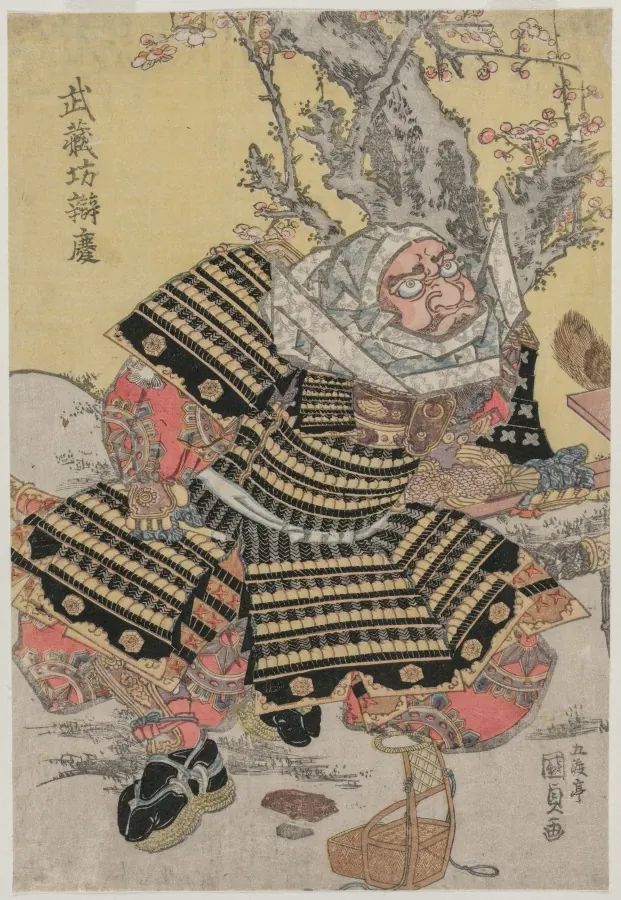
A famous founder
Ask a teacher where an art comes from and you will often hear a story: a holy monk, a hermit who watched a crane fight a snake, a nun who escaped a burning temple. These legends are beautiful, and they are worth knowing. They are also, very often, much younger than the art they explain.
Tracing a legend
Historians date a legend by finding its first appearance in writing. The idea that Bodhidharma taught boxing at Shaolin rests largely on a manual, the Yijin Jing, whose preface claims great age but contains errors; it was probably written by a Taoist, Zining, in 1624. In the 1930s the historian Tang Hao traced the Bodhidharma story to that preface, and attacked the parallel myth that the Taoist Zhang Sanfeng created tai chi, whose “internal school” first appears in an epitaph of 1669.
What legends are for
A founding legend does real work. It gives an art prestige by tying it to a saint, a sage or a hero. It marks identity: Buddhist against Taoist, Chinese against foreign rulers, Okinawan against Japanese, the oppressed against the powerful. It also teaches: the story of a small woman beating a bully explains, in one image, what Wing Chun wants to be. That is why legends survive even after historians have shown their limits.
How we tell them here
On WABUKAN, legends live in their own section, told as legends, with a box that says what can and cannot be shown. History pages stick to dates and documents. Keeping the two apart lets each do its job: the legend to inspire, the history to inform.
Related
- Kung Fu
- Tai Chi
- Wing Chun
- Legends
- Bodhidharma and Shaolin
- Ng Mui and the birth of Wing Chun
- Taoism and the internal arts
- Article: Shaolin
Images: public-domain or CC0 works credited under each picture, or original WABUKAN ink illustrations. Panels: the story told in numbered comic boxes.
Sources
- Yijin Jing — Wikipedia — en.wikipedia.org
- Bodhidharma — Wikipedia — en.wikipedia.org
- Tang Hao — Wikipedia — en.wikipedia.org
- Neijia — Wikipedia — en.wikipedia.org
- Ng Mui — Wikipedia — en.wikipedia.org
- Meir Shahar — Wikipedia — en.wikipedia.org
- Musashibō Benkei Kneeling by a Plum Tree — Cleveland Museum of Art — clevelandart.org
Cite / use this content
You may quote and share this page with a link to WABUKAN. Suggested citation:
WABUKAN 和武館, «Why every art has a founding legend», https://wabukan.com/ensaio-lendas-de-fundacao (accessed 2026-10-30).