
Historical archive
Parashurama, Hanuman and the origins of Kalaripayattu
A warrior-god who raised Kerala from the sea, 108 training grounds and a monkey god famed for his leaps: the sacred stories of India’s oldest-looking martial art.
The legend
Legend
What history shows
Evidence
- The Parashurama story, including the 108 kalaris and the 21 gurus, is a Kerala tradition preserved in a Malayalam song; it is sacred history, not a datable event. The southern style is revered as combining the teachings of Parashurama and of the sage Agastya.
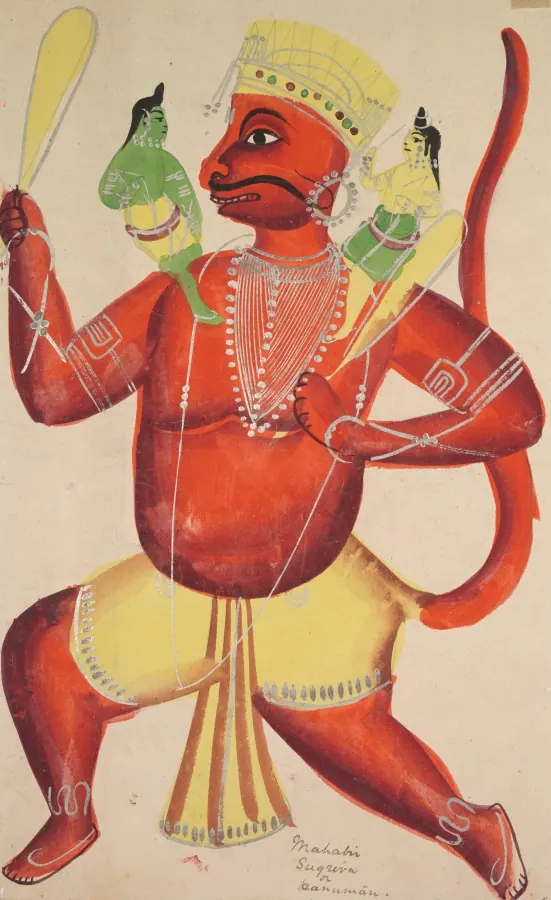
- Hanuman’s link is real but modest: styles called vazhi (“ways”) include Hanuman vazhi, Bhiman vazhi and Bali vazhi, named after epic heroes. Hanuman is also honoured as a patron of strength in Indian wrestling (kushti) gyms.
- Historians date the formation of Kalaripayattu to the 11th–12th centuries in Kerala, from battlefield techniques; Philip Zarrilli sees older precursors in Sangam-era combat and the Sanskrit Dhanur Veda tradition. Ballads from the 12th century onwards describe compulsory martial training.
- Under British rule the art declined (a ban in 1804, after the Pazhassi revolt, is often cited); its public revival began in the 1920s in Thalassery.
In short: Living religious stories that give the kalari its sacred meaning — the shrine corner, the invocation of gods. The documented art is medieval and Keralan, revived in the 20th century.
Images: public-domain or CC0 works credited under each picture, or original WABUKAN ink illustrations. Panels: the story told in numbered comic boxes.
Sources
- Kalaripayattu — Wikipedia — en.wikipedia.org
- Parashurama — Wikipedia — en.wikipedia.org
- Hanuman — Wikipedia — en.wikipedia.org
- Pehlwani (kushti) — Wikipedia — en.wikipedia.org
- Hanuman with Rama and Lakshmana on his Shoulders — Cleveland Museum of Art — clevelandart.org
Cite / use this content
You may quote and share this page with a link to WABUKAN. Suggested citation:
WABUKAN 和武館, «Parashurama, Hanuman and the origins of Kalaripayattu», https://wabukan.com/lenda-hanuman-kalaripayattu (accessed 2026-10-30).