
Historical archive
Kung fu fever: the martial arts boom of the 1970s and 80s
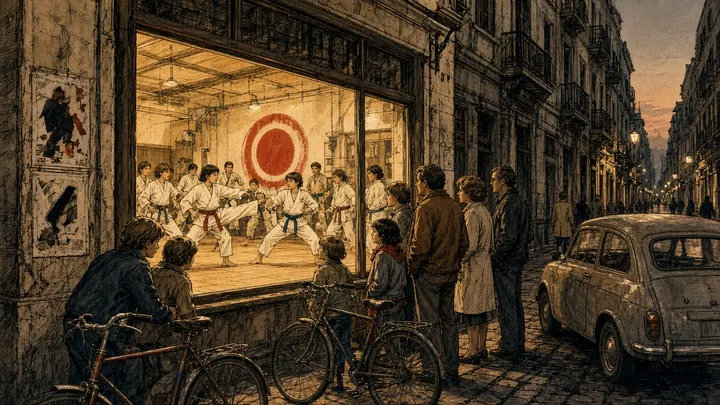
Television, pop songs, ninjas and the Karate Kid filled dojos all over the world.
1972–1989
The story
Key dates
- 1972
The TV series Kung Fu begins.
- 1974
Kung Fu Fighting is number one; first PKA full-contact world championships.
- 1978
Jackie Chan’s Drunken Master.
- 1981
Enter the Ninja starts the ninja film wave.
- 1984
The Karate Kid; first Teenage Mutant Ninja Turtles comic.
- 1988
Bloodsport.
Myth and fact
Bloodsport is a true story about a secret full-contact tournament.
The film was based on claims by Frank Dux that have been widely questioned and never independently confirmed. No reliable evidence shows that the tournament took place as told.
Why it matters
The boom gave many martial arts their first big public outside Asia, but it also filled the market with invented lineages and quick black belts. Much of today’s debate about authenticity starts here.
Related
- Kung Fu
- Karate
- Kickboxing
- Ninjutsu
- Taekwondo
- Martial arts cinema
- Bruce Lee and Hong Kong cinema
- The Gracies and UFC 1
Images: public-domain or CC0 works credited under each picture, or original WABUKAN ink illustrations. Panels: the story told in numbered comic boxes.
Sources
- Kung Fu (1972 TV series) — Wikipedia — en.wikipedia.org
- Kung Fu Fighting — Wikipedia — en.wikipedia.org
- Professional Karate Association — Wikipedia — en.wikipedia.org
- The Karate Kid — Wikipedia — en.wikipedia.org
- Frank Dux — Wikipedia — en.wikipedia.org
Cite / use this content
You may quote and share this page with a link to WABUKAN. Suggested citation:
WABUKAN 和武館, «Kung fu fever: the martial arts boom of the 1970s and 80s», https://wabukan.com/marco-boom-70-80 (accessed 2026-10-30).