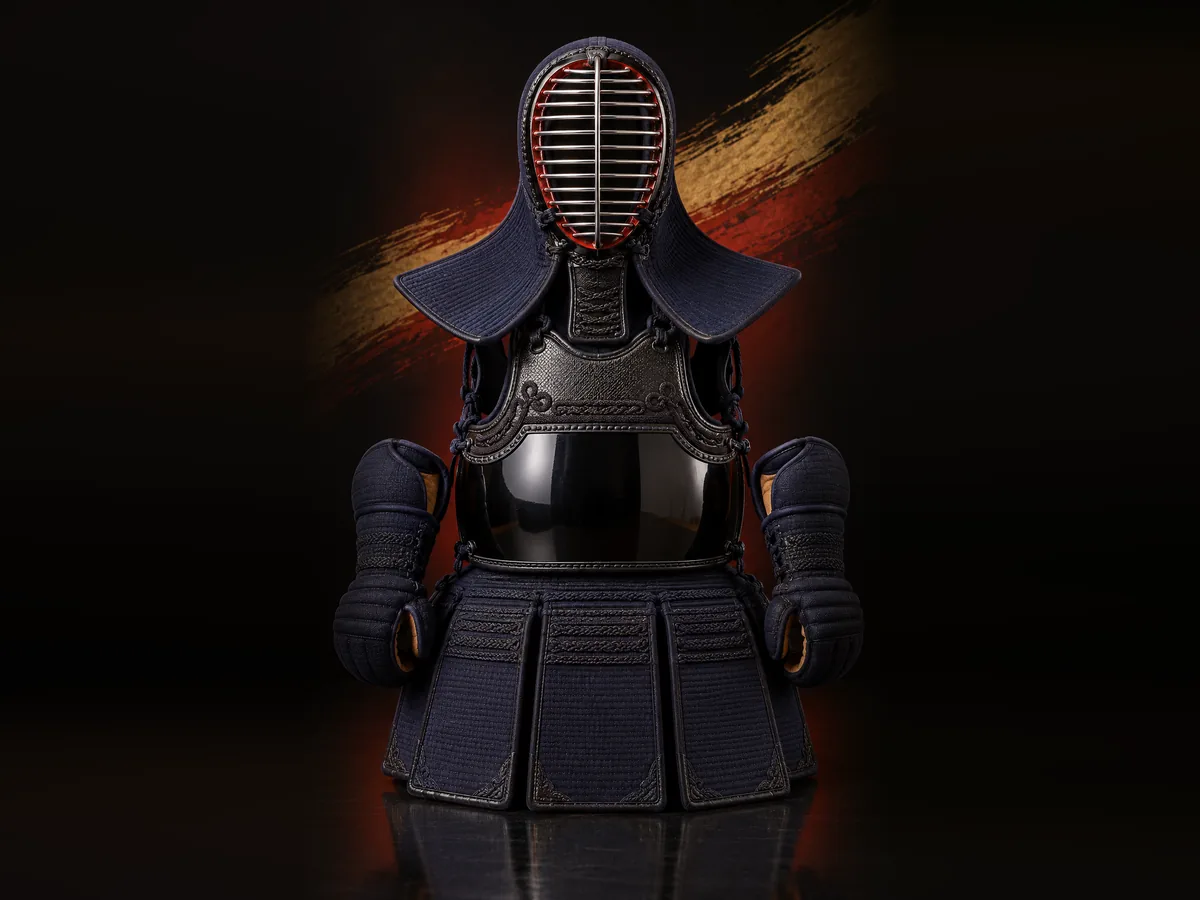
A armadura do kendo: men (capacete com grade), kote (luvas), do (peitoral) e tare (proteção da anca). Só se marcam pontos nestes alvos.
Bogu Ilustração WABUKAN
Outros nomes
防具 · kendōgu
Origem e história
A armadura de proteção para a esgrima desenvolveu-se no século XVIII, tradicionalmente atribuída às escolas Jikishinkage-ryū e Ittō-ryū, juntamente com o shinai. Tornou possíveis golpes com força total e levou diretamente ao kendo moderno.
Quatro peças: men (capacete com grelha de aço e abas para os ombros), kote (luvas almofadadas), dō (peitoral, tradicionalmente de bambu lacado ou fibra) e tare (proteção da anca e virilha), usadas sobre keikogi e hakama.
Técnicas básicas
vestir e atar (himo)
men-tsuke
kirikaeshi com armadura
Treino
O equipamento de proteção faz parte do próprio treino: aprende-se a vesti-lo bem, a verificar correias e almofadados e a mover-se e respirar com ele antes de qualquer trabalho de contacto.
Segurança
A proteção só funciona se servir bem: substitua almofadados rachados, rasgados ou comprimidos, verifique capacetes e grelhas com regularidade e deixe o equipamento húmido secar por completo para evitar infeções da pele.
Legalidade (informação geral)
Isto é equipamento de treino ou tradicional, não uma arma, e em geral é livre de comprar e ter. Clubes e federações podem ainda impor regras sobre modelos aprovados e estado de conservação. Informação geral, não aconselhamento jurídico.
Curiosidades
A etiqueta no tare, a zekken, mostra o dojo e o apelido do praticante.
Kendo armour: the men (helmet with grille), kote (gloves), do (chest protector) and tare (hip protector). Points are only scored on these targets.
Bogu WABUKAN illustration
Also known as
防具 · kendōgu
Origin and history
Protective armour for sword practice developed in the 18th century, traditionally credited to the Jikishinkage-ryū and Ittō-ryū schools, together with the shinai. It made full-power strikes possible and led directly to modern kendo.
Four parts: men (helmet with steel grille and shoulder flaps), kote (padded gauntlets), dō (breastplate, traditionally lacquered bamboo or fibre) and tare (hip and groin protector), worn over keikogi and hakama.
Basic techniques
wearing and tying (himo)
men-tsuke
kirikaeshi in armour
Training
Protective equipment is part of training itself: students learn to put it on correctly, check straps and padding, and move and breathe while wearing it before any contact work.
Safety
Protection only works if it fits: replace cracked, torn or compressed padding, check helmets and grilles regularly and let damp gear dry fully to avoid skin infections.
Legality (general information)
This is training or traditional equipment, not a weapon, and is generally free to buy and own. Clubs and federations may still set rules on approved models and condition. General information, not legal advice.
Did you know?
The name tag on the tare, the zekken, shows the player’s dojo and surname.
La armadura del kendo: casco, guantes, peto y faldón.
Bogu Ilustración WABUKAN
Otros nombres
防具 · kendōgu
Origen e historia
La armadura de protección para la esgrima se desarrolló en el siglo XVIII, atribuida tradicionalmente a las escuelas Jikishinkage-ryū e Ittō-ryū, junto con el shinai. Permitió golpear con fuerza plena y condujo directamente al kendo moderno.
Cuatro piezas: men (casco con rejilla de acero y faldones para los hombros), kote (guantes acolchados), dō (peto, tradicionalmente de bambú lacado o fibra) y tare (protección de cadera e ingles), sobre keikogi y hakama.
Técnicas básicas
ponerse y atar (himo)
men-tsuke
kirikaeshi con armadura
Entrenamiento
El equipo de protección forma parte del propio entrenamiento: se aprende a ponérselo bien, a revisar correas y acolchados y a moverse y respirar con él antes de cualquier trabajo de contacto.
Seguridad
La protección solo funciona si ajusta bien: sustituya acolchados agrietados, rotos o comprimidos, revise cascos y rejillas con regularidad y deje secar del todo el equipo húmedo para evitar infecciones de la piel.
Legalidad (información general)
Es material de entrenamiento o tradicional, no un arma, y en general es libre de comprar y poseer. Clubes y federaciones pueden fijar normas sobre modelos homologados y estado de conservación. Información general, no asesoramiento jurídico.
Curiosidades
La etiqueta del tare, la zekken, muestra el dojo y el apellido del practicante.
L’armure du kendo : casque, gants, plastron et tablier.
Bogu Illustration WABUKAN
Autres noms
防具 · kendōgu
Origine et histoire
L’armure de protection pour l’escrime se développe au XVIIIe siècle, traditionnellement attribuée aux écoles Jikishinkage-ryū et Ittō-ryū, en même temps que le shinai. Elle permet de frapper à pleine puissance et mène directement au kendo moderne.
Quatre pièces : men (casque à grille d’acier et rabats d’épaules), kote (gants rembourrés), dō (plastron, traditionnellement en bambou laqué ou en fibre) et tare (protection des hanches et de l’aine), portées sur le keikogi et le hakama.
Techniques de base
enfiler et nouer (himo)
men-tsuke
kirikaeshi en armure
Entraînement
L’équipement de protection fait partie de l’entraînement : on apprend à le mettre correctement, à vérifier sangles et rembourrages, et à bouger et respirer avec avant tout travail au contact.
Sécurité
Une protection ne fonctionne que si elle est à la bonne taille : remplacez les rembourrages fendus, déchirés ou tassés, vérifiez régulièrement casques et grilles et laissez sécher complètement l’équipement humide pour éviter les infections cutanées.
Légalité (information générale)
Il s’agit d’un équipement d’entraînement ou traditionnel, pas d’une arme, en général libre à l’achat et à la détention. Clubs et fédérations peuvent toutefois imposer des modèles homologués et un bon état. Information générale, pas un conseil juridique.
Le saviez-vous ?
L’étiquette du tare, le zekken, indique le dojo et le nom du pratiquant.