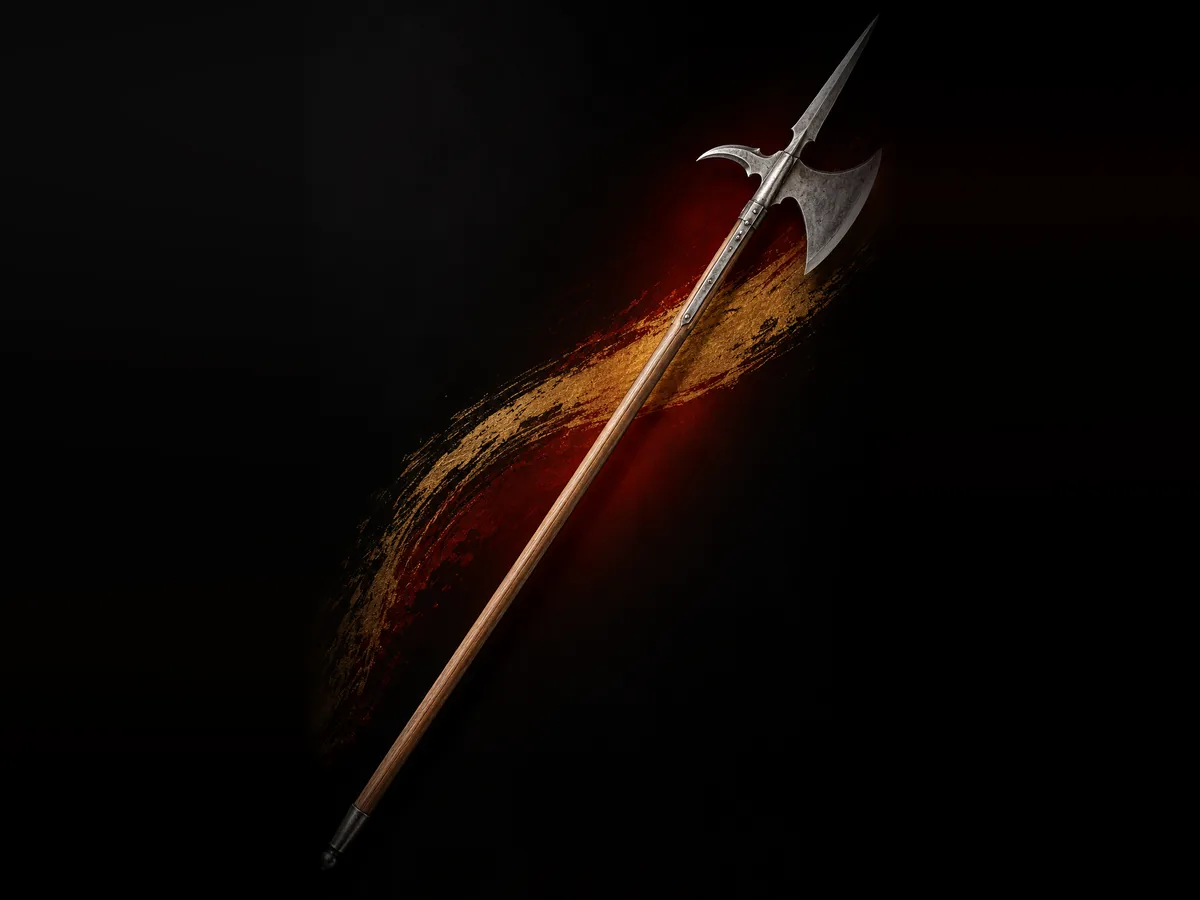
Lâmina de machado, espigão e gancho numa só haste comprida, a arma da infantaria suíça; a Guarda Suíça ainda a usa.
Alabarda Ilustração WABUKAN
Outros nomes
Hellebarde · hallebarde; alabarda; Hellebarde
Origem e história
A alabarda juntava uma lâmina de machado, uma ponta e um gancho num cabo. A infantaria suíça tornou-a famosa nos séculos XIV e XV, e Joachim Meyer (1570) ensinou o seu uso.
Cabo com cerca de 1,5–2 m e uma cabeça de aço com lâmina de machado de um lado, gancho do outro e ponta no topo.
Técnicas básicas
estocada
gancho para desmontar
corte com o machado
jogos de Joachim Meyer (1570)
Treino
O treino de armas de haste começa pelo manejo: deslizar as mãos ao longo do cabo, virar a arma de ponta a ponta e manter a distância. Estocadas, varrimentos e bloqueios treinam-se a solo e depois em formas combinadas a pares, com versões de madeira de ponta almofadada ou romba.
Segurança
As armas longas precisam de espaço: verifique o teto e o espaço atrás de si e avise os parceiros antes de virar a arma. Inspecione os cabos de madeira à procura de fissuras e lascas e substitua-os em vez de os reparar.
Legalidade (informação geral)
Espadas, facas e outras armas de lâmina são reguladas de forma muito diferente de país para país (e por vezes de região para região): ter uma em casa é muitas vezes permitido, mas trazê-la na via pública, comprá-la abaixo de certa idade ou importá-la pode estar limitado ou proibido. Os praticantes costumam transportá-las em estojo fechado, fora de alcance e diretamente entre casa e dojo. Isto é informação geral, não aconselhamento jurídico: confirme a lei onde vive.
Curiosidades
A Guarda Suíça do Vaticano ainda usa alabardas, uma das armas mais antigas ainda em uso cerimonial oficial.
An axe blade, spike and hook on one long pole, the weapon of Swiss infantry; the Swiss Guard still carries it.
Halberd WABUKAN illustration
Also known as
Hellebarde · hallebarde; alabarda; Hellebarde
Origin and history
The halberd combined an axe blade, a spike and a hook on a shaft. Swiss infantry made it famous in the 14th and 15th centuries, and Joachim Meyer (1570) taught its use.
A shaft of about 1.5–2 m topped by a steel head with an axe blade on one side, a hook or fluke on the other and a spike at the top.
Basic techniques
thrust
hook to unhorse
cut with the axe
plays from Joachim Meyer (1570)
Training
Polearm training begins with handling: sliding the hands along the shaft, turning the weapon end to end and keeping distance. Thrusts, sweeps and blocks are drilled solo, then in prearranged forms with a partner using wooden versions with padded or blunt tips.
Safety
Long weapons need room: check the ceiling and the space behind you, and warn partners before turning the weapon. Inspect wooden shafts for cracks and splinters and replace them rather than repair them.
Legality (general information)
Swords, knives and other edged weapons are regulated very differently from country to country (and sometimes from region to region): owning one at home is often allowed, while carrying it in public, buying it under a certain age or importing it may be restricted or banned. Practitioners usually transport them cased, out of reach and straight between home and dojo. This is general information, not legal advice: check the law where you live.
Did you know?
The Swiss Guard in Vatican City still carry halberds, one of the oldest weapons still in official ceremonial use.
El arma de asta suiza que combina hacha, punta y gancho.
Alabarda Ilustración WABUKAN
Otros nombres
Hellebarde · hallebarde; alabarda; Hellebarde
Origen e historia
La alabarda combinaba una hoja de hacha, una punta y un gancho en un asta. La infantería suiza la hizo famosa en los siglos XIV y XV, y Joachim Meyer (1570) enseñó su uso.
Asta de unos 1,5–2 m rematada por una cabeza de acero con hoja de hacha a un lado, gancho al otro y punta arriba.
Técnicas básicas
estocada
gancho para desmontar
tajo con el hacha
juegos de Joachim Meyer (1570)
Entrenamiento
El entrenamiento con armas de asta empieza por el manejo: deslizar las manos por el mango, girar el arma de punta a punta y mantener la distancia. Estocadas, barridos y bloqueos se practican en solitario y después en formas pactadas por parejas, con versiones de madera de punta acolchada o roma.
Seguridad
Las armas largas necesitan espacio: compruebe el techo y el espacio a su espalda y avise a los compañeros antes de girar el arma. Revise los mangos de madera en busca de grietas y astillas y sustitúyalos en lugar de repararlos.
Legalidad (información general)
Las espadas, cuchillos y demás armas blancas se regulan de forma muy distinta según el país (y a veces según la región): tener una en casa suele estar permitido, pero llevarla en la vía pública, comprarla por debajo de cierta edad o importarla puede estar limitado o prohibido. Los practicantes suelen transportarlas en funda cerrada, fuera de alcance y directamente entre casa y dojo. Es información general, no asesoramiento jurídico: consulte la ley donde vive.
Curiosidades
La Guardia Suiza del Vaticano sigue llevando alabardas, una de las armas más antiguas aún en uso ceremonial oficial.
L’arme d’hast suisse combinant hache, pointe et crochet.
Hallebarde Illustration WABUKAN
Autres noms
Hellebarde · hallebarde; alabarda; Hellebarde
Origine et histoire
La hallebarde combinait une lame de hache, une pointe et un crochet sur une hampe. L’infanterie suisse la rendit célèbre aux XIVe et XVe siècles, et Joachim Meyer (1570) en enseigna l’usage.
Hampe d’environ 1,5–2 m surmontée d’un fer avec lame de hache d’un côté, crochet de l’autre et pointe au sommet.
Techniques de base
estoc
crochet pour désarçonner
taille avec la hache
jeux de Joachim Meyer (1570)
Entraînement
L’entraînement aux armes d’hast commence par le maniement : faire glisser les mains le long de la hampe, retourner l’arme d’un bout à l’autre et garder la distance. Estocs, balayages et parades se travaillent seuls, puis en formes convenues à deux, avec des versions en bois à pointe rembourrée ou émoussée.
Sécurité
Les armes longues demandent de la place : vérifiez le plafond et l’espace derrière vous, et prévenez vos partenaires avant de retourner l’arme. Inspectez les hampes en bois (fissures, échardes) et remplacez-les plutôt que de les réparer.
Légalité (information générale)
Les épées, couteaux et autres armes blanches sont réglementés très différemment d’un pays à l’autre (parfois d’une région à l’autre) : en posséder une chez soi est souvent permis, mais la porter dans la rue, l’acheter avant un certain âge ou l’importer peut être limité ou interdit. Les pratiquants la transportent en général dans un étui fermé, hors de portée et directement entre domicile et dojo. Ceci est une information générale, pas un conseil juridique : vérifiez la loi là où vous vivez.
Le saviez-vous ?
La Garde suisse pontificale porte toujours la hallebarde, l’une des plus anciennes armes encore en usage cérémoniel officiel.