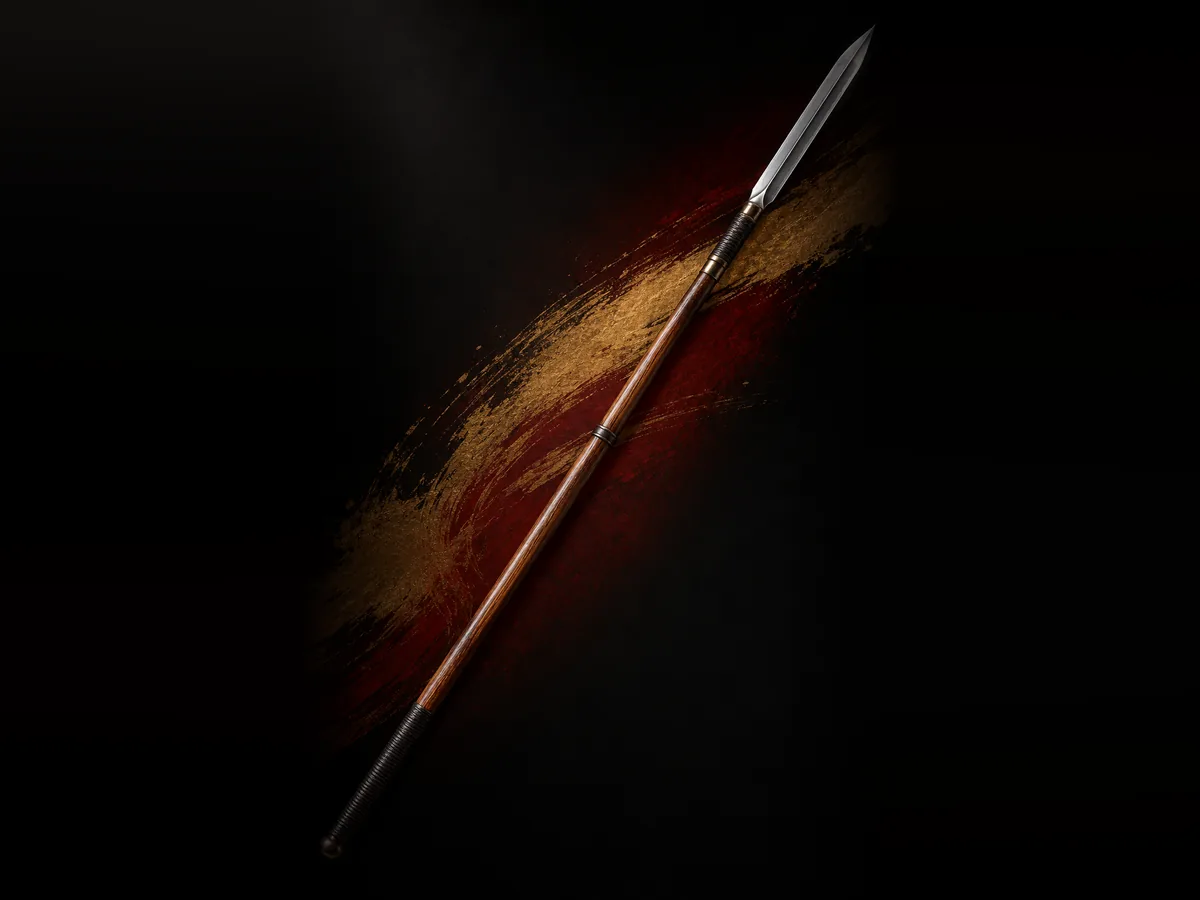
A lança japonesa de ponta reta. Na época das guerras civis era a arma principal dos soldados a pé, mais importante no campo de batalha do que a espada.
Yari Ilustração WABUKAN
Outros nomes
槍 · su-yari; jūmonji-yari; kuda-yari
Origem e história
As lanças usaram-se no Japão desde cedo, mas a yari tornou-se a principal arma de infantaria no período Sengoku (séc. XV–XVI), quando formações de ashigaru levavam piques muito compridos. A arte da lança chama-se sōjutsu; algumas escolas koryū, como a Hōzōin-ryū, ainda a ensinam.
Lâmina reta de poucos centímetros até mais de um metro, com um espigão longo encaixado num cabo de madeira dura que podia passar dos 4 m nos piques de infantaria. Há variantes como a jūmonji-yari em cruz e a kuda-yari, que desliza dentro de um tubo de metal.
Técnicas básicas
tsuki (estocada)
harai (varrimento)
uchi (golpe com a haste)
kata de sōjutsu
Treino
O treino de armas de haste começa pelo manejo: deslizar as mãos ao longo do cabo, virar a arma de ponta a ponta e manter a distância. Estocadas, varrimentos e bloqueios treinam-se a solo e depois em formas combinadas a pares, com versões de madeira de ponta almofadada ou romba.
Segurança
As armas longas precisam de espaço: verifique o teto e o espaço atrás de si e avise os parceiros antes de virar a arma. Inspecione os cabos de madeira à procura de fissuras e lascas e substitua-os em vez de os reparar.
Legalidade (informação geral)
Espadas, facas e outras armas de lâmina são reguladas de forma muito diferente de país para país (e por vezes de região para região): ter uma em casa é muitas vezes permitido, mas trazê-la na via pública, comprá-la abaixo de certa idade ou importá-la pode estar limitado ou proibido. Os praticantes costumam transportá-las em estojo fechado, fora de alcance e diretamente entre casa e dojo. Isto é informação geral, não aconselhamento jurídico: confirme a lei onde vive.
Curiosidades
As “Sete Lanças de Shizugatake” (1583) foram sete jovens vassalos de Toyotomi Hideyoshi celebrados pelos seus feitos nessa batalha.
The straight-headed Japanese spear. In the civil-war era it was the main weapon of foot soldiers, more important on the battlefield than the sword.
Yari WABUKAN illustration
Also known as
槍 · su-yari; jūmonji-yari; kuda-yari
Origin and history
Spears were used in Japan from early times, but the yari became the main infantry weapon in the Sengoku period (15th–16th c.), when massed ashigaru formations carried very long pikes. The art of the spear is called sōjutsu; a few koryū schools, such as Hōzōin-ryū, still teach it.
A straight blade from a few centimetres to over a metre, with a long tang set into a hardwood shaft that could exceed 4 m for infantry pikes. Variants include the cross-shaped jūmonji-yari and the kuda-yari, which slides through a metal tube.
Basic techniques
tsuki (thrust)
harai (sweep)
uchi (strike with the shaft)
sōjutsu kata
Training
Polearm training begins with handling: sliding the hands along the shaft, turning the weapon end to end and keeping distance. Thrusts, sweeps and blocks are drilled solo, then in prearranged forms with a partner using wooden versions with padded or blunt tips.
Safety
Long weapons need room: check the ceiling and the space behind you, and warn partners before turning the weapon. Inspect wooden shafts for cracks and splinters and replace them rather than repair them.
Legality (general information)
Swords, knives and other edged weapons are regulated very differently from country to country (and sometimes from region to region): owning one at home is often allowed, while carrying it in public, buying it under a certain age or importing it may be restricted or banned. Practitioners usually transport them cased, out of reach and straight between home and dojo. This is general information, not legal advice: check the law where you live.
Did you know?
The “Seven Spears of Shizugatake” (1583) were seven young retainers of Toyotomi Hideyoshi celebrated for their deeds in that battle.
La lanza japonesa, arma principal de la infantería en el periodo Sengoku.
Yari Ilustración WABUKAN
Otros nombres
槍 · su-yari; jūmonji-yari; kuda-yari
Origen e historia
Las lanzas se usaron en Japón desde muy pronto, pero la yari se convirtió en la principal arma de infantería en el periodo Sengoku (s. XV–XVI), cuando las formaciones de ashigaru llevaban picas muy largas. El arte de la lanza se llama sōjutsu; algunas escuelas koryū, como la Hōzōin-ryū, aún lo enseñan.
Hoja recta de pocos centímetros a más de un metro, con una espiga larga encajada en un asta de madera dura que podía superar los 4 m en las picas. Hay variantes como la jūmonji-yari en cruz y la kuda-yari, que se desliza por un tubo metálico.
Técnicas básicas
tsuki (estocada)
harai (barrido)
uchi (golpe con el asta)
kata de sōjutsu
Entrenamiento
El entrenamiento con armas de asta empieza por el manejo: deslizar las manos por el mango, girar el arma de punta a punta y mantener la distancia. Estocadas, barridos y bloqueos se practican en solitario y después en formas pactadas por parejas, con versiones de madera de punta acolchada o roma.
Seguridad
Las armas largas necesitan espacio: compruebe el techo y el espacio a su espalda y avise a los compañeros antes de girar el arma. Revise los mangos de madera en busca de grietas y astillas y sustitúyalos en lugar de repararlos.
Legalidad (información general)
Las espadas, cuchillos y demás armas blancas se regulan de forma muy distinta según el país (y a veces según la región): tener una en casa suele estar permitido, pero llevarla en la vía pública, comprarla por debajo de cierta edad o importarla puede estar limitado o prohibido. Los practicantes suelen transportarlas en funda cerrada, fuera de alcance y directamente entre casa y dojo. Es información general, no asesoramiento jurídico: consulte la ley donde vive.
Curiosidades
Las «Siete Lanzas de Shizugatake» (1583) fueron siete jóvenes vasallos de Toyotomi Hideyoshi célebres por su actuación en esa batalla.
La lance japonaise, arme principale de l’infanterie à l’époque Sengoku.
Yari Illustration WABUKAN
Autres noms
槍 · su-yari; jūmonji-yari; kuda-yari
Origine et histoire
Les lances sont utilisées au Japon depuis longtemps, mais le yari devient la principale arme d’infanterie à l’époque Sengoku (XVe–XVIe s.), quand les formations d’ashigaru portent de très longues piques. L’art de la lance s’appelle sōjutsu ; quelques écoles koryū, comme la Hōzōin-ryū, l’enseignent encore.
Lame droite de quelques centimètres à plus d’un mètre, avec une longue soie fixée dans une hampe en bois dur qui pouvait dépasser 4 m pour les piques. Variantes : le jūmonji-yari en croix et le kuda-yari, qui coulisse dans un tube métallique.
Techniques de base
tsuki (estoc)
harai (balayage)
uchi (frappe avec la hampe)
kata de sōjutsu
Entraînement
L’entraînement aux armes d’hast commence par le maniement : faire glisser les mains le long de la hampe, retourner l’arme d’un bout à l’autre et garder la distance. Estocs, balayages et parades se travaillent seuls, puis en formes convenues à deux, avec des versions en bois à pointe rembourrée ou émoussée.
Sécurité
Les armes longues demandent de la place : vérifiez le plafond et l’espace derrière vous, et prévenez vos partenaires avant de retourner l’arme. Inspectez les hampes en bois (fissures, échardes) et remplacez-les plutôt que de les réparer.
Légalité (information générale)
Les épées, couteaux et autres armes blanches sont réglementés très différemment d’un pays à l’autre (parfois d’une région à l’autre) : en posséder une chez soi est souvent permis, mais la porter dans la rue, l’acheter avant un certain âge ou l’importer peut être limité ou interdit. Les pratiquants la transportent en général dans un étui fermé, hors de portée et directement entre domicile et dojo. Ceci est une information générale, pas un conseil juridique : vérifiez la loi là où vous vivez.
Le saviez-vous ?
Les « Sept Lances de Shizugatake » (1583) sont sept jeunes vassaux de Toyotomi Hideyoshi célébrés pour leurs exploits dans cette bataille.