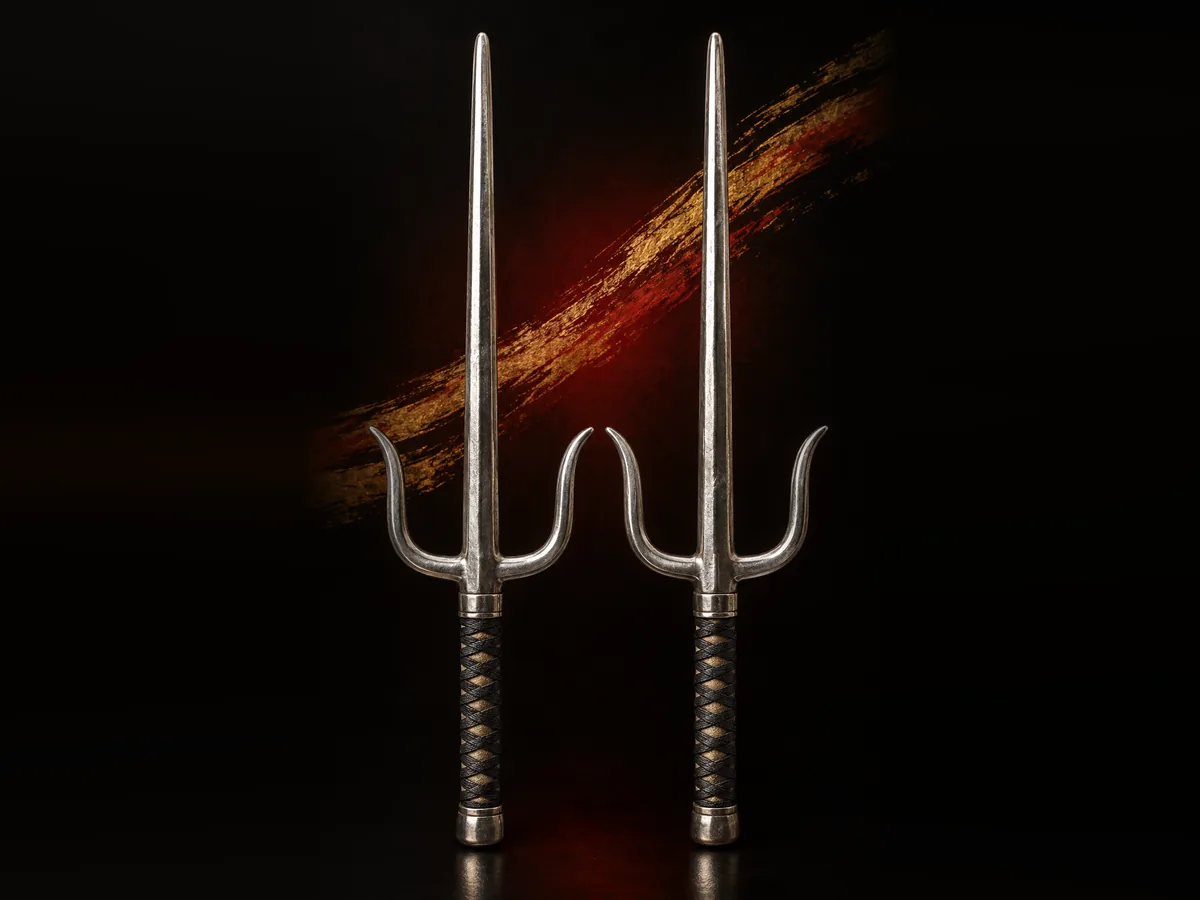
Bastão de metal com três pontas, aguçado mas sem gume. As pontas laterais prendem e bloqueiam um pau ou uma lâmina.
Sai Ilustração WABUKAN
Outros nomes
釵 · jitte-like trident (in English); chā (Chinese)
Origem e história
O sai chegou a Okinawa vindo da China ou do Sudeste Asiático e era usado por funcionários do reino de Ryūkyū para controlar multidões e fazer detenções. Tornou-se uma das armas principais do kobudō de Okinawa e treina-se normalmente aos pares.
Haste de metal pontiaguda (monouchi), redonda ou octogonal, de cerca de 45–55 cm, com dois dentes laterais curvos (yoku) e um punho com pomo; normalmente não tem gume.
Técnicas básicas
uke (bloqueio com os dentes)
tsuki
uchi com o pomo (tsuka-gashira)
pega invertida
kata de sai (Tsuken Shitahaku no sai)
Treino
O treino de lâmina curta começa com réplicas de madeira, alumínio ou borracha. Treinam-se os ângulos de ataque, as pegas (normal e invertida), o controlo do braço adversário e o trabalho de pés, e depois exercícios de fluxo a pares. Lâminas verdadeiras ficam, quando muito, para formas a solo de praticantes experientes.
Segurança
Use facas de treino em todo o trabalho a pares e proteção para os olhos nos exercícios rápidos. Nunca misture lâminas verdadeiras e de treino na mesma sessão; guarde as lâminas embainhadas e fora do alcance das crianças.
Legalidade (informação geral)
Espadas, facas e outras armas de lâmina são reguladas de forma muito diferente de país para país (e por vezes de região para região): ter uma em casa é muitas vezes permitido, mas trazê-la na via pública, comprá-la abaixo de certa idade ou importá-la pode estar limitado ou proibido. Os praticantes costumam transportá-las em estojo fechado, fora de alcance e diretamente entre casa e dojo. Isto é informação geral, não aconselhamento jurídico: confirme a lei onde vive.
Curiosidades
Alguns sistemas de kobudō levam um terceiro sai no cinto para atirar ou substituir um perdido.
A three-pronged metal truncheon, pointed but not sharpened. The side prongs trap and block a stick or blade.
Sai WABUKAN illustration
Also known as
釵 · jitte-like trident (in English); chā (Chinese)
Origin and history
The sai reached Okinawa from China or Southeast Asia and was used by Ryūkyū officials to control crowds and arrest people. It became one of the main weapons of Okinawan kobudō and is usually trained in pairs.
A pointed metal shaft (monouchi), round or octagonal, of about 45–55 cm, with two curved side prongs (yoku) and a handle with a pommel; it is normally blunt.
Basic techniques
uke (block with the prongs)
tsuki
uchi with the knob (tsuka-gashira)
reverse grip
sai kata (Tsuken Shitahaku no sai)
Training
Short-blade training starts with trainers made of wood, aluminium or rubber. Students drill angles of attack, grips (forward and reverse), checking the opponent’s arm and footwork, then flow drills with a partner. Live blades are kept for solo forms by experienced practitioners, if at all.
Safety
Use training knives for all partner work and eye protection for fast drills. Never mix live and training blades in the same session, store blades sheathed and out of reach of children.
Legality (general information)
Swords, knives and other edged weapons are regulated very differently from country to country (and sometimes from region to region): owning one at home is often allowed, while carrying it in public, buying it under a certain age or importing it may be restricted or banned. Practitioners usually transport them cased, out of reach and straight between home and dojo. This is general information, not legal advice: check the law where you live.
Did you know?
Some kobudō systems carry a third sai in the belt to throw or to replace one that is lost.
Tridente metálico sin filo del kobudō de Okinawa, usado en pareja.
Sai Ilustración WABUKAN
Otros nombres
釵 · jitte-like trident (in English); chā (Chinese)
Origen e historia
El sai llegó a Okinawa desde China o el Sudeste Asiático y lo usaban funcionarios del reino de Ryūkyū para controlar multitudes y hacer detenciones. Se convirtió en una de las armas principales del kobudō de Okinawa y se entrena normalmente por parejas.
Vástago metálico puntiagudo (monouchi), redondo u octogonal, de unos 45–55 cm, con dos dientes laterales curvos (yoku) y empuñadura con pomo; normalmente sin filo.
Técnicas básicas
uke (bloqueo con las púas)
tsuki
uchi con el pomo (tsuka-gashira)
agarre invertido
kata de sai (Tsuken Shitahaku no sai)
Entrenamiento
El entrenamiento de hoja corta empieza con réplicas de madera, aluminio o goma. Se practican los ángulos de ataque, los agarres (normal e invertido), el control del brazo contrario y el juego de pies, y después ejercicios de flujo por parejas. Las hojas reales quedan, como mucho, para formas en solitario de practicantes expertos.
Seguridad
Use cuchillos de entrenamiento en todo el trabajo por parejas y protección ocular en los ejercicios rápidos. Nunca mezcle hojas reales y de entrenamiento en la misma sesión; guarde las hojas enfundadas y fuera del alcance de los niños.
Legalidad (información general)
Las espadas, cuchillos y demás armas blancas se regulan de forma muy distinta según el país (y a veces según la región): tener una en casa suele estar permitido, pero llevarla en la vía pública, comprarla por debajo de cierta edad o importarla puede estar limitado o prohibido. Los practicantes suelen transportarlas en funda cerrada, fuera de alcance y directamente entre casa y dojo. Es información general, no asesoramiento jurídico: consulte la ley donde vive.
Curiosidades
Algunos sistemas de kobudō llevan un tercer sai en el cinturón para lanzarlo o sustituir uno perdido.
Trident métallique sans tranchant du kobudō d’Okinawa, utilisé par paire.
Sai Illustration WABUKAN
Autres noms
釵 · jitte-like trident (in English); chā (Chinese)
Origine et histoire
Le sai arrive à Okinawa depuis la Chine ou l’Asie du Sud-Est ; les fonctionnaires du royaume de Ryūkyū l’utilisaient pour contenir la foule et arrêter des personnes. Il devient l’une des armes principales du kobudō d’Okinawa et se travaille en général par paire.
Tige métallique pointue (monouchi), ronde ou octogonale, d’environ 45–55 cm, avec deux branches latérales courbes (yoku) et une poignée à pommeau ; normalement sans tranchant.
Techniques de base
uke (blocage avec les branches)
tsuki
uchi avec le pommeau (tsuka-gashira)
prise inversée
kata de sai (Tsuken Shitahaku no sai)
Entraînement
L’entraînement à la lame courte commence avec des répliques en bois, aluminium ou caoutchouc. On travaille les angles d’attaque, les prises (normale et inversée), le contrôle du bras adverse et le jeu de jambes, puis des exercices de flux à deux. Les vraies lames sont réservées, au mieux, aux formes solo des pratiquants confirmés.
Sécurité
Utilisez des couteaux d’entraînement pour tout le travail à deux et une protection des yeux pour les exercices rapides. Ne mélangez jamais lames vives et d’entraînement dans une même séance ; rangez les lames dans leur fourreau, hors de portée des enfants.
Légalité (information générale)
Les épées, couteaux et autres armes blanches sont réglementés très différemment d’un pays à l’autre (parfois d’une région à l’autre) : en posséder une chez soi est souvent permis, mais la porter dans la rue, l’acheter avant un certain âge ou l’importer peut être limité ou interdit. Les pratiquants la transportent en général dans un étui fermé, hors de portée et directement entre domicile et dojo. Ceci est une information générale, pas un conseil juridique : vérifiez la loi là où vous vivez.
Le saviez-vous ?
Certains systèmes de kobudō portent un troisième sai à la ceinture, pour le lancer ou remplacer un sai perdu.