
Historical archive
← All beliefs and philosophies
European chivalry: the ideal knight and the real one
How the Church, poets and knights themselves built an ethic for armed men, and how far practice followed it.
The story
What the tradition holds
- A knight must be brave, loyal, generous and courteous.
- Strength exists to protect the Church, the weak, widows and orphans.
- Prowess is earned through constant training and hardship.
What history and science show
- Llull, Charny and the fight books are genuine medieval texts; the ideals were real and widely read.
- There was no single code; chivalry meant different things in different places and centuries.
- Records of war show that ideals and practice were often far apart, especially for non-nobles.
Myth and fact
Knights followed a written code of chivalry with ten commandments.
That list comes from Léon Gautier’s book La Chevalerie (1884), a nineteenth-century summary, not a medieval rule.
A note of respect
The ideal of using strength to protect others still inspires people. Knowing its real history makes it a choice, not a legend.
Related
- HEMA
- Olympic Fencing
- Liechtenauer’s Zettel — the secret verses of the longsword
- Fiore dei Liberi — The Flower of Battle
- Article: fencing and HEMA
- Zen and bushido
- Code of honour
Images: public-domain or CC0 works credited under each picture, or original WABUKAN ink illustrations. Panels: the story told in numbered comic boxes.
Sources
- Chivalry — Wikipedia — en.wikipedia.org
- Peace and Truce of God — Wikipedia — en.wikipedia.org
- Geoffroi de Charny — Wikipedia — en.wikipedia.org
- Ramon Llull — Wikipedia — en.wikipedia.org
- Chevauchée — Wikipedia — en.wikipedia.org
- Léon Gautier — Wikipedia — en.wikipedia.org
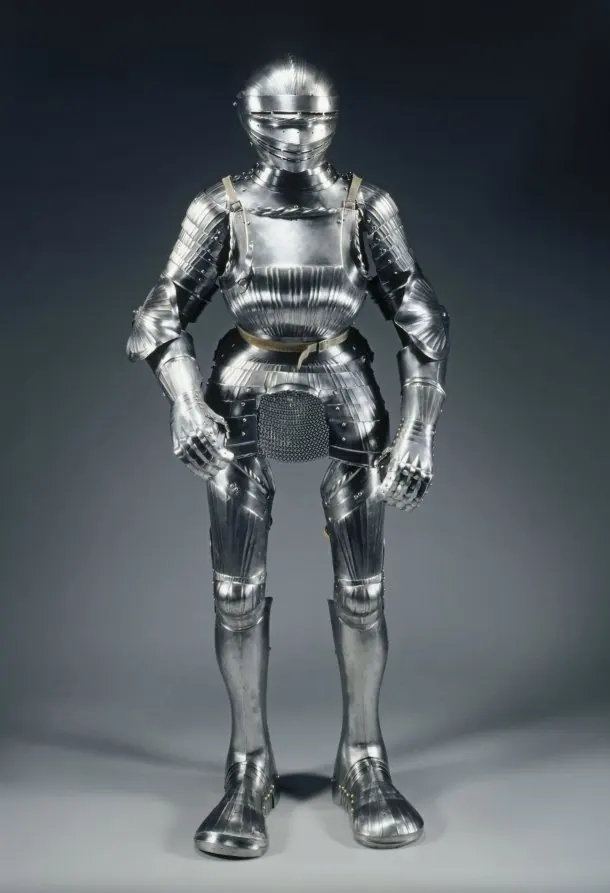
- Field Armor in Maximilian Style — Cleveland Museum of Art — clevelandart.org
Cite / use this content
You may quote and share this page with a link to WABUKAN. Suggested citation:
WABUKAN 和武館, «European chivalry: the ideal knight and the real one», https://wabukan.com/crenca-cavalaria-europeia (accessed 2026-10-30).