
9 techniques published
Technique Manual
Each technique is explained three ways: how to do it, what the human body does, and what the measurements say. The same movement is then compared across the arts that use it.
⚠ Train with an instructor. Learn and practise this technique only under a qualified instructor, on a suitable surface and with a cooperative partner. This page explains; it does not replace a teacher.
Strikes
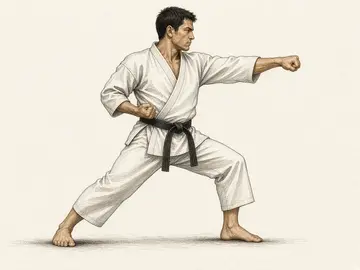
Kicks
 Front kick (mae-geri / teep / ap chagi)The front kick step by step: chamber, extension, return; the whip-like knee action measured in taekwondo and karate studies; and how karate, taekwondo and Muay Thai use it differently.
 Roundhouse kick (mawashi-geri / dollyo chagi / Thai kick)The roundhouse kick in Muay Thai, karate and taekwondo: steps, errors, a 3D motion-capture comparison of expert practitioners, and what makes a kick effective.
 Side kick (yoko-geri / yop chagi)The side kick step by step, why it puts much more body mass into the target than the roundhouse kick, and how taekwondo, karate and savate use it.
Falls
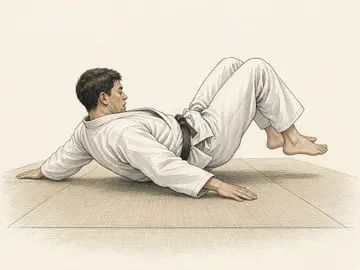
Throws
 Major outer reap (o-soto-gari)O-soto-gari step by step: breaking balance onto the heel, the reaping leg, the support-leg ankle that powers the rotation, measured differences between black and white belts, and why the thrown partner must know ukemi.
 Shoulder throw (seoi-nage)Seoi-nage step by step: entry, turning under the partner and the lift; why the legs and trunk produce most of the driving moments, how fast elite judoka move forwards, and how the throw appears in sambo, wrestling and jujutsu.
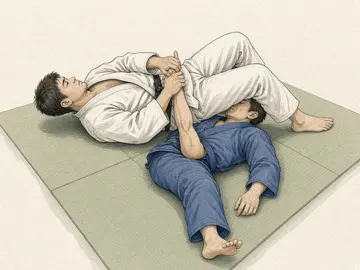
Joint locks
Chokes
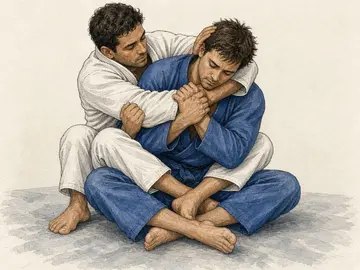
The manual grows in versions; new techniques are added to the categories below.
Method
- Numbers come only from published studies, with their sample size and conditions; each is linked to its entry in our bibliography.
- When we do a calculation (for example converting degrees to radians or multiplying mass by velocity), it is labelled “Our calculation from cited data”.
- Where no laboratory study exists for a technique, we say so, and the comparison stays descriptive.
- Diagrams are drawn by Wabukan for this manual; their labels are explained under each figure in your language.
Related
Sports science bibliography Code of Honour Glossary Philosophy
Cite / use this content
You may quote short excerpts with a visible link to this page. Suggested citation:
Wabukan (2026). “Technique Manual”. https://wabukan.com/manual (accessed 2026-10-30).
Full rules, ready-made link code and press kit → · Updated: 2026-10-30