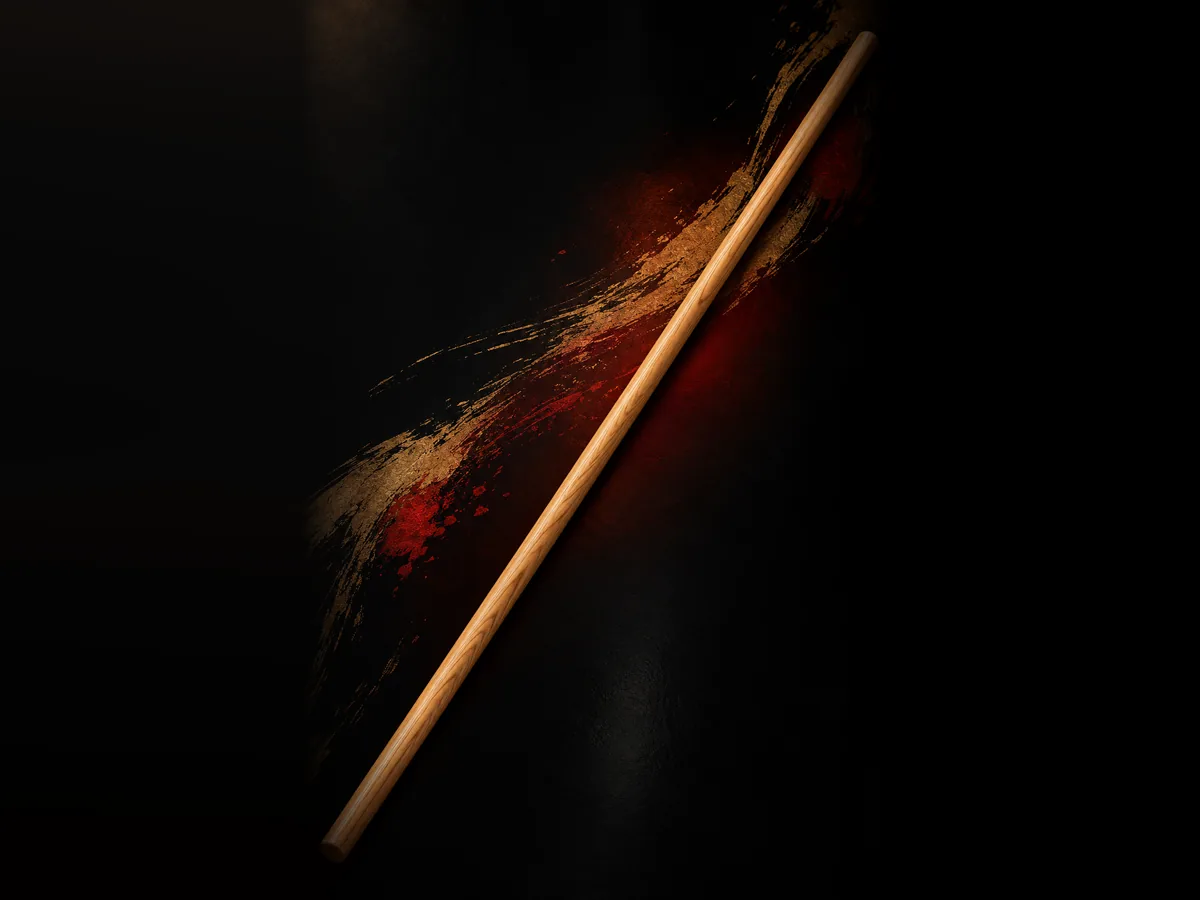
O bastão longo, tradicionalmente com seis shaku (cerca de 182 cm). É a primeira arma que se aprende no kobudo de Okinawa.
Bo Ilustração WABUKAN
Outros nomes
棒 · rokushaku-bō; kon (Okinawan)
Origem e história
O bastão comprido é uma das armas mais antigas do mundo; em Okinawa tornou-se o centro do kobudō, com kata com nomes de mestres como Sakugawa Kanga (séc. XVIII). Escolas japonesas koryū, como a Tenshin Shōden Katori Shintō-ryū, também ensinam bōjutsu.
O rokushaku-bō padrão mede seis shaku (cerca de 182 cm), redondo ou octogonal, muitas vezes mais fino nas pontas, normalmente de carvalho vermelho ou branco.
Técnicas básicas
jōdan-uchi
gedan-barai
tsuki
furi-uchi
kata de bō (Shūshi no kon, Sakugawa no kon)
Treino
O treino de pau e bastão começa pelas pegas, posições e golpes e defesas básicos, praticados no ar ou num alvo, e depois exercícios a dois com velocidade controlada. Muitas escolas usam paus de rota ou almofadados para combate, com capacete e luvas.
Segurança
Use capacete com grelha e luvas almofadadas em qualquer trabalho de contacto; mãos e dedos são as lesões mais comuns. Verifique os paus à procura de fissuras e lascas e retire os danificados.
Legalidade (informação geral)
Paus, bastões e outras armas de impacto ou flexíveis são objetos comuns em alguns países e armas proibidas ou limitadas noutros (vários países europeus, por exemplo, regulam nunchaku, bastões extensíveis ou correntes com peso). Andar com uma na rua sem motivo pode ser infração mesmo onde é legal tê-la. Transporte-a num saco e use-a no local de treino. Isto é informação geral, não aconselhamento jurídico: confirme a lei local.
Curiosidades
O bastão usa-se pelas duas pontas: quem luta com bō troca constantemente a ponta que bate, e por isso as mãos ficam a cerca de um terço do comprimento.
The long staff, traditionally six shaku (about 182 cm). It is the first weapon learned in Okinawan kobudo.
Bo WABUKAN illustration
Also known as
棒 · rokushaku-bō; kon (Okinawan)
Origin and history
The long staff is one of the oldest weapons anywhere; in Okinawa it became the core of kobudō, with kata named after masters such as Sakugawa Kanga (18th c.). Japanese koryū schools such as Tenshin Shōden Katori Shintō-ryū also teach bōjutsu.
The standard rokushaku-bō is six shaku long (about 182 cm), round or octagonal, often tapering towards both ends, usually of red or white oak.
Basic techniques
jōdan-uchi
gedan-barai
tsuki
furi-uchi
bō kata (Shūshi no kon, Sakugawa no kon)
Training
Stick and staff training starts with grips, stances and basic strikes and blocks practised in the air or on a target, then two-person drills at controlled speed. Many schools use rattan or padded sticks for sparring, with a helmet and gloves.
Safety
Wear a helmet with a face grille and padded gloves for any contact work; hands and fingers are the most common injuries. Check sticks for cracks and splinters and retire damaged ones.
Legality (general information)
Sticks, staffs and other impact or flexible weapons are ordinary objects in some countries and restricted weapons in others (several European countries, for example, regulate nunchaku, batons or weighted chains). Carrying one in public without a good reason can be an offence even where owning it is legal. Transport it in a bag and use it in the training hall. This is general information, not legal advice: check local law.
Did you know?
The staff is used in both ends: a bō fighter constantly switches which end strikes, which is why the grip sits about a third of the way along.
El bastón largo de seis shaku, centro del kobudō de Okinawa.
Bo Ilustración WABUKAN
Otros nombres
棒 · rokushaku-bō; kon (Okinawan)
Origen e historia
El bastón largo es una de las armas más antiguas del mundo; en Okinawa se convirtió en el centro del kobudō, con kata que llevan nombres de maestros como Sakugawa Kanga (s. XVIII). Escuelas japonesas koryū, como la Tenshin Shōden Katori Shintō-ryū, también enseñan bōjutsu.
El rokushaku-bō estándar mide seis shaku (unos 182 cm), redondo u octogonal, a menudo más fino en las puntas, normalmente de roble rojo o blanco.
Técnicas básicas
jōdan-uchi
gedan-barai
tsuki
furi-uchi
kata de bō (Shūshi no kon, Sakugawa no kon)
Entrenamiento
El entrenamiento de palo y bastón empieza por los agarres, las posiciones y los golpes y defensas básicos, practicados al aire o sobre un objetivo, y después ejercicios por parejas a velocidad controlada. Muchas escuelas usan palos de ratán o acolchados para el combate, con casco y guantes.
Seguridad
Use casco con rejilla y guantes acolchados en cualquier trabajo de contacto; manos y dedos son las lesiones más frecuentes. Revise los palos en busca de grietas y astillas y retire los dañados.
Legalidad (información general)
Palos, bastones y otras armas de impacto o flexibles son objetos corrientes en algunos países y armas restringidas en otros (varios países europeos, por ejemplo, regulan el nunchaku, las porras o las cadenas con peso). Llevar una en público sin motivo puede ser infracción aunque poseerla sea legal. Transpórtela en una bolsa y úsela en la sala de entrenamiento. Es información general, no asesoramiento jurídico: consulte la ley local.
Curiosidades
El bastón se usa por los dos extremos: quien lucha con bō cambia constantemente la punta que golpea, por eso las manos van a un tercio de su longitud.
Le grand bâton de six shaku, cœur du kobudō d’Okinawa.
Bo Illustration WABUKAN
Autres noms
棒 · rokushaku-bō; kon (Okinawan)
Origine et histoire
Le grand bâton est l’une des plus anciennes armes ; à Okinawa il devient le cœur du kobudō, avec des kata portant le nom de maîtres comme Sakugawa Kanga (XVIIIe s.). Des écoles japonaises koryū comme la Tenshin Shōden Katori Shintō-ryū enseignent aussi le bōjutsu.
Le rokushaku-bō standard mesure six shaku (environ 182 cm), rond ou octogonal, souvent effilé aux deux bouts, généralement en chêne rouge ou blanc.
Techniques de base
jōdan-uchi
gedan-barai
tsuki
furi-uchi
kata de bō (Shūshi no kon, Sakugawa no kon)
Entraînement
L’entraînement au bâton commence par les prises, les gardes et les frappes et parades de base, travaillées dans le vide ou sur cible, puis par des exercices à deux à vitesse contrôlée. Beaucoup d’écoles utilisent des bâtons en rotin ou rembourrés pour l’assaut, avec casque et gants.
Sécurité
Portez un casque à grille et des gants rembourrés pour tout travail au contact ; mains et doigts sont les blessures les plus fréquentes. Vérifiez les bâtons (fissures, échardes) et retirez ceux qui sont abîmés.
Légalité (information générale)
Bâtons, cannes et autres armes contondantes ou souples sont des objets ordinaires dans certains pays et des armes réglementées dans d’autres (plusieurs pays européens encadrent par exemple le nunchaku, la matraque ou les chaînes lestées). Les porter en public sans motif peut constituer une infraction même là où leur détention est légale. Transportez-les dans un sac et utilisez-les en salle. Ceci est une information générale, pas un conseil juridique : vérifiez la loi locale.
Le saviez-vous ?
Le bâton s’utilise par les deux extrémités : le pratiquant change sans cesse de bout pour frapper, d’où une prise vers le tiers de la longueur.