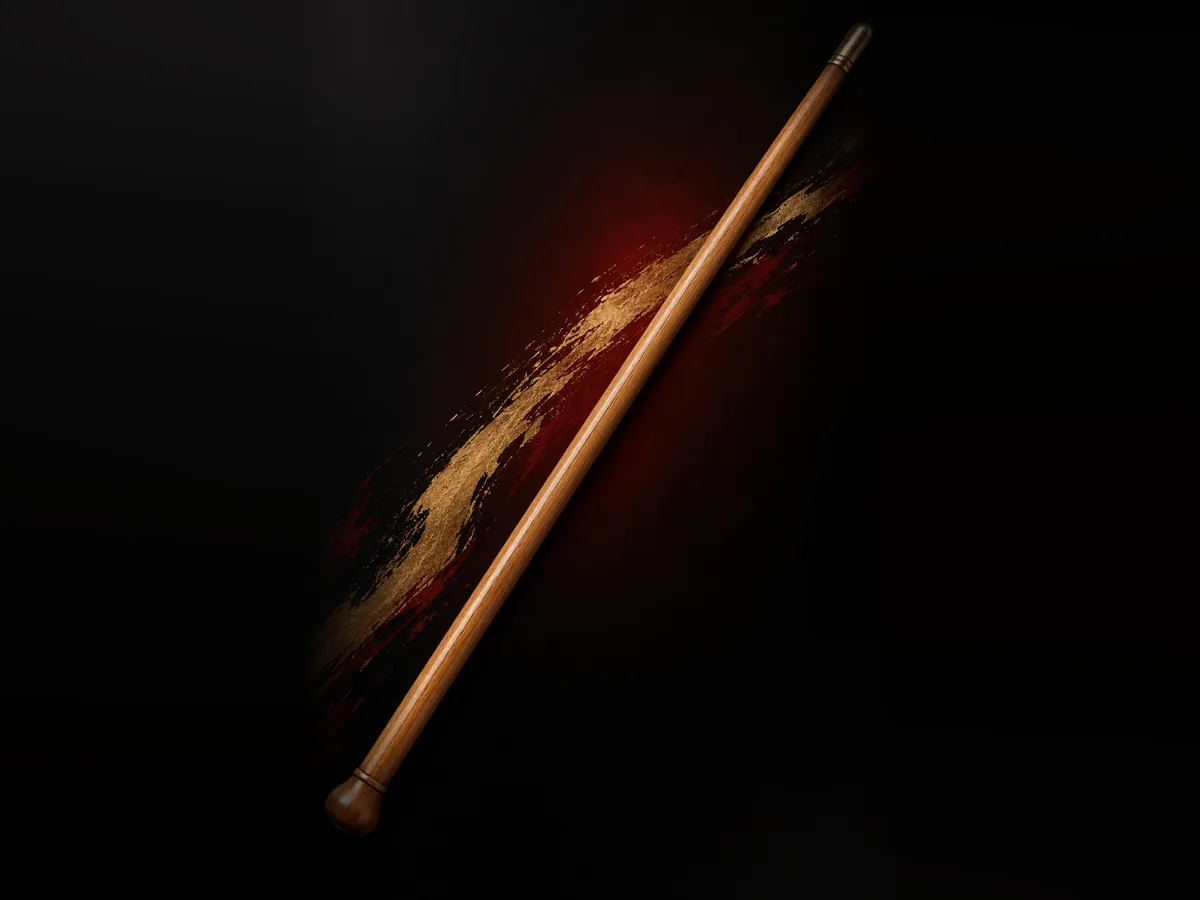
Uma bengala leve de castanheiro com 95 cm. A canne de combat francesa e o bartitsu eduardiano fizeram da bengala do cavalheiro uma arma de defesa.
Bengala de combate Ilustração WABUKAN
Outros nomes
canne · canne de combat; canne d’arme; walking cane
Origem e história
A bengala francesa tornou-se método de defesa pessoal na Paris do século XIX, ensinada ao lado da savate. Maurice Gruss codificou-a como o desporto canne de combat nos anos 1970, com regras que exigem armar a bengala (rodá-la) antes de bater.
Bengala de castanheiro afunilada com cerca de 95 cm e 100–120 g. Os atletas usam fato almofadado, luvas e máscara de tipo esgrima.
Técnicas básicas
brisé, croisé, enlevé, latéral
molinetes
afundo (fente)
Treino
O treino de pau e bastão começa pelas pegas, posições e golpes e defesas básicos, praticados no ar ou num alvo, e depois exercícios a dois com velocidade controlada. Muitas escolas usam paus de rota ou almofadados para combate, com capacete e luvas.
Segurança
Use capacete com grelha e luvas almofadadas em qualquer trabalho de contacto; mãos e dedos são as lesões mais comuns. Verifique os paus à procura de fissuras e lascas e retire os danificados.
Legalidade (informação geral)
Paus, bastões e outras armas de impacto ou flexíveis são objetos comuns em alguns países e armas proibidas ou limitadas noutros (vários países europeus, por exemplo, regulam nunchaku, bastões extensíveis ou correntes com peso). Andar com uma na rua sem motivo pode ser infração mesmo onde é legal tê-la. Transporte-a num saco e use-a no local de treino. Isto é informação geral, não aconselhamento jurídico: confirme a lei local.
Curiosidades
Na canne de combat um golpe só conta se a bengala fizer primeiro um movimento armado amplo: golpes curtos não contam.
A light chestnut walking stick, 95 cm long. French canne de combat and Edwardian bartitsu turned the gentleman's cane into a self-defence weapon.
Combat cane (canne) WABUKAN illustration
Also known as
canne · canne de combat; canne d’arme; walking cane
Origin and history
The French walking cane became a self-defence method in 19th-century Paris, taught alongside savate. Maurice Gruss codified it as the sport canne de combat in the 1970s, with rules requiring the cane to be armed (swung) before hitting.
A tapered chestnut-wood cane of about 95 cm and around 100–120 g. Fighters wear a padded suit, gloves and a fencing-style mask.
Basic techniques
brisé, croisé, enlevé, latéral
moulinets
fente (lunge)
Training
Stick and staff training starts with grips, stances and basic strikes and blocks practised in the air or on a target, then two-person drills at controlled speed. Many schools use rattan or padded sticks for sparring, with a helmet and gloves.
Safety
Wear a helmet with a face grille and padded gloves for any contact work; hands and fingers are the most common injuries. Check sticks for cracks and splinters and retire damaged ones.
Legality (general information)
Sticks, staffs and other impact or flexible weapons are ordinary objects in some countries and restricted weapons in others (several European countries, for example, regulate nunchaku, batons or weighted chains). Carrying one in public without a good reason can be an offence even where owning it is legal. Transport it in a bag and use it in the training hall. This is general information, not legal advice: check local law.
Did you know?
In canne de combat a strike only scores if the cane first makes a wide armed movement: short jabs do not count.
canne · canne de combat; canne d’arme; walking cane
Origen e historia
El bastón de paseo francés se convirtió en método de defensa personal en el París del siglo XIX, enseñado junto a la savate. Maurice Gruss lo codificó como el deporte canne de combat en los años 1970, con reglas que exigen armar el bastón (girarlo) antes de golpear.
Bastón de castaño cónico de unos 95 cm y unos 100–120 g. Los tiradores llevan traje acolchado, guantes y careta de esgrima.
Técnicas básicas
brisé, croisé, enlevé, latéral
molinetes
fondo (fente)
Entrenamiento
El entrenamiento de palo y bastón empieza por los agarres, las posiciones y los golpes y defensas básicos, practicados al aire o sobre un objetivo, y después ejercicios por parejas a velocidad controlada. Muchas escuelas usan palos de ratán o acolchados para el combate, con casco y guantes.
Seguridad
Use casco con rejilla y guantes acolchados en cualquier trabajo de contacto; manos y dedos son las lesiones más frecuentes. Revise los palos en busca de grietas y astillas y retire los dañados.
Legalidad (información general)
Palos, bastones y otras armas de impacto o flexibles son objetos corrientes en algunos países y armas restringidas en otros (varios países europeos, por ejemplo, regulan el nunchaku, las porras o las cadenas con peso). Llevar una en público sin motivo puede ser infracción aunque poseerla sea legal. Transpórtela en una bolsa y úsela en la sala de entrenamiento. Es información general, no asesoramiento jurídico: consulte la ley local.
Curiosidades
En la canne de combat un golpe solo puntúa si el bastón hace antes un movimiento armado amplio: los golpes cortos no cuentan.
canne · canne de combat; canne d’arme; walking cane
Origine et histoire
La canne de promenade devient une méthode de défense dans le Paris du XIXe siècle, enseignée avec la savate. Maurice Gruss la codifie en sport, la canne de combat, dans les années 1970, avec des règles qui imposent d’armer la canne avant de frapper.
Canne effilée en bois de châtaignier d’environ 95 cm pour 100–120 g. Les tireurs portent une tenue rembourrée, des gants et un masque d’escrime.
Techniques de base
brisé, croisé, enlevé, latéral
moulinets
fente
Entraînement
L’entraînement au bâton commence par les prises, les gardes et les frappes et parades de base, travaillées dans le vide ou sur cible, puis par des exercices à deux à vitesse contrôlée. Beaucoup d’écoles utilisent des bâtons en rotin ou rembourrés pour l’assaut, avec casque et gants.
Sécurité
Portez un casque à grille et des gants rembourrés pour tout travail au contact ; mains et doigts sont les blessures les plus fréquentes. Vérifiez les bâtons (fissures, échardes) et retirez ceux qui sont abîmés.
Légalité (information générale)
Bâtons, cannes et autres armes contondantes ou souples sont des objets ordinaires dans certains pays et des armes réglementées dans d’autres (plusieurs pays européens encadrent par exemple le nunchaku, la matraque ou les chaînes lestées). Les porter en public sans motif peut constituer une infraction même là où leur détention est légale. Transportez-les dans un sac et utilisez-les en salle. Ceci est une information générale, pas un conseil juridique : vérifiez la loi locale.
Le saviez-vous ?
En canne de combat, un coup ne compte que si la canne a d’abord été armée par un ample mouvement : les coups courts ne comptent pas.