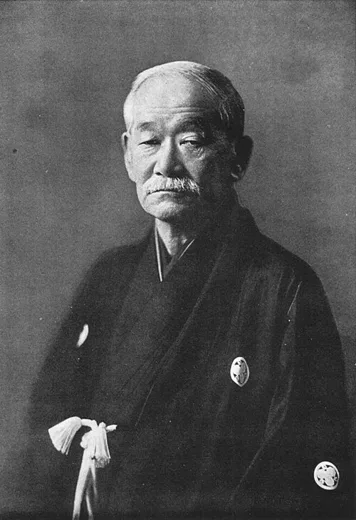
Jigoro Kano
1860–1938 · Japan
Founder of judo. In 1882 he opened the Kodokan in Tokyo, turning old jujutsu into a safe, modern sport and a way of education.
Photo: Unknown author · Public domain · Wikimedia Commons ✦ Member👤 Sign in
The founders, teachers and champions who shaped the martial arts — from Musashi to today. Choose an art to see its masters.
1860–1938 · Japan
Founder of judo. In 1882 he opened the Kodokan in Tokyo, turning old jujutsu into a safe, modern sport and a way of education.
Photo: Unknown author · Public domain · Wikimedia Commons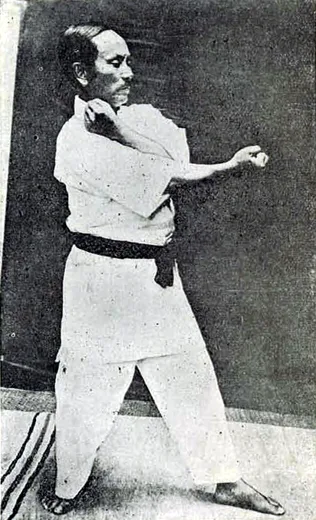
1868–1957 · Japan
The "father of modern karate". He brought karate from Okinawa to mainland Japan in 1922; his students named his style Shotokan.
Photo: Gichin Funakoshi · Public domain · Wikimedia Commons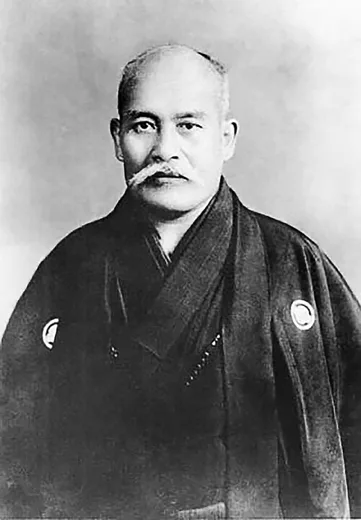
1883–1969 · Japan
Founder of aikido, known as O-Sensei. From Daito-ryu jujutsu and the sword he created an art of harmony that neutralises an attack without destroying the attacker.
Photo: Unknown photographer · Public domain · Wikimedia Commons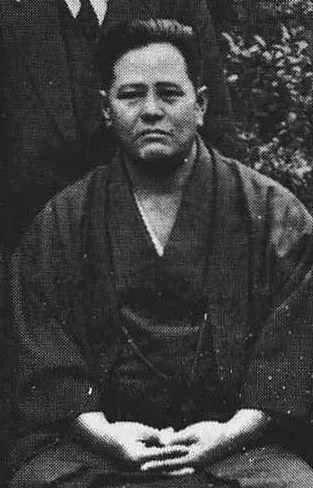
1888–1953 · Japan
Founder of Goju-ryu karate in Okinawa. He gave the style its name, "hard-soft", and made the Sanchin kata and breathing its heart.
Photo: Nakasone Genwa · Public domain · Wikimedia Commons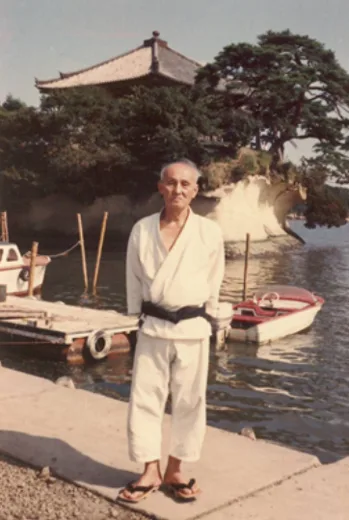
1892–1982 · Japan
Founder of Wado-ryu. A jujutsu master who trained with Funakoshi, he joined both arts into a karate of evasion and redirection.
Photo: HistoryTuan · CC BY-SA 4.0 · Wikimedia Commons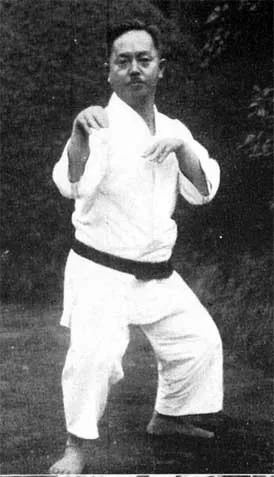
1889–1952 · Japan
Founder of Shito-ryu. He joined the teachings of his masters Itosu and Higaonna and preserved a huge collection of kata.
Photo: published by 東京興武館(Tokyo Koubukan) · Public domain · Wikimedia Commons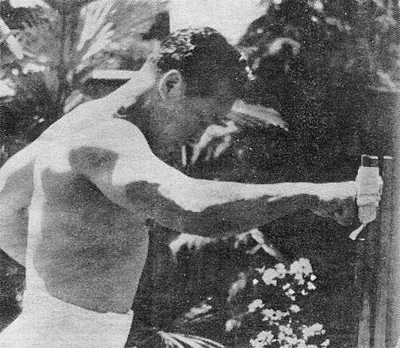
1923–1994 · Japan, South Korea
Founder of Kyokushin, born in Korea. Famous for extreme training in the mountains and the 100-man kumite, he made full-contact karate popular worldwide.
Photo: 日本スポーツ出版社 · Public domain · Wikimedia Commons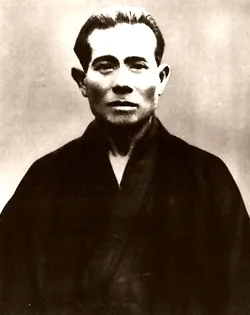
1877–1948 · Japan
Founder of Uechi-ryu. He studied for about ten years in Fujian, China, and brought back a hard, close-range style based on tiger, crane and dragon.
Photo: No machine-readable author provided. URK assumed (based on copyright claims). · Public domain · Wikimedia Commons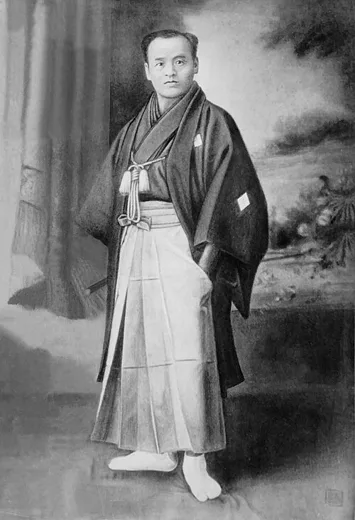
1859–1943 · Japan
The great teacher of Daito-ryu Aiki-jujutsu. He travelled across Japan teaching police and soldiers, and Morihei Ueshiba was his student.
Photo: Unknown author · Public domain · Wikimedia Commons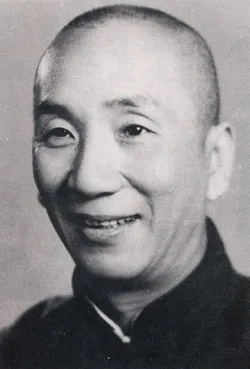
1893–1972 · China
Grandmaster of Wing Chun. He opened his school in Hong Kong in the 1950s and taught hundreds of students, among them Bruce Lee.
Photo: Dever · Public domain · Wikimedia Commons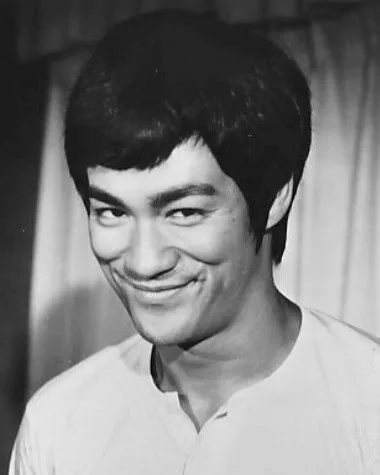
1940–1973 · China, United States
Martial artist, actor and thinker. He created Jeet Kune Do, "the way of the intercepting fist", and brought kung fu to the whole world through cinema.
Photo: National General Pictures · Public domain · Wikimedia Commons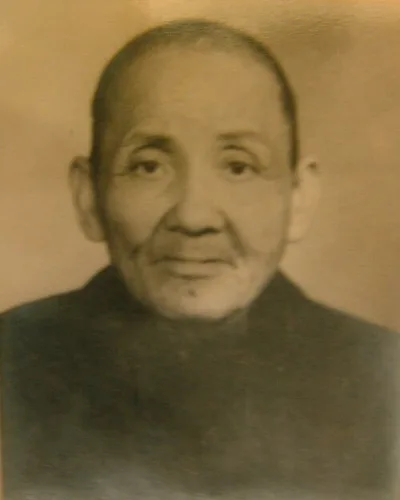
1847–1925 · China
Hung Gar master and doctor of traditional medicine in Foshan. He became a folk hero, the subject of more than a hundred films.
Photo: Kwong Kei-tim (鄺祺添) · Public domain · Wikimedia Commons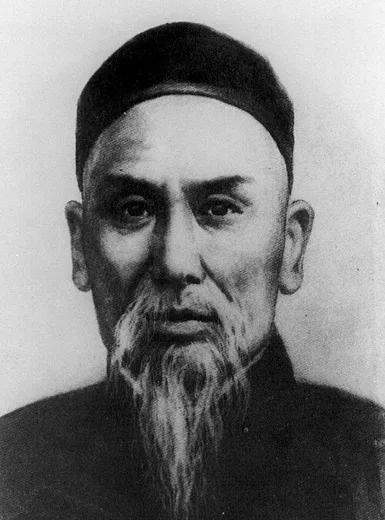
1799–1872 · China
Founder of Yang-style Tai Chi. He learned in the Chen village and taught in Beijing, where he was nicknamed "Yang the Invincible".
Photo: Wikimedia Commons · Public domain · Wikimedia Commons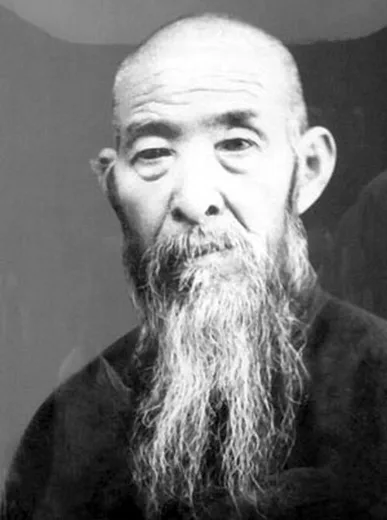
1860–1933 · China
Master of the three internal arts — Xingyi, Bagua and Tai Chi — and creator of Sun-style Tai Chi. He also wrote some of the first books on them.
Photo: Unknown author · Public domain · Wikimedia Commons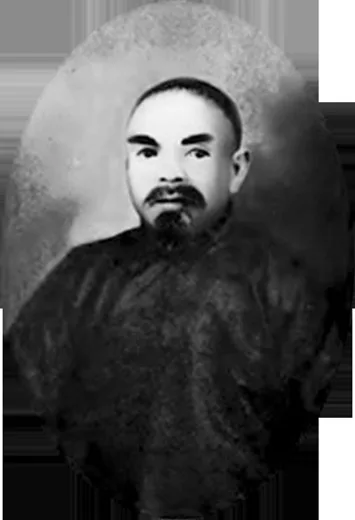
1864–1934 · China
Legendary Bajiquan master known as "Divine Spear Li". His students included bodyguards of China’s leaders.
Photo: Unknown author · Public domain · Wikimedia Commons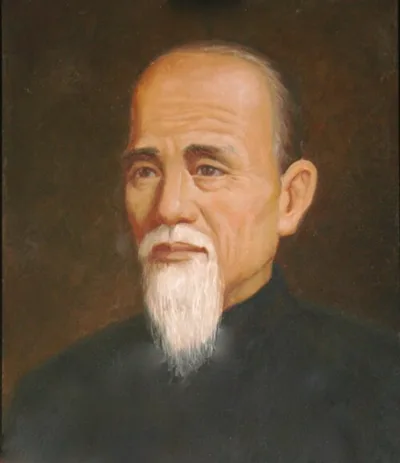
1806–1875 · China
Founder of Choy Li Fut in 1836. He joined what he had learned from three teachers into one southern style of long, circular strikes.
Photo: User:Clftruthseeking · Public domain · Wikimedia Commons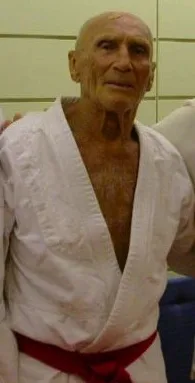
1913–2009 · Brazil
One of the creators of Brazilian jiu-jitsu. Light and frail, he adapted techniques to leverage and timing so that a smaller person could win.
Photo: Satorijits · CC BY-SA 3.0 · Wikimedia Commons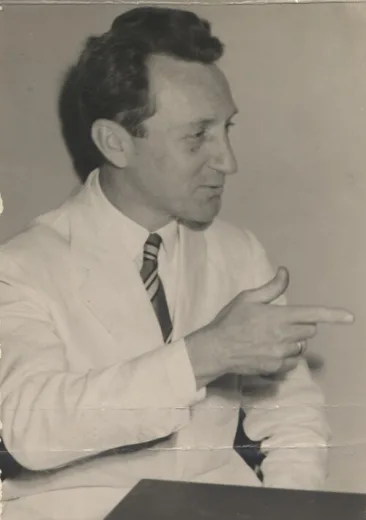
1902–1994 · Brazil
Learned judo/jujutsu from Mitsuyo Maeda in Belém and opened the first Gracie academy in Rio de Janeiro in 1925.
Photo: UnknownUnknown · Public domain · Wikimedia Commons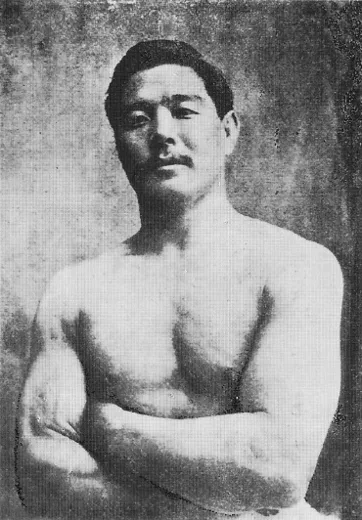
1878–1941 · Japan, Brazil
Kodokan judoka who fought challenge matches around the world and settled in Brazil, where he taught the Gracie family — the root of BJJ.
Photo: published by 島津書房 · Public domain · Wikimedia Commons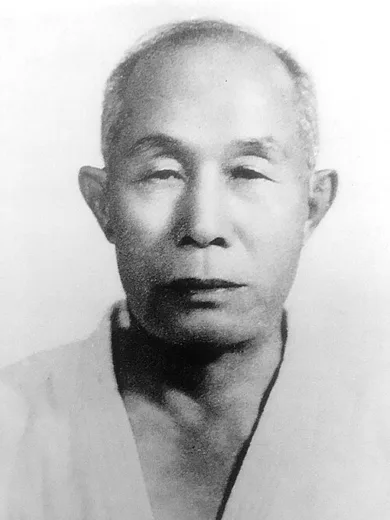
1904–1986 · South Korea
The founder of hapkido. After decades in Japan he returned to Korea and taught a system of joint locks, throws and kicks.
Photo: Tokaria · CC BY-SA 4.0 · Wikimedia Commons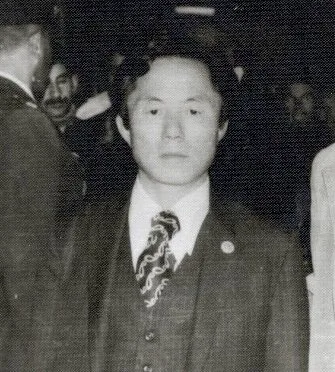
1918–2002 · South Korea
Korean general who led the naming of taekwondo in 1955 and founded the International Taekwon-Do Federation (ITF) in 1966.
Photo: Mehran Eisazadeh · CC BY-SA 4.0 · Wikimedia Commons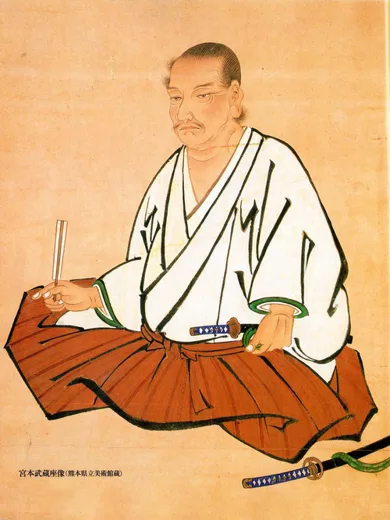
1584–1645 · Japan
Japan’s most famous swordsman, undefeated in his duels. He fought with two swords and wrote The Book of Five Rings.
Photo: Unknown author · Public domain · Wikimedia Commons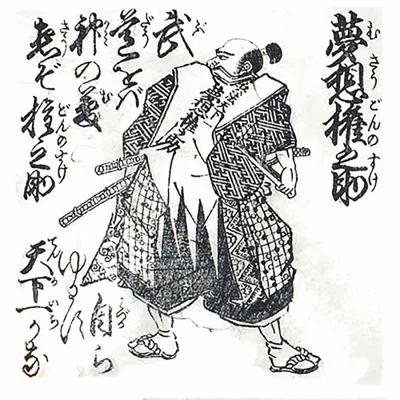
1600s · Japan
Samurai of the early 17th century and founder of Shindo Muso-ryu jojutsu. Tradition says he created the short staff after facing Musashi.
Photo: Unknown author · Public domain · Wikimedia Commons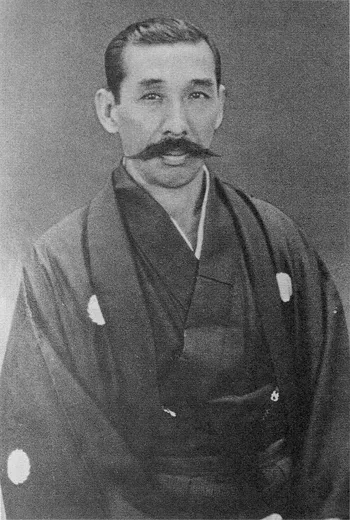
1872–1958 · Japan
One of the greatest kendo and iaido teachers of the 20th century; he founded Muso Shinden-ryu iaido.
Photo: Unknown author · Public domain · Wikimedia Commons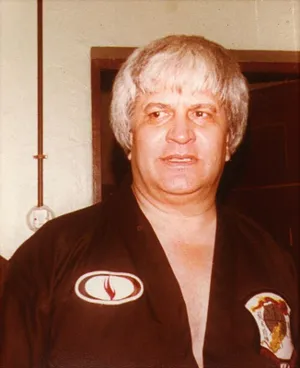
1931–1990 · United States
Father of American Kenpo. From Hawaii, he opened schools in California and trained Hollywood stars; he introduced Bruce Lee at the 1964 Long Beach tournament.
Photo: LuisFer Dominguez Serra · CC BY-SA 4.0 · Wikimedia Commons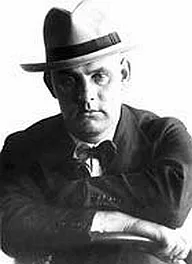
1892–1937 · Russia
One of the first foreigners to earn a black belt at the Kodokan. He brought judo to Russia and helped create sambo.
Photo: Unknown author · Public domain · Wikimedia Commons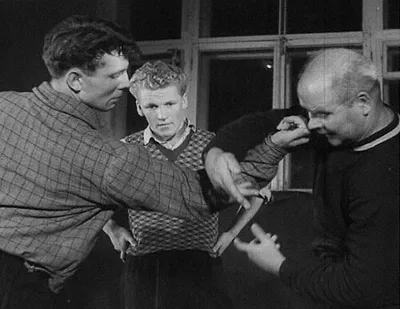
1906–1979 · Russia
Considered a founding father of sambo. He gathered techniques from many wrestling styles and got sambo recognised as a sport in the USSR in 1938.
Photo: Vdilyin · CC BY-SA 3.0 · Wikimedia Commons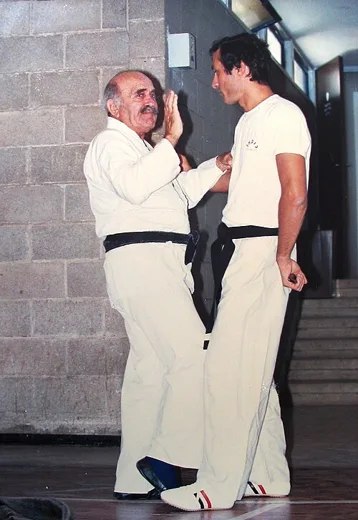
1910–1998 · Israel
Founder of Krav Maga. A boxer and wrestler from Bratislava, he developed it for the Israeli army and later adapted it for civilians.
Photo: Yaron Lichtenstein · Attribution · Wikimedia Commons
1899–1974 · Brazil
Creator of Capoeira Regional. In 1932 he opened the first official capoeira academy in Salvador, Bahia, helping to end its ban.
Photo: Malikss19 · CC BY-SA 4.0 · Wikimedia Commons
1889–1981 · Brazil
The guardian of Capoeira Angola. In Salvador he kept the traditional, rhythmic style alive and taught it as philosophy and culture.
Photo: Unknown author · Public domain · Wikimedia Commons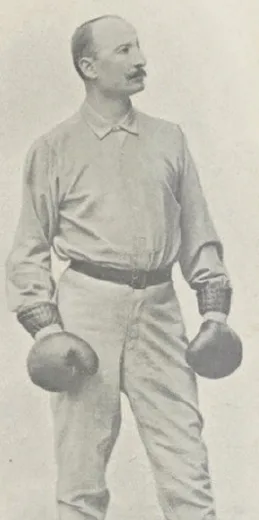
1839–1929 · France
Master who codified boxe française (savate) in the 19th century and wrote its classic manuals in Paris.
Photo: Joseph Charlemont · Public domain · Wikimedia Commons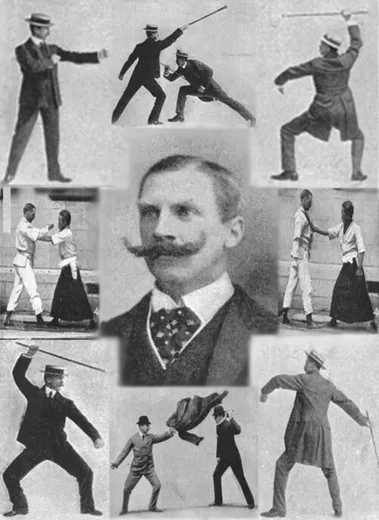
1860–1951 · United Kingdom
English engineer who created Bartitsu in London in 1899, mixing jujutsu, boxing, savate and the walking stick — Sherlock Holmes’ "baritsu".
Photo: Artful Dodger at English Wikipedia · Public domain · Wikimedia Commons
1700s · Thailand
Siamese fighter of the 18th century who, as a prisoner in Burma, is said to have beaten many opponents in a row. Thailand celebrates Muay Thai Day in his honour.
Photo: Judge761 (memorial statue / estátua) · CC BY-SA 4.0 · Wikimedia Commons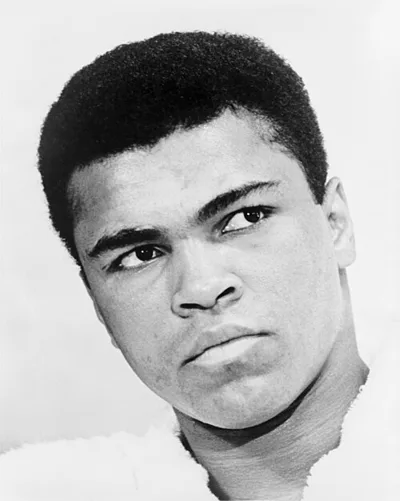
1942–2016 · United States
Olympic champion in 1960 and three-time world heavyweight champion. "Float like a butterfly, sting like a bee" — speed, style and courage outside the ring.
Photo: Ira Rosenberg · Public domain · Wikimedia Commons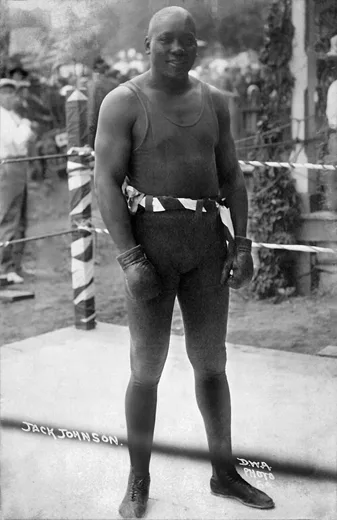
1878–1946 · United States
The first African-American world heavyweight champion (1908). A brilliant defensive boxer who faced enormous racism.
Photo: Bain News Service · Public domain · Wikimedia Commons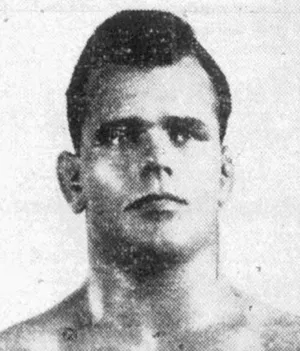
1924–2007 · Belgium, United States
Catch wrestler trained at the Snake Pit in Wigan. In Japan he became the "god of wrestling" and influenced shoot wrestling and early MMA.
Photo: Unknown · Public domain · Wikimedia Commons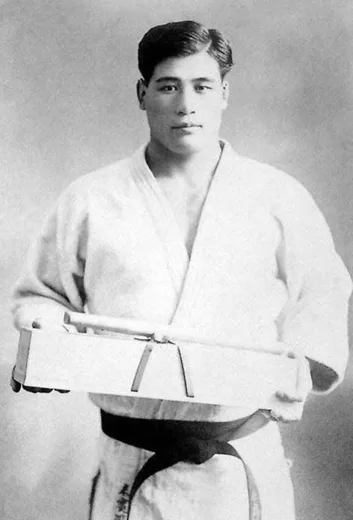
1917–1993 · Japan
One of the greatest judoka ever, unbeaten for 13 years. The shoulder lock he used against Hélio Gracie in 1951 is called the "kimura".
Photo: published by 学習研究社 · Public domain · Wikimedia Commons
1883–1965 · Japan
Judo 10th dan known as the "god of judo". Small in size, he was famous for his flowing technique and the "air throw" (kuki nage).
Photo: published by ポプラ書房 · Public domain · Wikimedia Commons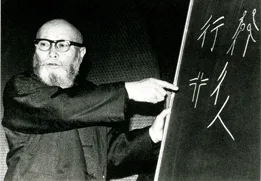
1911–1980 · Japan
Founder of Shorinji Kempo in 1947. He joined martial training with Buddhist teaching to build confident, helpful people.
Photo: Momotti · CC BY-SA 3.0 · Wikimedia Commons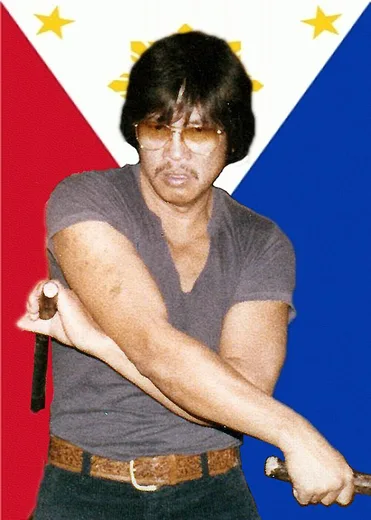
1936–2001 · Philippines
Founder of Modern Arnis. He made Filipino stick fighting easy to learn and spread it across the Philippines, the USA and Europe.
Photo: Robert James DeMott · CC BY-SA 3.0 · Wikimedia Commons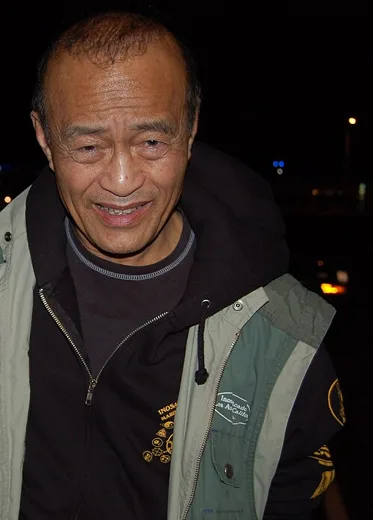
1936– · United States
Jeet Kune Do Arnis · Eskrima · Kali
Bruce Lee’s training partner and one of the few certified to teach Jeet Kune Do. He also made Filipino martial arts known worldwide.
Photo: Webtraktion · CC BY-SA 4.0 · Wikimedia Commons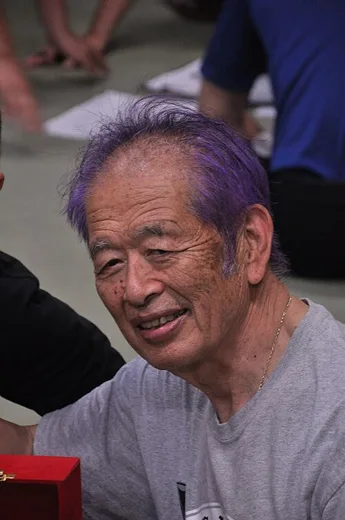
1931– · Japan
Founder of the Bujinkan, which teaches ninjutsu and old samurai arts in dojos all over the world from its base in Noda, Japan.
Photo: Pavel.ninryu · CC BY-SA 4.0 · Wikimedia Commons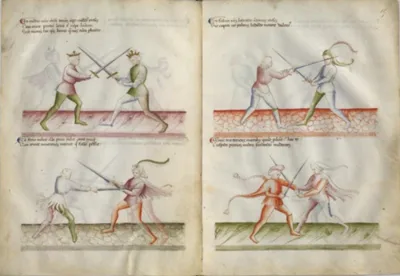
1350–1420 · Italy
Italian knight and fencing master around 1400. His illustrated manual Flower of Battle is a key source for today’s HEMA.
Photo: Fiore dei Liberi · Public domain · Wikimedia Commons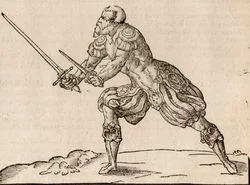
1537–1571 · Germany
German fencing master from Strasbourg. His 1570 book on the longsword, dussack and rapier is one of the richest sources of HEMA.
Photo: Joachim Meyer · Public domain · Wikimedia Commons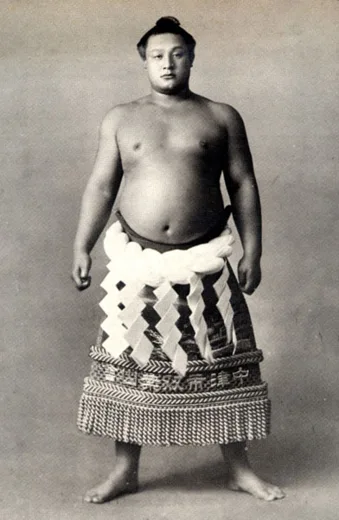
1912–1968 · Japan
The 35th yokozuna, famous for 69 consecutive wins in the 1930s — a record that still stands.
Photo: Unknown author · Public domain · Wikimedia Commons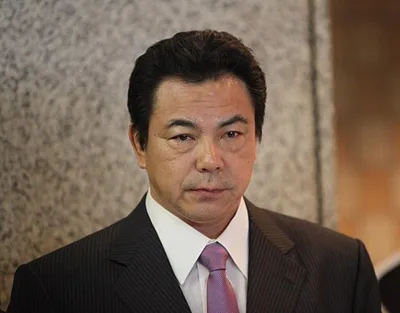
1955–2016 · Japan
The 58th yokozuna, "the Wolf". Light for a sumo wrestler, he won 31 top-division tournaments with speed and power.
Photo: Route246 · CC BY 3.0 · Wikimedia Commons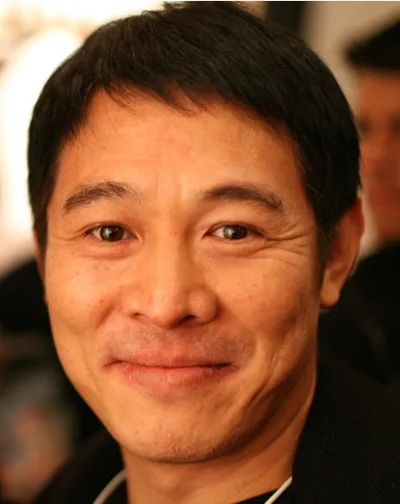
1963– · China
Five-time Chinese national wushu champion as a teenager, later a world movie star who brought modern wushu to cinema.
Photo: Mark_Zuckerberg,_founder_Facebook,_and_Jet_Li.jpg: Robert Scoble derivative work · CC BY 2.0 · Wikimedia Commons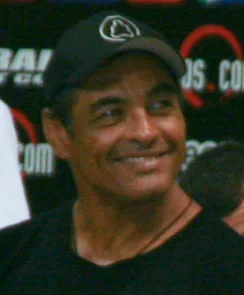
1958– · Brazil
Son of Hélio Gracie and one of the most respected BJJ fighters ever, known for his calm, pressure and unbeaten record in vale tudo.
Photo: Original uploader was Zekerags at en.wikipedia · Public domain · Wikimedia Commons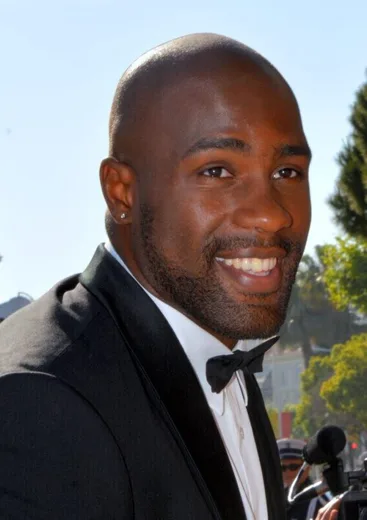
1989– · France
French heavyweight judoka with many Olympic gold medals and more than ten world titles — one of the greatest judoka in history.
Photo: Georges Biard · CC BY-SA 3.0 · Wikimedia Commons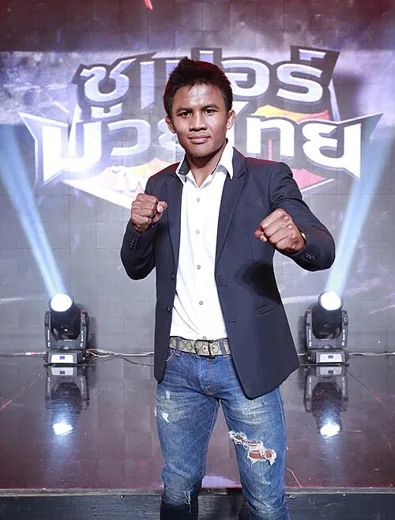
1982– · Thailand
Thai Muay Thai and kickboxing legend, two-time K-1 World MAX champion, famous for his kicks and endurance.
Photo: ตั๊กกะล่อนนน · CC BY-SA 4.0 · Wikimedia Commons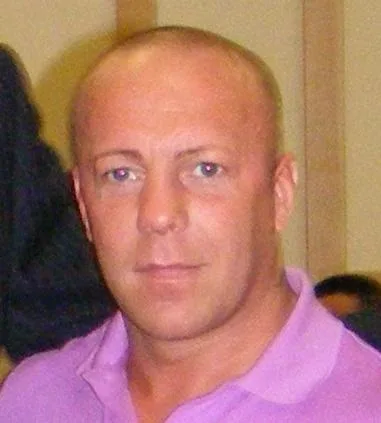
1969–2013 · Netherlands
Dutch fighter nicknamed "The Diamond", the first foreigner to become a star in Thailand’s stadiums, with an aggressive punching style.
Photo: Ramon_Dekkers_(NED).jpg: Umi1903 derivative work: Beastpack (talk) · CC BY-SA 3.0 · Wikimedia Commons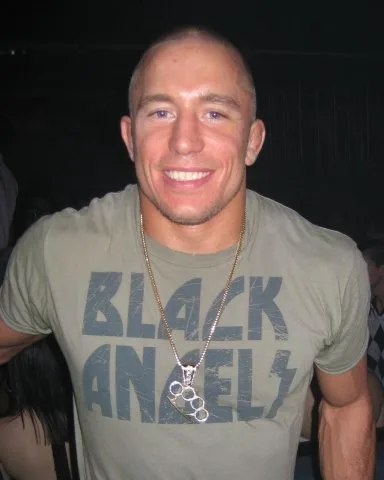
1981– · Canada
Canadian MMA champion with a Kyokushin karate base, two-division UFC champion and one of the most complete fighters ever.
Photo: Bad intentionz · CC BY-SA 3.0 · Wikimedia Commons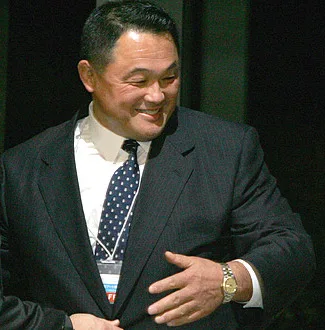
1957– · Japan
Japanese judoka unbeaten in his last 203 contests, Olympic champion in 1984 despite an injured leg.
Photo: Russian Presidential Press Service; crop by User:Pruneau · CC BY 4.0 · Wikimedia Commons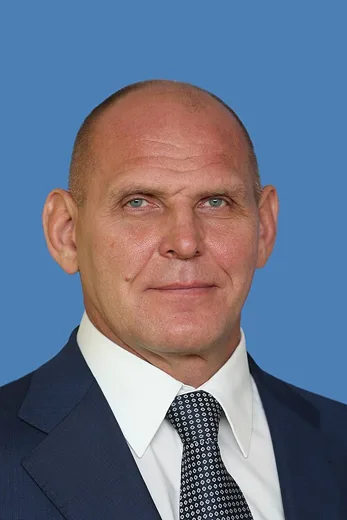
1967– · Russia
Greco-Roman wrestler, three-time Olympic champion, unbeaten for 13 years and famous for lifting heavyweights with his reverse body lift.
Photo: Пресс-служба Совета Федерации России · CC BY 4.0 · Wikimedia Commons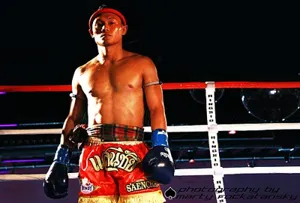
1980– · Thailand
One of the most skilful Muay Thai fighters ever, multiple Lumpinee champion, known for his speed, cartwheel kicks and playful style.
Photo: Marty Rockatansky at English Wikipedia · Public domain · Wikimedia CommonsBiographies written by Wabukan. Dates from Wikidata. Photos only with a free licence from Wikimedia Commons (author and licence under each photo).
✦ Member
⌂Home
拳Arts
師Masters
📚Library
🛒Shop