
Historical archive
How old is “ancient”? Invented traditions in the martial arts
Belts, grades, codes and even names that feel timeless are often little more than a century old. That does not make them fake.
1 min read · 268 words
A useful idea from historians
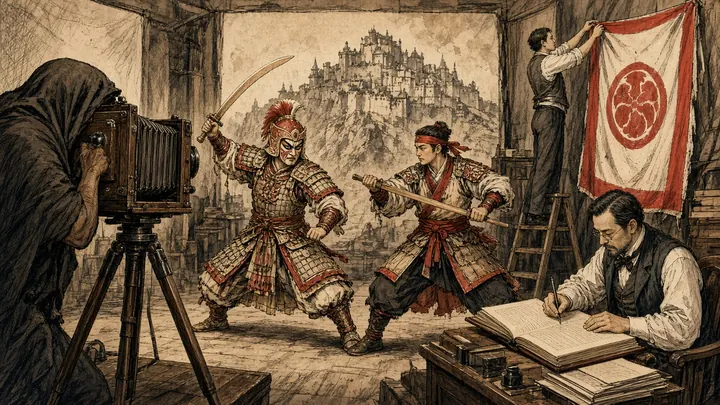
In 1983 the historians Eric Hobsbawm and Terence Ranger published a book called The Invention of Tradition. Their point was simple: many customs that look or claim to be old are in fact quite recent, created to give a group identity and authority. Scottish tartans and many royal ceremonies were their examples. The martial arts are full of such cases.
The black belt is younger than the telephone
Old Japanese schools gave scrolls and licences, not belts. In 1883 Kanō Jigorō awarded the first dan grades of judo to two senior students, Saigō Shirō and Tomita Tsunejirō, and in 1886 he had his graded students wear a black obi. Coloured belts for beginners came later and from abroad: the records of the Budokwai club in London show them in 1926 and 1927, and the Japanese teacher Kawaishi Mikinosuke, who visited the Budokwai in 1928, probably took the idea to France.
Names and codes
Even names move. Karate was written “Tang hand” until Tokyo clubs adopted “empty hand” from 1929 and Okinawan masters made it official in 1936. The noble, single bushido code took shape around 1900. The “ten commandments of chivalry” were compiled by Léon Gautier in 1884. In each case real older ideas were gathered, cleaned up and presented as timeless.
Recent is not the same as false
None of this means the traditions are worthless. A belt system that is 140 years old still motivates millions of children; a code written in 1900 can still guide a good life. What history changes is the claim. Saying “our art is two thousand years old and unchanged” is usually untrue; saying “our art keeps older ideas in a modern form” is usually right, and more interesting.
Related
- Judo
- Karate
- Meiji Japan
- Karate reaches Japan
- Zen and bushido
- European chivalry
- Kanō Jigorō — What judo is for (1915 and 1922)
Images: public-domain or CC0 works credited under each picture, or original WABUKAN ink illustrations. Panels: the story told in numbered comic boxes.
Sources
- Invented tradition — Wikipedia — en.wikipedia.org
- Dan (rank) — Wikipedia — en.wikipedia.org
- Judo (coloured belts, Budokwai) — Wikipedia — en.wikipedia.org
- Mikinosuke Kawaishi — Wikipedia — en.wikipedia.org
- Karate — Wikipedia — en.wikipedia.org
- Bushido — Wikipedia — en.wikipedia.org
- Chivalry — Wikipedia — en.wikipedia.org
Cite / use this content
You may quote and share this page with a link to WABUKAN. Suggested citation:
WABUKAN 和武館, «How old is “ancient”? Invented traditions in the martial arts», https://wabukan.com/ensaio-tradicoes-inventadas (accessed 2026-10-30).